SWR Advances on Sparkling Bottle Weight Agreement, Releases 2nd Standards Benchmarking Round
Progress in Sustainable Wine Packaging and Global Environmental Efforts
The Sustainable Wine Roundtable has made significant strides in developing guidelines for lightweight sparkling wine bottles, aiming to balance environmental sustainability with safety. These guidelines are designed to provide evidence-based recommendations that ensure the structural integrity of bottles while reducing their carbon footprint. The organization also released its second round of Standards Benchmarking, which evaluates eight additional local sustainability programs alongside two global certifications: EU Organic and Demeter Biodynamic. This effort is part of a broader push to bring clarity and comparability to wine sustainability standards worldwide.
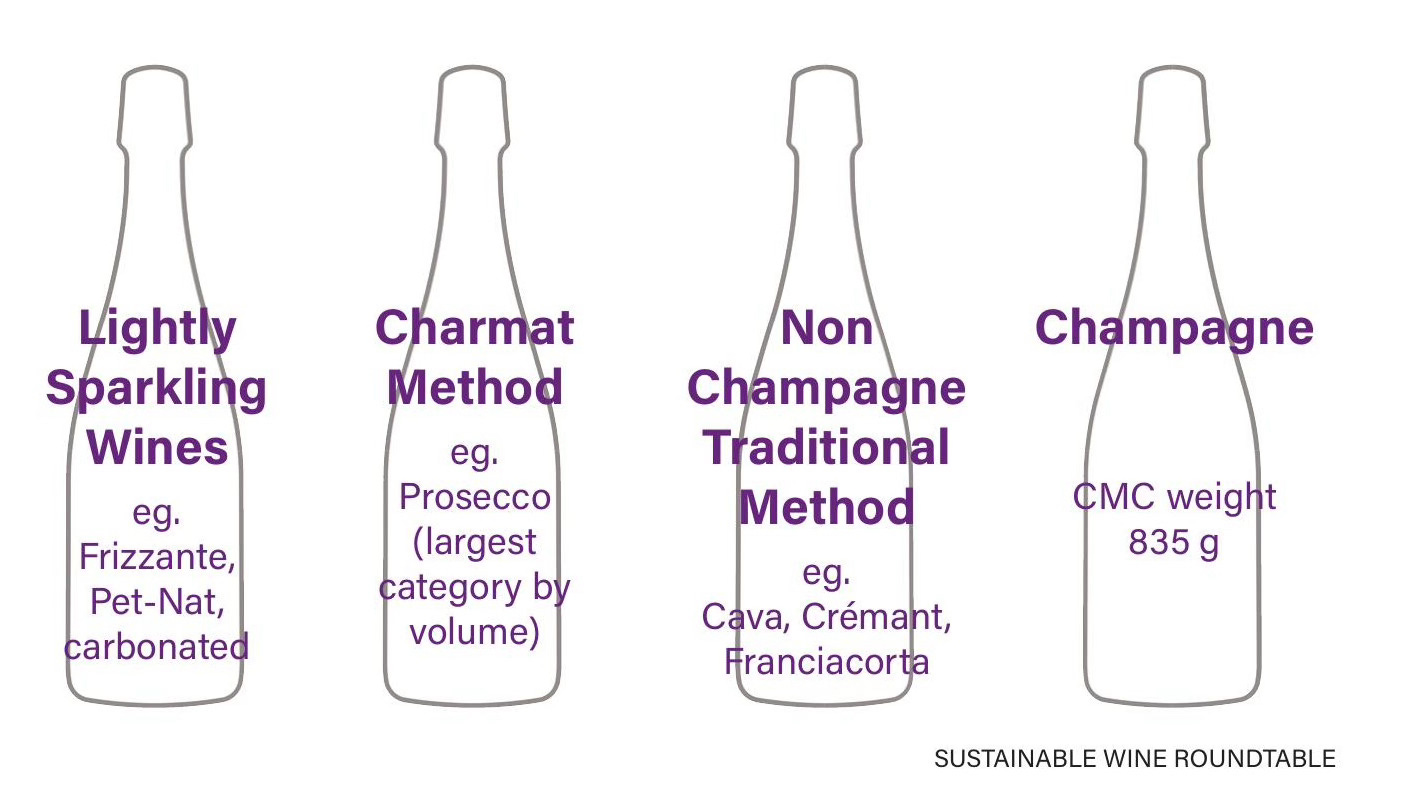
One of the key challenges in reducing the weight of sparkling wine bottles lies in their higher pressure requirements compared to still wines. Sparkling wines must withstand greater internal pressure, making them heavier and more environmentally impactful. To address this, the Roundtable has categorized the guidelines into four types based on pressure levels: lightly sparkling wines, tank-fermented wines, traditional method wines like Champagne, and other traditional method sparkling wines. For example, the Comité Interprofessionnel du Vin de Champagne (CIVC) has already reduced the standard bottle weight from 900g to 835g, and major suppliers such as Saverglass, Verallia, O-I, and Ardagh now offer 835g models.
Portugal recently unveiled a record-light 260g wine bottle, developed by a consortium called Embalagem do Futuro in collaboration with Santos Barosa and LiDA. This 750ml bottle is made from 80% recycled glass and will be showcased at Expo 2025 in Osaka, Japan. Meanwhile, glass packaging company Verallia introduced the Vista bottle, made entirely from post-consumer recycled (PCR) glass, which uses 40% less energy during production than virgin glass.
Innovations in Sustainable Packaging
In addition to advancements in glass, the beverage industry continues to explore alternative sustainable packaging solutions. A boxed wine bar called The Vertical Wine Collective has opened outside Seattle, focusing on eco-friendly packaging formats. In Scotland, a new initiative called MycoPack aims to use mycelium—fungal root structures—and whisky production by-products to create durable, lightweight, and compostable packaging. This project is part of a £300k net zero research program led by Arbikie Distillery and Edinburgh Napier University.
Other innovations include Encore Glass’s Featherweight Collection, which features bottles weighing 408g or 440g. In the food sector, KIND Snacks is testing a curbside recyclable paper wrapper for its nutrition bars, available exclusively at select Whole Foods Market stores.
Challenges in Global Plastic Pollution Talks
Despite progress in sustainable packaging, global efforts to reduce plastic pollution faced setbacks as UN treaty talks ended without an agreement. The High Ambition Coalition, including the European Union, Britain, and Canada, advocated for language addressing plastic production reduction and the phase-out of toxic chemicals. However, the Like-Minded Group, consisting mostly of oil-producing nations like Saudi Arabia, Russia, and Iran, pushed for a narrower treaty scope.
Sustainability in Other Industries
Beyond wine and plastics, sustainability initiatives are gaining traction in agriculture and fashion. In Mississippi, researchers found that adding biochar to soil improves cotton growth and reduces nitrogen runoff by up to 87%. Biochar, made from sugarcane bagasse, enhances soil health and environmental sustainability.
In Oregon, a study by Oregon State University revealed that wine grape growers in Southern Oregon could cut water usage by nearly half. The AgriMet network, widely used by growers, overestimated irrigation needs, leading to unnecessary water consumption. By optimizing irrigation practices, growers can significantly reduce their water footprint.
Meanwhile, a study on t-shirts showed that affordable clothing often outperforms high-end options in durability, suggesting that cost-effective garments can help reduce waste and emissions. Researchers from the University of Leeds evaluated 47 t-shirts, finding that synthetic fibers like polyester and elastane contribute to longer-lasting products.
These developments highlight the growing emphasis on sustainability across industries, from wine and fashion to agriculture and packaging. As innovation continues, the path toward a more circular and environmentally responsible economy becomes clearer.

Post a Comment for "SWR Advances on Sparkling Bottle Weight Agreement, Releases 2nd Standards Benchmarking Round"
Post a Comment