Sweltering Outdoor Work in Southern Europe's Tourist Hotspots Becomes Unbearable
The Impact of Extreme Heat on Workers in Southern Europe
As southern Europe experiences record-breaking temperatures, the effects of extreme heat are becoming increasingly severe. While air conditioning provides relief for those indoors, outdoor workers face grueling conditions that can be dangerous and even life-threatening. In cities like Barcelona, street cleaners and other laborers are bearing the brunt of these rising temperatures.
A Tragic Death Sparks Protests
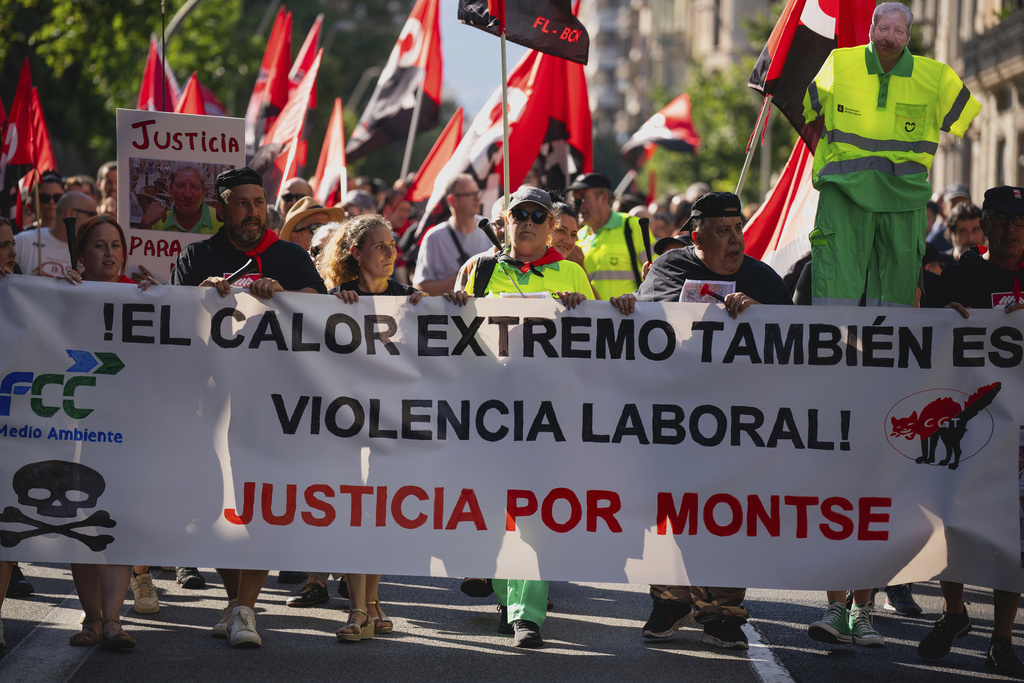
Last month, a street sweeper in Barcelona died during a heat wave, prompting outrage among workers and their families. According to a labor union, 12 other city cleaners have suffered heatstroke since then. This incident has led to protests, with hundreds of street cleaners and concerned citizens marching through downtown Barcelona to demand better protections for workers.
Montse Aguilar, a 51-year-old street cleaner, was one of the victims. Her death sparked a demonstration where fellow worker Antonia Rodríguez described the summer heat as "unbearable." With 23 years of experience, she noted that each year the heat becomes worse. "Something has to be done," she said.
Rising Deaths and Health Concerns
Extreme heat has already caused over 1,000 excess deaths in Spain during June and July, according to the Carlos III Health Institute. Diana Gómez, who leads the institute’s daily mortality observatory, emphasized that climate change is a major factor in the increasing frequency of heat waves. She stated that these events are having a significant impact on the population.
In response to the growing concerns, Barcelona’s City Hall introduced new rules for the companies responsible for cleaning its streets. These include providing breathable uniforms, hats, and sun cream. When temperatures reach 34°C (93°F), workers must take hourly water breaks and have access to shaded areas. Cleaning work will be suspended when temperatures hit 40°C (104°F).
However, protesters argue that these measures have not been implemented effectively. They claim that workers are being punished for taking necessary breaks or slowing down due to the heat. Additionally, they reported that workers are required to purchase their own water.
Efforts in Greece and Beyond
In Greece, regulations for outdoor labor such as construction and food delivery include mandatory breaks and advice for employers to adjust shifts to avoid the midday sun. Although heat-safety inspections are required during hotter months, the country's largest labor union, GSEE, is advocating for year-round monitoring.
European labor unions and the International Labor Organization (ILO) are also calling for a more coordinated international approach to address the impact of rising temperatures on workers. The ILO highlighted that heat stress is an "invisible killer" and urged countries to enhance worker protections. It pointed out that Europe and Central Asia have seen the most significant increase in heat exposure for workers this century.
Adjusting to the Heat: A Greek Cook’s Perspective
In Athens, grill cook Thomas Siamandas works in the intense heat of the Bairaktaris Restaurant. Despite being out of direct sunlight, he still faces challenging conditions. On July 16, the temperature reached 38°C (100.4°F), making it difficult to endure while working near the souvlaki burners.
Siamandas relies on air-conditioned rooms and always keeps water nearby. He uses a fan to stay cool and emphasizes the importance of taking breaks before the heat becomes overwhelming. "You have to find a way to adjust to the conditions," he said, noting that he has worked at the restaurant for eight years.
Challenges in Rome
In Rome, tour guide Massimo De Filippis spends long hours under the scorching sun explaining the history of ancient Rome to tourists. He admits that the heat is extremely challenging, especially between noon and 3:30 p.m. when the Roman Forum is particularly oppressive.
De Filippis often leads groups to a fountain where they can rinse their faces and fill their bottles. Francesca Duimich, who represents 300 Roman tour guides, explained that the Forum is essentially a "pit" with no shade or wind. She noted that many tourists become dehydrated and pass out during the hottest parts of the day.
This year, guides have raised concerns about the heat, leading Federagit to request that the Colosseum Archaeological Park open an hour earlier. So far, the request has not been granted, but the park’s press office mentioned that they are working on moving the opening time up by 30 minutes and scheduling visits after sunset.

Post a Comment for "Sweltering Outdoor Work in Southern Europe's Tourist Hotspots Becomes Unbearable"
Post a Comment