Supreme Court Permits Trump to Remove Three Democratic CPSC Members
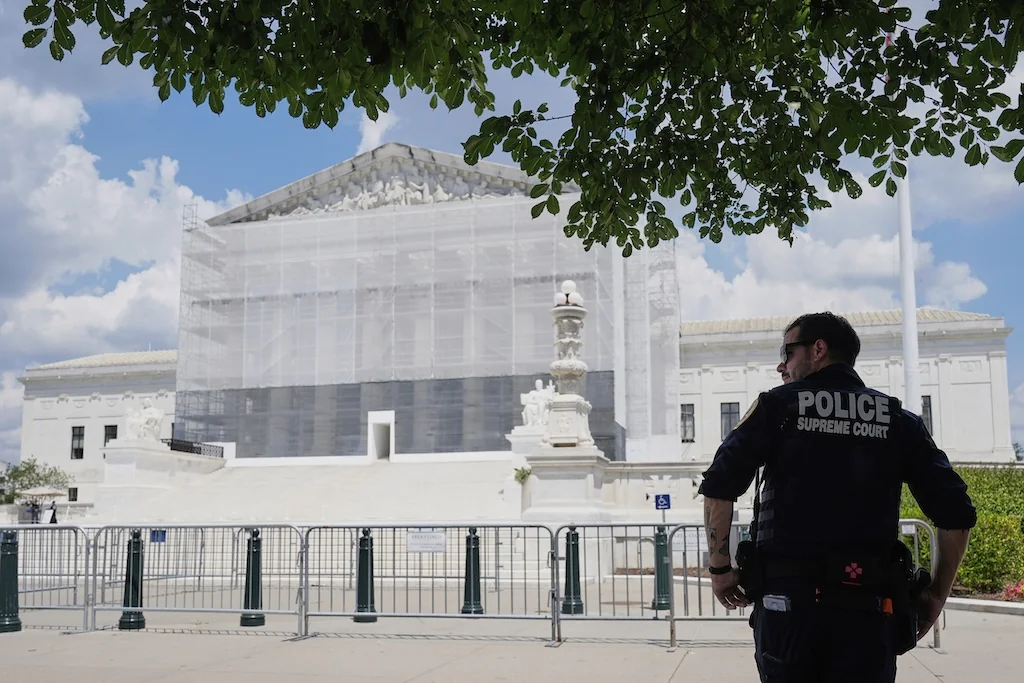
Supreme Court Allows Trump Administration to Fire Democratic-Appointed Members of Consumer Product Safety Commission
The U.S. Supreme Court recently allowed the Trump administration to proceed with the removal of three Democratic-appointed members of the Consumer Product Safety Commission (CPSC). This decision comes as litigation continues in lower courts, following a similar ruling from the high court earlier this year that permitted the firing of two other independent agency heads under the Trump administration.
The latest order, issued by a 6-3 majority, stayed a lower court's decision that declared the terminations of Mary Boyle, Alexander Hoehn-Saric, and Richard Trumka Jr. unlawful and ordered their reinstatement. The majority opinion emphasized that while the order does not resolve the case on its merits, it provides guidance for lower courts to consider when handling similar cases. It referenced the court’s previous decision in Trump v. Wilcox, which allowed the removal of two Democratic-appointed members from the National Labor Relations Board (NLRB) and the Merit Systems Protection Board (MSPB).
The ruling stated that the CPSC, like the NLRB, exercises executive power in a manner that justifies the temporary removal of its members during ongoing legal challenges. "The same is true on the facts presented here," the majority wrote, noting that the case does not differ significantly from Wilcox in any relevant aspect.
Justice Kavanaugh’s Concurrence Highlights Concerns About Legal Uncertainty
Justice Brett Kavanaugh filed a separate concurrence, agreeing with the majority but expressing concerns about the potential for confusion in lower courts. He argued that the Supreme Court should have taken the case before it reached a final judgment in lower courts, especially given the possibility of overturning or narrowing existing precedent.
Kavanaugh emphasized that when the Supreme Court is faced with an emergency application involving the potential reversal of a precedent, it may be more prudent to grant both a stay and certiorari before judgment. "In those unusual circumstances, if we grant a stay but do not also grant certiorari before judgment, we may leave the lower courts and affected parties with extended uncertainty and confusion about the status of the precedent in question," he wrote.
He further argued that delaying a definitive resolution could lead to unnecessary legal uncertainty for agencies and their operations. "The downsides of delay in definitively resolving the status of the precedent sometimes tend to outweigh the benefits of further lower-court consideration," Kavanaugh said.
Solicitor General Supports the Stay and Calls for Further Review
Solicitor General D. John Sauer, who filed the petition for the stay, echoed these concerns. In his application to the Supreme Court, he warned that until the high court issues a final decision, agencies such as the CPSC would operate under a cloud of uncertainty, risking legal challenges to any actions they take.
Since the petition was filed, two lower federal courts have ruled that the Trump administration must restore different fired Democratic-appointed officials from independent agencies. This growing number of lawsuits suggests that the issue of firing independent agency heads is likely to reach the Supreme Court for a full review in the coming months.
Dissent from Justices Kagan, Sotomayor, and Jackson
Justice Elena Kagan, joined by Justices Sonia Sotomayor and Ketanji Brown Jackson, dissented from the majority’s decision. She argued that the majority had effectively rescinded the CPSC’s status as an independent agency and undermined Congress’s design of a bipartisan and independent structure for such agencies.
Kagan criticized the majority for acting quickly on the emergency docket without sufficient time, briefing, or argument. "By means of such actions, this Court may facilitate the permanent transfer of authority, piece by piece by piece, from one branch of Government to another," she wrote.
She also took aim at the court’s earlier decision to allow the Trump administration to proceed with mass layoffs at the Department of Education. "The majority has acted on the emergency docket—with 'little time, scant briefing, and no argument'—to override Congress’s decisions about how to structure administrative agencies so that they can perform their prescribed duties," Kagan wrote.
"Respectfully, I dissent," she concluded.

Post a Comment for "Supreme Court Permits Trump to Remove Three Democratic CPSC Members"
Post a Comment