Su-57 vs. F-14: Top Gun Dogfight Showdown
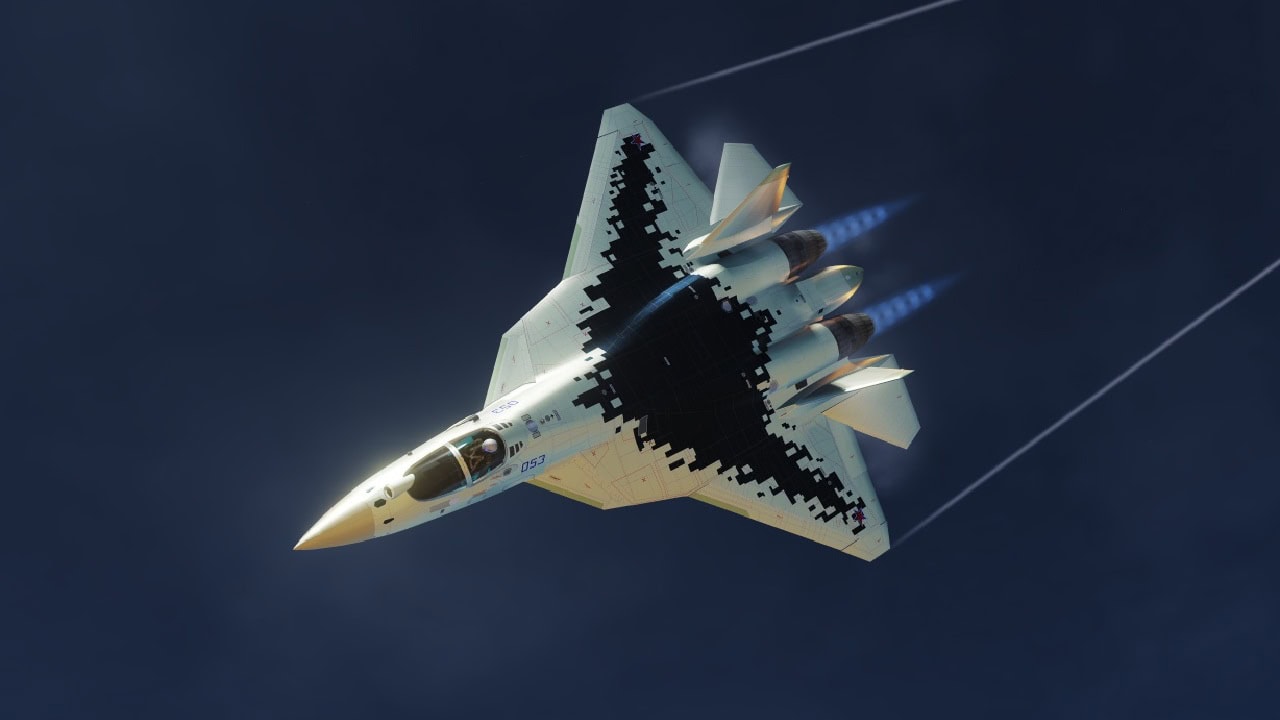
The Hypothetical Showdown: F-14 Tomcat vs. Su-57 Felon
The 2022 film Top Gun: Maverick featured a dramatic and cinematic battle that pitted the iconic Grumman F-14 Tomcat against the Russian Sukhoi Su-57 "Felon." While the movie's outcome was clearly in favor of the Tomcat, the real-world scenario would likely play out differently. This hypothetical matchup between two vastly different generations of fighter jets offers an interesting look at the evolution of aerial combat technology.
Key Advantages of the Su-57 Felon
One of the most significant advantages the Su-57 holds over the F-14 is its true stealth capability. Unlike the F-14, which was designed as a fourth-generation fighter without stealth features, the Su-57 is a fifth-generation aircraft with advanced radar-absorbing materials and a reduced radar cross-section (RCS). This makes it much harder for enemy radar systems to detect, allowing the Su-57 to engage targets from beyond visual range (BVR) before the opponent even knows it's there.
Additionally, the Su-57 has a more modern design, with manufacturing beginning in 2019. This means it is less prone to wear and tear and has access to newer spare parts compared to the F-14, which was last produced in 1992. The few operational F-14s remaining are even older, having been acquired during the 1970s when Iran was still a U.S. ally.
The Su-57 also boasts superior performance in terms of range and altitude. It can fly up to 670 nautical miles and reach a service ceiling of 66,000 feet, while the F-14 has a shorter range of 503 nautical miles and a maximum altitude of 53,000 feet. These capabilities give the Su-57 a tactical edge in long-range engagements.
Advantages of the F-14 Tomcat
Despite its age, the F-14 Tomcat still has some notable strengths. Its top speed of Mach 2.34 surpasses the Su-57’s maximum speed of Mach 2.0, giving it an advantage in high-speed maneuvers. This speed was famously highlighted in the original Top Gun film with the line, “I feel the need for speed.”
The F-14 also has a strong combat record, with a reported 135-to-4 aerial kill ratio. However, this record dates back to the 1991 Persian Gulf War, meaning the Tomcat has not been tested in modern combat scenarios. In contrast, the Su-57 has seen limited action in air-to-ground missions, though it has yet to face advanced Western fighters like the F-16 or MiG-29 in direct combat.
Who Would Win in a Real-World Scenario?
Considering the technological gap between the two aircraft, the Su-57 would likely have a decisive advantage in a one-on-one engagement. Its stealth capabilities, BVR engagement potential, and modern design make it far more suited to contemporary aerial warfare. Unless the F-14 pilot managed to get extremely lucky—such as catching the Su-57 off guard or using clever tactics—the outcome would almost certainly favor the Russian jet.
Conclusion
While the F-14 Tomcat remains a symbol of American aviation history and nostalgia, the Su-57 represents the future of fighter jet technology. In a real-world confrontation, the Su-57’s advanced capabilities would make it a formidable opponent. The outcome of such a battle would depend on various factors, including pilot skill, tactics, and environmental conditions, but the technological edge of the Su-57 would make it the likely winner.

Post a Comment for "Su-57 vs. F-14: Top Gun Dogfight Showdown"
Post a Comment