Studying Mars Could Reveal Earth's Atmospheric Secrets
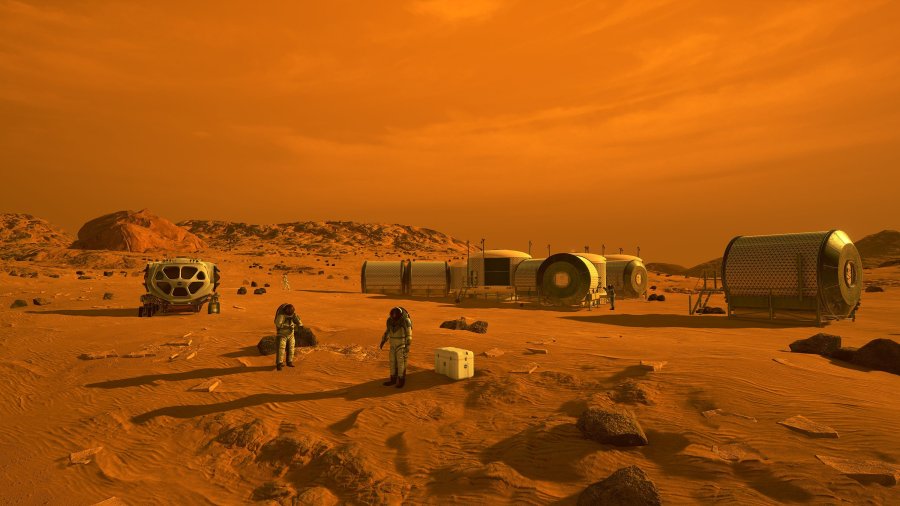
Understanding Weather on Other Planets
From monstrous tsunamis to building-shattering earthquakes to flood-inducing downpours, nature has always been a powerful force. In recent years, Earth has experienced an increasing number of extreme weather events, leading many to wonder if we should look beyond our planet for potential solutions or even escape routes.
Experts in planetary science have explored this idea, offering insights into the weather patterns of other planets and what they might tell us about our own. One such expert is Dave Brain, a Planetary Scientist and Professor of Astrophysical and Planetary Science at the University of Colorado at Boulder. He also works at the Laboratory for Atmospheric and Space Physics (LASP) and has been involved in several NASA missions, including the Mars Atmosphere and Volatile EvolutioN (MAVEN) mission.
The Existence of Weather Beyond Earth
The question of whether weather exists on other planets is a compelling one. The answer is yes, but it varies dramatically from planet to planet. For example, Venus has a thick atmosphere composed mainly of carbon dioxide, with clouds made of sulfuric acid. Its surface temperature averages around 847 degrees Fahrenheit, making it one of the hottest planets in the solar system.
Jupiter, on the other hand, is home to the Great Red Spot, a massive storm that has been raging for centuries. This storm is so large that it could easily fit 1.3 Earths within its boundaries. Uranus, with its unique 98-degree tilt, experiences seasons that last 21 Earth years each, creating a completely different kind of weather cycle compared to what we experience on Earth.
Weather in Popular Culture and Real Science
The 2015 movie "The Martian" brought attention to the weather conditions on Mars, depicting a dust storm that forces astronauts to abandon their mission. While the film was praised for its engaging storyline and scientific elements, it also took some creative liberties. According to Dave Brain, the catastrophic storm that kicks off the movie is highly unlikely based on real-world science.
Mars has a cold, desert-like climate with a thin atmosphere that leads to extreme temperature fluctuations. Daytime temperatures can reach up to 68 degrees Fahrenheit, while nighttime temperatures can drop as low as -243 degrees Fahrenheit. Dust storms are common and can reach speeds of 60-70 miles per hour, but they are not as destructive as portrayed in the film.
The Search for Life on Mars
One of the most critical factors for life on other planets is the presence of liquid water. Evidence suggests that Mars once had flowing water, as seen in dry riverbeds. However, the planet's current environment is vastly different from what it was billions of years ago.
When the solar system formed 4 billion years ago, Mars had a magnetic field similar to Earth’s, generated by a molten metal core. However, due to its smaller size, Mars cooled more quickly, causing its magnetic field to disappear. Without this protection, the Martian atmosphere was exposed to solar winds, which gradually stripped it away, leaving it much thinner than Earth's today.
Without a thick atmosphere to retain heat or shield water, Mars' surface became dry, and its potential for sustaining life diminished. Despite this, scientists and science fiction enthusiasts continue to explore ideas for terraforming Mars or establishing colonies there. Could we warm the planet, thicken its atmosphere, or bring back water? While these concepts are intriguing, the science behind them is still in its early stages.
Lessons from Mars
Although Mars may not be our best option for colonization anytime soon, studying it offers valuable insights. In some ways, we know more about the atmosphere of Mars than we do about Earth’s. By understanding how atmospheres evolve, we can gain a better understanding of Earth’s past, present, and future.
As research continues, the study of other planets remains a crucial part of our quest to understand the universe and our place within it. Whether it's exploring the weather of distant worlds or searching for signs of life, the journey is just beginning.

Post a Comment for "Studying Mars Could Reveal Earth's Atmospheric Secrets"
Post a Comment