"State Change" and "Preludes": A Dance of Adaptation and Allusion
The Evolution of Electronic Music and Its Modern Expressions
In the early days of electronic music, composers and listeners believed that this new genre would be self-contained, separate from traditional instrumental and vocal music. The primary setting for performances was a studio rather than a concert hall, and composition involved creating or collecting sounds to form aural collages, rather than notating abstract ideas for others to interpret at a later time.
This perspective seems almost quaint today. While pure electronic music still exists, the current momentum in the genre comes from live performances that blend acoustic instruments or voices with electronic sound. New recordings by composers like Molly Joyce and Teddy Abrams highlight how these hybrids offer an expansive range of expression.
Molly Joyce’s “State Change”: A Personal Journey Through Sound
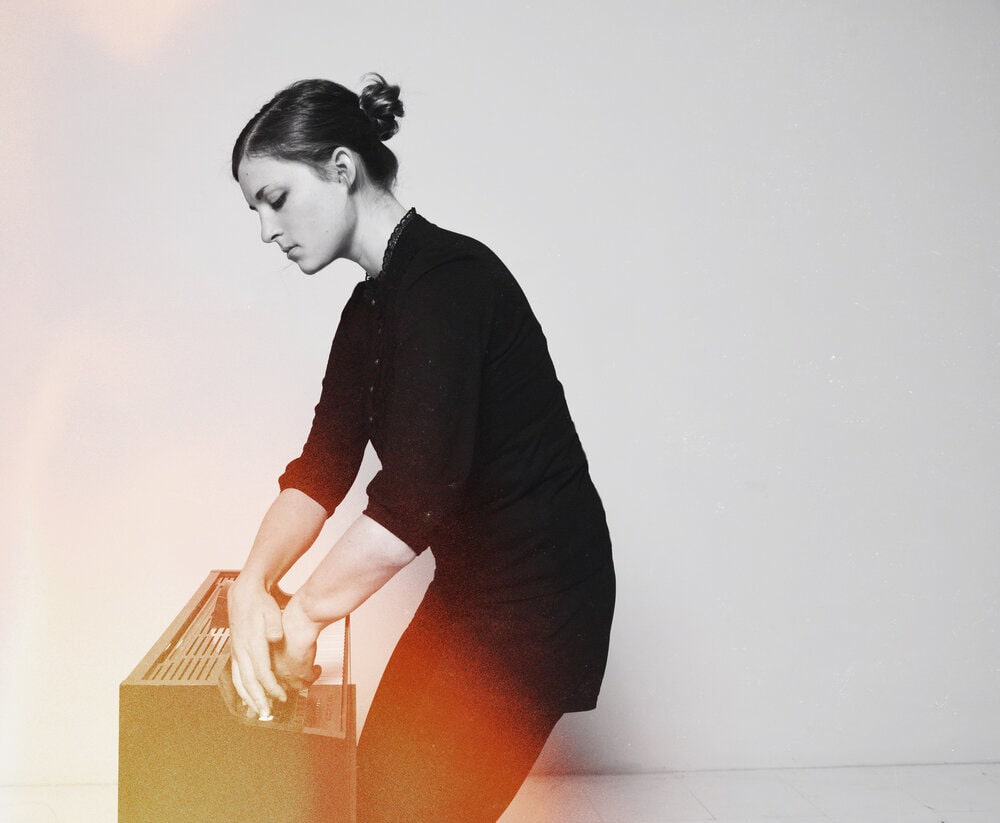
Molly Joyce’s album “State Change” (Better Company) is a deeply personal work that explores her experiences following a car accident in 1999, which nearly cost her her left hand. She uses what she calls “adaptive technology,” such as MUGIC, a device created by violinist Mari Kimura, to control sound-producing software through physical gestures. This technology helps her navigate her disabilities and create a powerful musical narrative.
“State Change” is structured as a song cycle with seven movements, each titled with dates related to the accident and subsequent surgeries. The texts incorporate fragments from surgical reports and her memories of the crash. Despite the clinical nature of the subject matter, the work presents serene, ethereal meditations that evoke out-of-body experiences during medical procedures.
Joyce's vocal lines often resemble plainchant or children's songs, but she also demonstrates a nuanced understanding of expressive intensity, sometimes transforming phrases into melismatic figures. Her accompaniments contrast with the dreamlike vocal writing, adding a sense of tension and drama. The unpredictable nature of the technology used in the piece creates a dynamic interplay between post-Minimalist chordal repetition and sounds reminiscent of medical equipment, making the work both effective and emotionally resonant.
Teddy Abrams’ “Preludes”: A Diverse Collection of Piano Miniatures
Teddy Abrams, known for his work as a conductor, pianist, and clarinetist, has released a new album titled “Preludes” (New Amsterdam). This collection of solo piano miniatures includes references to past eras, pop, and jazz elements. For example, “Spake Schumann” echoes Schumann’s “Carnaval,” while “Nearby Parallel Universes” channels Chopin. The opening piece, “Microcosm,” and “Echo Charlie Hotel Oscar” draw on Debussy’s harmonic language, and the closing “Macrocosm” bears a resemblance to Bach’s Prelude in C from “The Well-Tempered Clavier.”
Abrams designed these pieces to be accessible to talented amateurs, drawing inspiration from Bartók’s “Mikrokosmos” and Bach’s “Inventions.” However, the complexity of the works makes them challenging for amateur performers. Abrams recorded the pieces at Flora Recording and Playback in Portland, Oregon, using a variety of pianos, including an opulent 9-foot Steinway, an electric piano, and one with tacks affixed to its felt hammers to produce a harpsichord-like sound.
Collaboration with composer Gabriel Kahane and producer Casey Foubert brought additional layers of electronic processing and studio techniques to the recordings. These enhancements transform the pieces into magical sonic experiences. For instance, “Tact” features a sparkling perpetual-motion style reminiscent of neo-Baroque compositions, while “The Scream” reimagines the original piano piece as the churning of an old washing machine, with only subtle traces of piano present.
Despite the innovative use of the recording studio, Abrams should consider releasing the unadorned piano performances to fully realize the potential of these works as a modern equivalent to Bartók’s “Mikrokosmos.”

Post a Comment for ""State Change" and "Preludes": A Dance of Adaptation and Allusion"
Post a Comment