Starmer's Four Demands on Israel: Why They'll Go Unmet
Sir Keir Starmer's Ultimatum to Israel
Sir Keir Starmer, the Prime Minister of the United Kingdom, has made a bold statement that Britain will recognize Palestine in September unless Israel achieves peace in Gaza. This declaration came after an emergency Cabinet meeting and a prior meeting with former U.S. President Donald Trump. In a national address, Starmer emphasized that recognizing a Palestinian state is a critical step toward a two-state solution, especially at a time when this vision is under threat.
He outlined several conditions that the Israeli government must meet to avoid Britain's recognition of Palestine. These include:
- Agreeing to a ceasefire with Hamas in Gaza
- Allowing the UN to restart the supply of humanitarian aid
- Ensuring no annexations occur in the West Bank
- Committing to a long-term sustainable peace based on the two-state solution
Starmer also addressed Hamas directly, stating that Britain’s demands remain unchanged and unequivocal. He called for the immediate release of all hostages, the signing of a ceasefire, and the disarmament of Hamas, ensuring they do not play a role in the governance of Gaza.
The Four Demands on Israel
1. Agree to a Ceasefire
Britain is urging Israel to reach a ceasefire with Hamas in Gaza. This demand aligns with ongoing efforts by the U.S., Egypt, and Qatar to mediate an agreement. Starmer emphasized that the ceasefire must be sustainable and lead to a broader peace plan developed with international partners. However, recent negotiations have stalled, with Israel recalling its delegation from Doha, ending the longest round of talks since the war began in October 2023.
2. Allow the UN to Restart Aid Supply
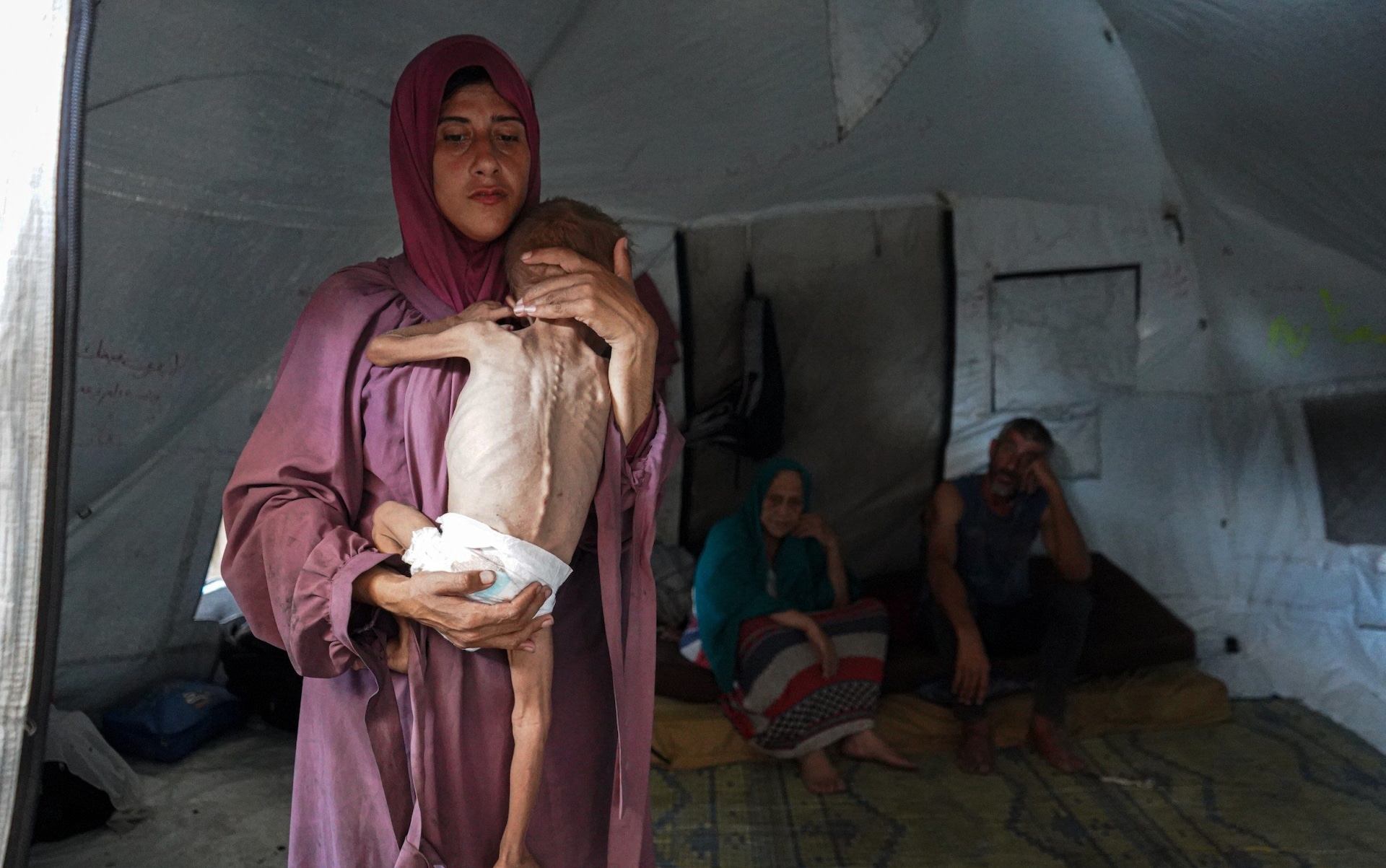
The Prime Minister insists that Israel must allow the UN to resume the supply of humanitarian aid into Gaza. This comes amid warnings of starvation, with the International Food Policy Research Institute (IPC) alerting that the worst-case scenario of famine is unfolding in the region. Despite some progress, such as the opening of humanitarian corridors, the amount of aid entering Gaza remains far below what is needed.
3. No Annexations in the West Bank
As part of the broader peace process, Starmer has called on Israel to make clear that there will be no annexations of Palestinian land in the occupied West Bank. This territory is central to the aspirations of the Palestinian people for a state that would include Gaza and have East Jerusalem as its capital. While Israel has suspended annexation plans under a 2020 deal, far-right ministers in Netanyahu’s coalition continue to advocate for expansion, which Palestinians argue undermines the two-state solution.
4. Long-Term Sustainable Peace
Beyond a temporary ceasefire, Britain demands a long-term plan for peace that paves the way for negotiations on a two-state solution. Starmer highlighted that the idea of a two-state solution is becoming increasingly distant. He reiterated that statehood is the inalienable right of the Palestinian people. David Lammy, the Foreign Secretary, echoed these sentiments, emphasizing that the two-state solution is the best vision for resolving the decades-long conflict between Palestinians and Israelis.
Challenges Ahead
Despite these demands, significant obstacles remain. Jewish settlements in the occupied West Bank, unresolved issues regarding borders, the status of Palestinian refugees, and the future of Jerusalem continue to impede the implementation of the two-state solution. As the situation in Gaza deteriorates, the pressure on Israel to meet these conditions grows, with Britain poised to become the second G7 country and member of the UN Security Council to recognize Palestine if its demands are not met.

Post a Comment for "Starmer's Four Demands on Israel: Why They'll Go Unmet"
Post a Comment