Starmer Aligns With France on Palestinian Statehood Recognition
Britain's Bold Move Toward Palestinian Statehood
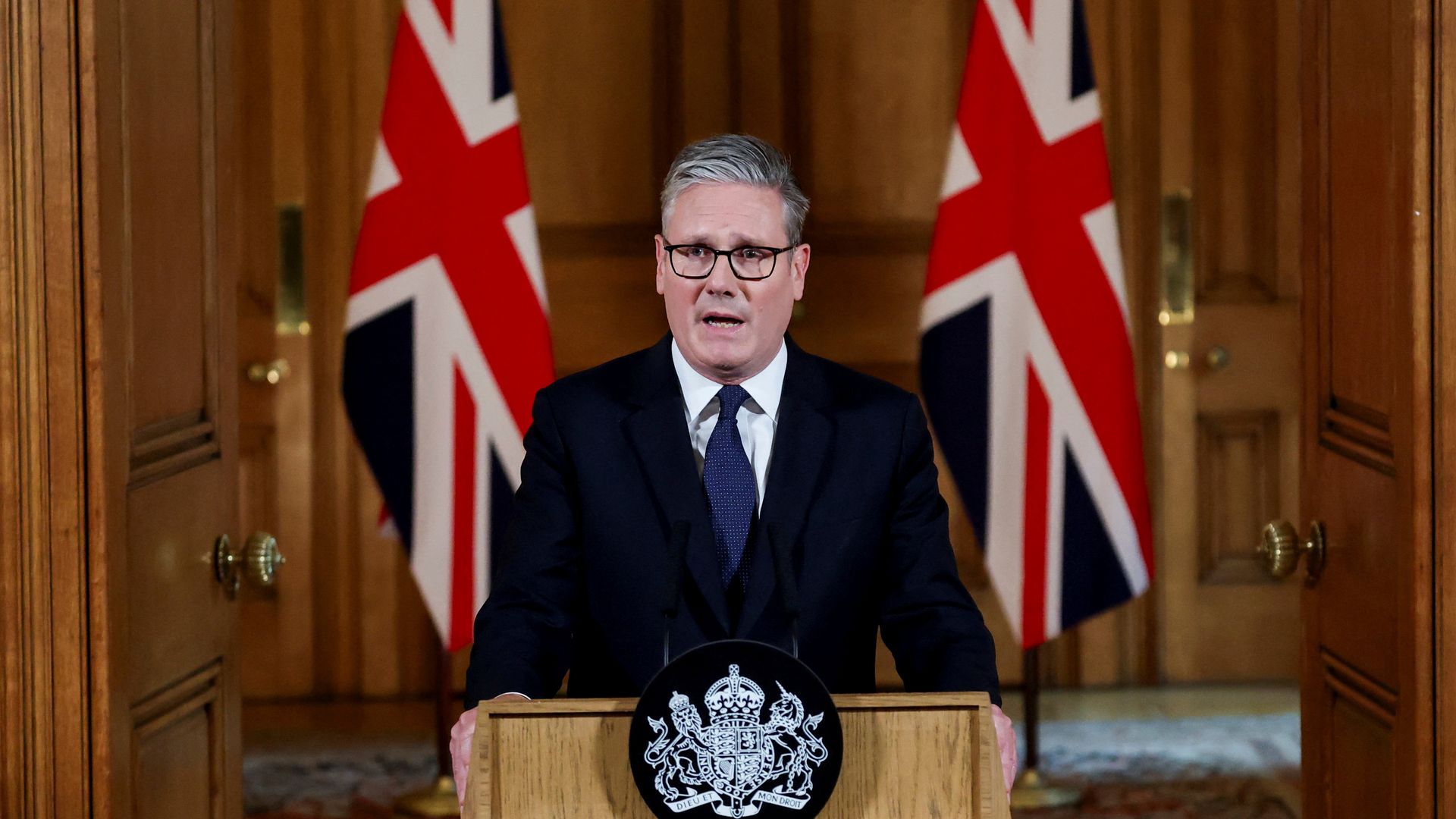
In a significant shift in international relations, the United Kingdom has announced its intention to recognize Palestine as a sovereign state in September. This decision comes if Israel does not agree to a lasting ceasefire, as stated by U.K. Prime Minister Keir Starmer on Tuesday, July 29. This move would make the UK the second major Western power to acknowledge the existence of a Palestinian state, following a similar declaration from French President Emmanuel Macron on Thursday, July 24.
A Commitment to Peace and Justice
Starmer's announcement was made during an emergency meeting of his Cabinet, focusing on the escalating humanitarian crisis in Gaza. The statement reaffirmed the belief that statehood is an inalienable right for the Palestinian people. In a message posted on X earlier that day, Starmer emphasized, "We are clear that statehood is the inalienable right of the Palestinian people. A ceasefire will put us on a path to the recognition of a Palestinian state and a two-state solution which guarantees peace and security for Palestinians and Israelis."
During the Cabinet meeting, Starmer reiterated his stance, stating that the UK government will formally recognize a Palestinian state at the upcoming United Nations General Assembly in September. This action will be taken unless the Israeli government takes concrete steps to end the situation in Gaza, reaches a ceasefire, ensures no annexation in the West Bank, and commits to a long-term peace process leading to a two-state solution.
International Reactions and Criticisms
The announcement drew mixed reactions from the international community. Speaking to reporters after Starmer’s statement, former U.S. President Donald Trump expressed neutrality, saying, “I'm not going to take a position. I don't mind him taking a position. I'm looking for getting people fed right now.”
Macron’s similar pledge on July 24 sparked immediate criticism from Israeli Prime Minister Benjamin Netanyahu, who argued that it rewarded terrorism and threatened Israel's security. U.S. Secretary of State Marco Rubio also criticized the decision, calling it "reckless" and harmful to peace efforts.
Shifting Tides in U.S. Public Opinion
Support for Israel's military actions in Gaza is showing signs of waning in the United States. On Monday, July 28, Trump broke with his Israeli counterpart by acknowledging the widespread starvation in Gaza, a claim that the Netanyahu administration had previously denied. Additionally, Rep. Marjorie Taylor Greene became the first GOP House member to label Israel's actions in Gaza as "genocide."
Public sentiment is also shifting. According to a Gallup poll released on Tuesday, support for Israeli military action in Gaza has dropped by 10 percentage points to 32% since last September, marking a new low. Disapproval of Israel's actions now stands at 60%. The poll, conducted between July 7 and July 21, highlights a growing public concern over the ongoing conflict.
Historical Context of Two-State Negotiations
Efforts to achieve a "two-state solution" have faced numerous challenges throughout history. In 2000, President Bill Clinton convened peace talks between Israel and Palestinian leaders. Clinton, a close ally of former Israeli Prime Minister Yitzhak Rabin, led these negotiations as his second term ended. However, the talks failed due to the Palestinian leader Yasser Arafat's reluctance to accept the proposed terms.
This history underscores the complexity of achieving a lasting peace in the region. As global leaders continue to grapple with the realities of the conflict, the recent decisions by the UK and France signal a potential shift in the international approach to resolving the long-standing dispute.

Post a Comment for "Starmer Aligns With France on Palestinian Statehood Recognition"
Post a Comment