Speaker Johnson Opposes Midcycle Redistricting When Dems Lead
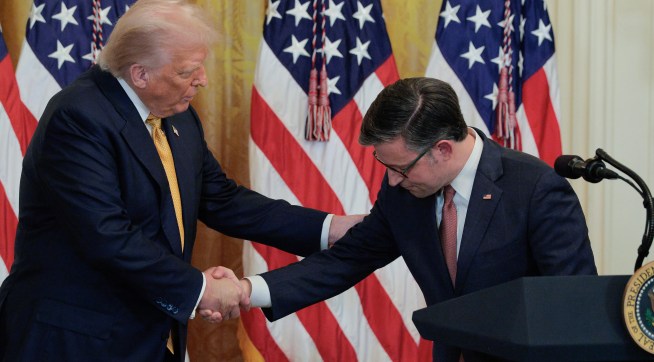
House Speaker Mike Johnson and the Redistricting Controversy
House Speaker Mike Johnson (R-LA) has maintained a cautious stance regarding the Trump administration's push for mid-decade redistricting in Texas. This effort aims to help Republicans potentially gain five new U.S. House seats in the 2026 midterms. Despite the pressure, Johnson has not publicly opposed the administration, instead emphasizing that redistricting decisions should be left to individual states.
Several vulnerable blue state Republicans within the GOP conference, such as Reps. Mike Lawler (R-NY), Andy Harris (R-MD), and Doug LaMalfa (R-CA), have voiced concerns about the power grab. However, Johnson has refrained from taking a public position beyond stating that redistricting is a matter for the states. According to reports, senior House Republicans have advised members to keep their criticisms private rather than express them publicly.
The House GOP leadership has been careful not to challenge the White House on this issue, avoiding any bills that might contradict Trump’s efforts. Despite internal pressures from some GOP members, Johnson and his team have remained aligned with the administration’s goals.
The Role of Redistricting in the 2026 Midterms
Republicans within the House are aware that Trump has been focused on maintaining his party's majority in the upcoming midterms. Many in deep-red districts support the effort to give Republicans an advantage. However, Johnson recently issued a statement on X (formerly Twitter) opposing gerrymandering—specifically when Democrats engage in it.
In his statement, Johnson criticized Democrats for playing politics with redistricting and emphasized that Republicans following state and federal laws should not be lectured by those who have abused the system. He also mentioned the need to fight against what he described as California Democrats' "illegal power grab."
California Governor Gavin Newsom and other Democratic officials are exploring ways to counteract Republican gerrymandering by redrawing maps to offset the impact of changes in Texas. States like California and New York have independent redistricting commissions to prevent partisan gerrymandering, unlike Texas, which allows more flexibility for partisan map drawing.
The Freedom Caucus and Pocket Rescissions
Freedom Caucus Chair Andy Harris (R-MD) has advocated for the White House to submit a pocket rescissions request before the end of the current fiscal year. This approach involves a loophole that allows the administration to declare congressionally approved funding rescinded if a rescissions package is sent to Congress near the fiscal year's end. Critics argue that this practice is illegal, as confirmed by the Government Accountability Office (GAO).
Despite this, Harris continues to push for such measures, even suggesting that he would support a flat-funded continuing resolution with earmarks in exchange for backing rescission packages. However, not all Republicans agree with this strategy, as several Senate appropriators have expressed opposition to further rescission efforts.
Impact of Rescissions on Disaster Warning Systems
The recent rescissions package, largely supported by congressional Republicans, has already begun affecting access to disaster warning systems. Public radio and TV stations are struggling to maintain essential services, including emergency alerts.
In Alaska, funding for public broadcasting has dried up, impacting rural communities and tribal villages. Similarly, PBS outlets in Northern California and Oklahoma face shutdowns due to lack of resources. Station managers warn that these cuts will have lasting consequences for their communities.
The Corporation for Public Broadcasting, which distributes federal funds to public media, announced plans to shut down operations by January 2026, further highlighting the challenges facing public broadcasting.
Other Notable Developments
Other significant stories include RFK Jr.'s proposal to overhaul the U.S. Vaccine Court and ongoing investigations into potential misconduct by certain Republicans. Additionally, there are growing concerns about the Trump administration's efforts to take control of federal data.
These developments underscore the complex political landscape as the 2026 midterms approach, with various issues shaping the national conversation.

Post a Comment for "Speaker Johnson Opposes Midcycle Redistricting When Dems Lead"
Post a Comment