Space Force Unveils Satellite for Next-Gen GPS Innovation
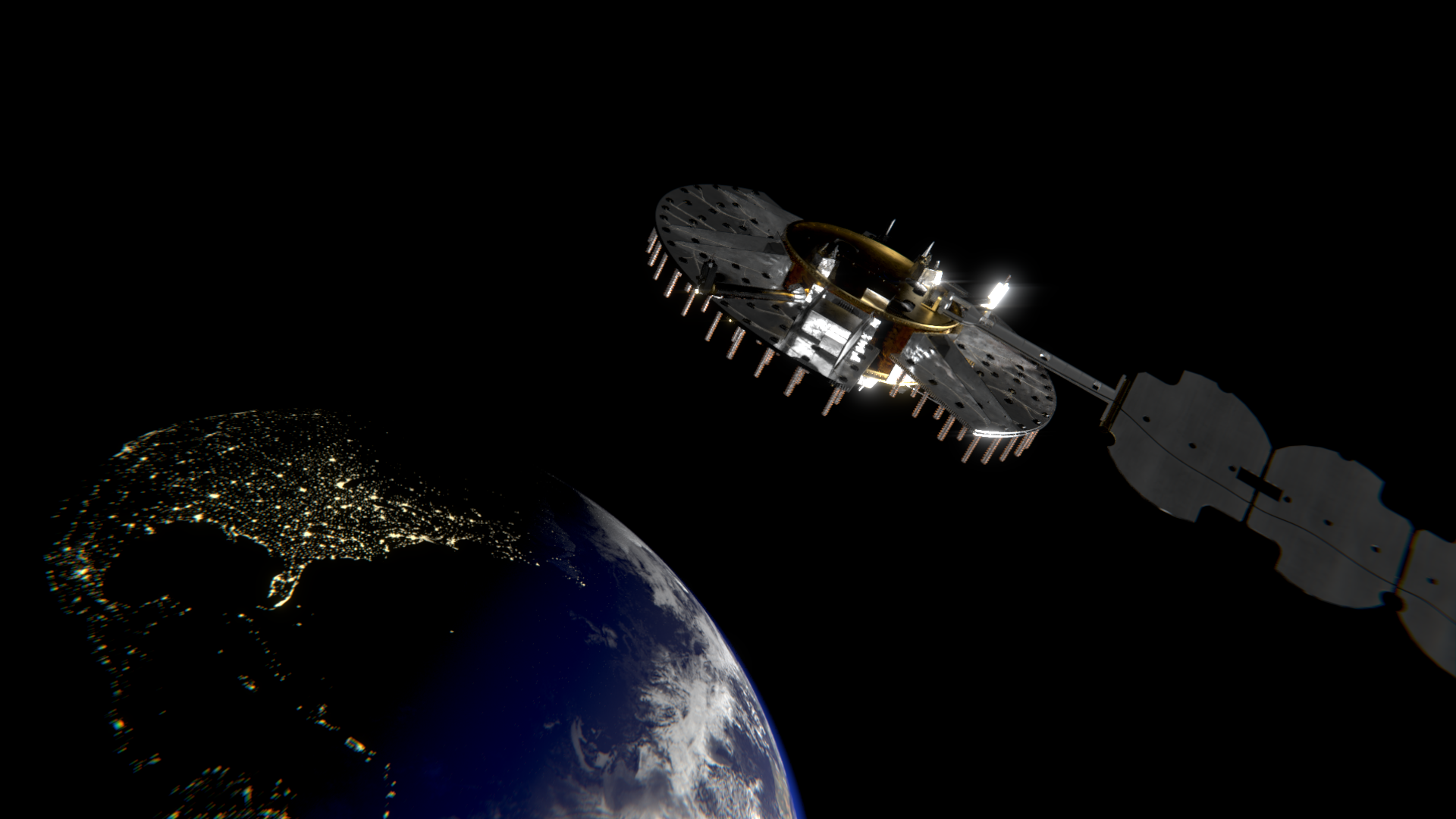
Launch of NTS-3 Marks New Era in GPS Technology
The Space Force and United Launch Alliance have successfully launched the National Technology Satellite-3 (NTS-3), marking the beginning of a year-long series of demonstrations that could revolutionize the GPS mission and the broader positioning, navigation, and timing (PNT) industry. This experimental satellite was launched from Cape Canaveral Space Force Station in Florida, making it the first national security flight for United Launch Alliance's Vulcan rocket.
Built by L3Harris as part of a project led by the Air Force Research Lab and Space Systems Command, NTS-3 is designed to explore new PNT signals and payloads that could be integrated into future GPS satellites. These innovations aim to shape the capabilities and operational concepts for spacecraft, ground systems, and user equipment.
Originally scheduled for a 2022 launch, NTS-3 faced significant delays due to issues with the Vulcan rocket, which delayed its journey to geosynchronous orbit. These setbacks kept the satellite grounded for several years. However, this extended period allowed for additional testing and improvements.
Joanna Hicks, a senior aerospace engineer at AFRL's Space Vehicles Directorate, expressed her team's readiness for the launch, noting that the lab is "overdue" for a PNT experiment. She emphasized that the goal of NTS-3 is to explore technologies that will help evolve and enhance GPS to ensure it remains a critical asset for military operations.
Extended Testing and Enhanced Capabilities
The time spent on the ground provided an opportunity for AFRL and L3Harris to conduct extensive lab testing. During this period, the firm added new signals to the spacecraft after its initial delivery. Once in orbit, NTS-3 will perform over 100 tests exploring various technologies, including simultaneous GPS signal broadcast and receipt, autonomous operations, and anti-spoofing signals.
Some of these experiments will take place in a controlled lab environment, where signals are processed, while others will simulate real-world conditions that warfighters might encounter. Additionally, the satellite will conduct onboard experiments related to clocks and timekeeping, with data transmitted back to Earth for analysis.
Integration into Future GPS Systems
Once the program demonstrates its capabilities, the Space Force will evaluate options for integrating the technology into its GPS production lines. Initially, the plan was to incorporate NTS-3-proven capabilities into the production line for the newest GPS variant, GPS IIIF. However, launch delays have limited the margin for design changes.
Cordell DeLaPena, who oversees the Space Systems Command's PNT portfolio, mentioned that there is still some flexibility on the first batch of Lockheed Martin-built GPS IIIF satellites for additional capabilities. If certain experiments prove successful in orbit and are mature enough for production, they could be integrated into future spacecraft.
If the current window is missed, there will be opportunities in the next batch of spacecraft, according to DeLaPena.
Expanding Beyond GPS IIIF
Beyond the GPS IIIF program, the Space Force's Resilient GPS initiative is exploring ways to augment the larger satellite fleet with a constellation of small, lightweight, and cost-effective spacecraft. This effort could also benefit from the technology developed through the NTS-3 program.
Hicks highlighted that AFRL is collaborating with the Space Development Agency and the Space Force's force design hub, the Space Warfighting Analysis Center, to identify potential applications for NTS-3 technology. These partnerships aim to ensure that the advancements made through NTS-3 can contribute to the broader goals of the Space Force and its allies.

Post a Comment for "Space Force Unveils Satellite for Next-Gen GPS Innovation"
Post a Comment