South Korea and U.S. Start Annual Summer Drills to Counter North Korea
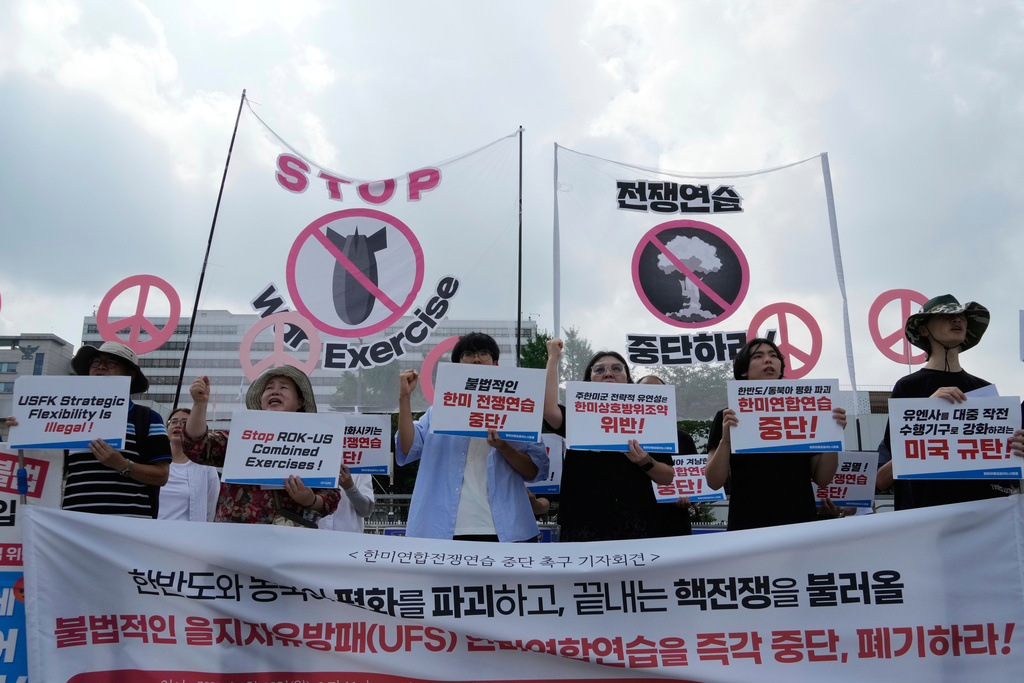
South Korea and U.S. Begin Joint Military Drills Amid Rising Tensions
South Korea and the United States have initiated their annual large-scale joint military exercise, aimed at enhancing readiness to address threats posed by North Korea, which has expressed concerns over the drills and warned of potential responses to any perceived provocations.
The 11-day Ulchi Freedom Shield exercise is the second major joint drill conducted annually in South Korea, following a similar exercise held in March. This year’s drills will involve 21,000 soldiers, with 18,000 being from South Korea. The exercises include computer-simulated command post operations and field training, focusing on strengthening coordination between the two nations’ military forces.
While the allies describe the drills as defensive in nature, they could provoke a reaction from North Korea, which has consistently viewed such exercises as rehearsals for an invasion. North Korea has frequently used these exercises as a justification for its own military demonstrations and weapons tests, aiming to advance its nuclear program.
In a recent statement, North Korean Defense Minister No Kwang Chol accused the U.S. and South Korea of adopting a “military confrontation” stance and declared that North Korea’s forces are prepared to counteract any actions that exceed the boundary line. This rhetoric underscores the heightened tensions on the Korean Peninsula.
A Crucial Moment for South Korea’s Leadership
The timing of the Ulchi Freedom Shield exercise coincides with a significant moment for South Korea’s new liberal President, Lee Jae Myung. He is preparing for a summit with U.S. President Donald Trump in Washington on August 25. Trump has raised concerns in Seoul about potentially altering the long-standing alliance by demanding higher payments for the American troop presence in South Korea and possibly reducing it as the U.S. shifts focus toward China.
Tensions remain high on the Korean Peninsula as North Korea has disregarded Lee’s calls for renewed diplomacy with the South. Relations have deteriorated in recent years due to North Korean leader Kim Jong Un's accelerated weapons development and increased alignment with Moscow following Russia’s invasion of Ukraine.
During a Cabinet meeting on Monday, Lee emphasized the need for courage in taking steps to ease tensions while maintaining a strong security posture. In addition to the military drills, South Korea also launched a four-day civil defense drill involving thousands of public workers, often scheduled alongside the summertime military exercises.
Shifting Dynamics in the Alliance
The previous conservative government in Seoul responded to North Korean threats by expanding military exercises with the U.S. and seeking stronger assurances for nuclear deterrence. This approach led to an angry reaction from Kim, who last year abandoned long-term reconciliation goals and revised North Korea’s constitution to label the South as a permanent enemy.
In his latest message to Pyongyang, Lee, who took office in June, called for restoring a 2018 inter-Korean military agreement designed to reduce border tensions. He urged North Korea to respond positively to efforts to rebuild trust and revive talks. The 2018 agreement established buffer zones on land and sea and no-fly zones above the border to prevent clashes.
However, South Korea suspended the deal in 2024, citing tensions over North Korea’s launches of trash-laden balloons toward the South. The country resumed frontline military activities and propaganda campaigns, a move that came after North Korea had already declared it would no longer abide by the agreement.
Diplomacy vs. Military Readiness
When asked whether the Lee government’s efforts to restore the 2018 agreement would affect the allies’ drills, the South’s Defense Ministry stated there are no immediate plans to suspend live-fire training near the disputed western maritime border. While half of the originally planned 44 field training programs for Ulchi Freedom Shield have been postponed to September, U.S. military officials denied speculation that the scaled-back drills were meant to accommodate diplomacy with the North, citing heat concerns and flood damage to some training fields.
President Trump has long advocated for South Korea to increase its financial contributions for the 28,500 American troops stationed in the country. Senior Trump administration officials, including Undersecretary of Defense Elbridge Colby, have suggested restructuring the alliance, which experts say could alter the size and role of U.S. forces in South Korea.
Under this approach, South Korea would take on a greater responsibility in countering North Korean threats, while U.S. forces focus more on China. Experts warn that this shift could result in reduced benefits for South Korea but increased costs and risks.
Strengthening the Alliance for Future Challenges
In a recent meeting with reporters, Gen. Xavier Brunson, commander of U.S. Forces Korea, emphasized the need to "modernize" the alliance to address evolving security challenges. These include North Korea’s nuclear ambitions, its growing alignment with Russia, and what he described as Chinese threats to a “free and open Indo-Pacific.” The modernization effort aims to ensure the alliance remains effective in addressing current and future security concerns.

Post a Comment for "South Korea and U.S. Start Annual Summer Drills to Counter North Korea"
Post a Comment