Soaring Temperatures: TSSAA's Guidelines for Protecting High School Athletes
Understanding TSSAA Heat Policies and Their Importance
The Tennessee Secondary School Athletic Association (TSSAA) has long emphasized its heat policies to ensure the safety of student-athletes, especially during high-temperature periods. However, the tragic death of Joshua Henderson, a football player from Bolton High School, has reignited discussions about these guidelines. Henderson suffered a severe heat stroke during a practice on July 7 and passed away nearly three weeks later due to complications from the incident. This event has brought the issue of heat safety in high school sports back into the spotlight.
With the 2025 TSSAA football season set to begin on August 22, teams are already preparing for practices. Full-pad practices started on July 28, and temperatures have been rising significantly. The National Weather Service has predicted heat indexes reaching up to 116 degrees through July 30, making it crucial for schools to follow strict protocols to protect athletes.
TSSAA Heat Policy Overview
TSSAA's heat policy is designed to help schools monitor and respond to extreme weather conditions. Before any practices or competitions, each school is required to obtain either a Wet Bulb Globe Temperature (WBGT) reading or a heat index at the site of the activity. WBGT is preferred because it considers more environmental factors than the heat index. If WBGT is not available, a digital psychrometer or other measuring instrument can be used. Even a weather app on a phone is acceptable if no other tools are present.
Practice Guidelines Based on Heat Levels
TSSAA has established specific guidelines depending on the heat level:
- WBGT 82.0–86.9 or Heat Index Under 95 Degrees: Teams must provide at least three rest breaks per hour, each lasting a minimum of three minutes.
- WBGT 87–89.9 or Heat Index of 95–99 Degrees: Maximum practice time is two hours, with at least four rest breaks each hour, each lasting four minutes. Contact is allowed, and full pads may be worn during contact activities. Protective gear must be removed for non-contact activities, except for football pants with pads.
- WBGT 90–92 or Heat Index of 100–104 Degrees: Practice time is limited to one hour, including 20 minutes of rest breaks. No conditioning activities are permitted. For football, only essential protective equipment may be worn during contact drills.
- Above 92.0 WBGT or Heat Index Above 104 Degrees: Outdoor practices are prohibited until conditions improve. Competitions must also be postponed unless a qualified healthcare professional is present with access to a cold water immersion tub or similar cooling method.
Adjustments by TSSAA Football Teams
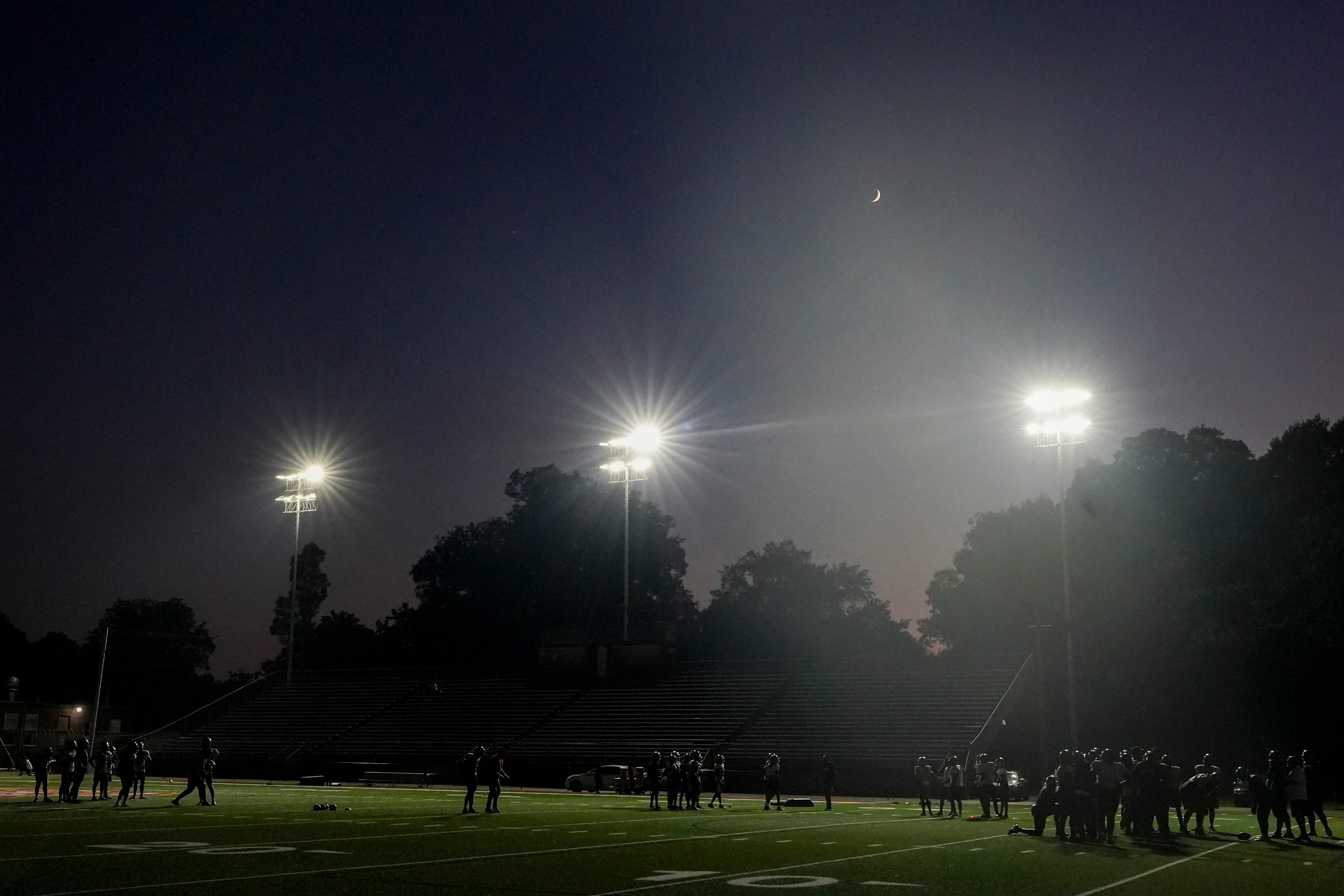
To cope with the extreme heat, many teams have made adjustments to their schedules. Some have moved practices to early mornings or evenings when temperatures are lower. For example, Melrose held its July 28 practice around 7:45 p.m., just as the sun was setting. Coach Gerald Morrow noted that the team is being strategic about practice times and mental health days.
Other teams have taken different approaches. Collierville practiced indoors, while Maryville and Alcoa in the Knoxville area scheduled practices as early as 6 a.m. Alcoa even opted for a walk-through on July 31. Pearl-Cohn in Nashville delayed its practice until 7:10 p.m. after spending the first two hours in the school gym. Clarksville High shifted its practice to the night, and Brentwood High started at 5:45 a.m. on July 28.
These changes highlight the growing awareness and proactive measures being taken by coaches and schools to prioritize athlete safety in extreme heat conditions. As temperatures continue to rise, adherence to TSSAA guidelines remains critical to preventing heat-related illnesses and ensuring the well-being of student-athletes.

Post a Comment for "Soaring Temperatures: TSSAA's Guidelines for Protecting High School Athletes"
Post a Comment