Smart Lane on I-90: Impact on Dead Man’s Curve
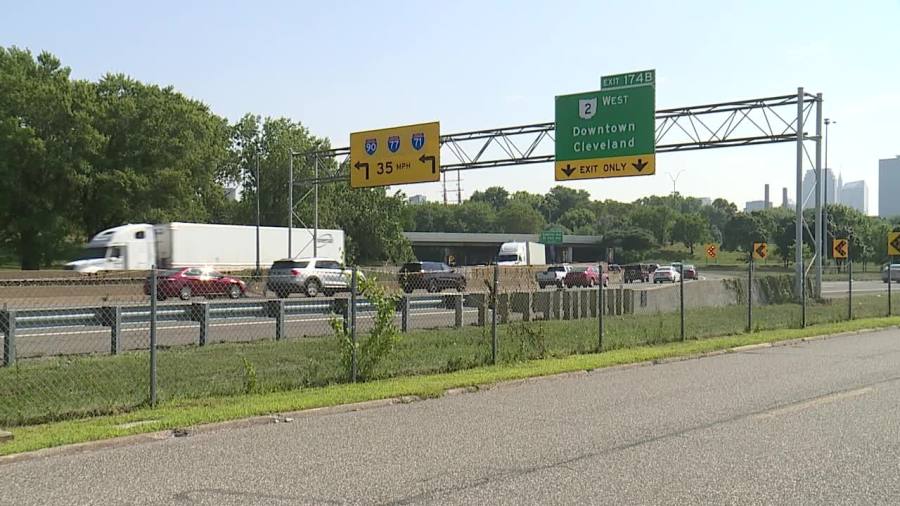
Addressing Traffic Challenges on I-90’s Dead Man’s Curve
For decades, the stretch of I-90 around Dead Man’s Curve in Cleveland has been a major source of frustration for drivers. Known for its sharp turn and frequent accidents, this section of the highway has long been a traffic bottleneck, especially during rush hours. To address these issues, the Ohio Department of Transportation (ODOT) is now pursuing funding for a project that could significantly improve traffic flow through the area.
The proposed initiative involves establishing what is known as a Smart Lane on the westbound portion of I-90 between East 55th Street and the ramp to southbound I-77. Unlike traditional lane additions, the Smart Lane would not involve constructing a new road. Instead, it would convert the left shoulder into a part-time lane that becomes active during peak travel times.
According to ODOT Public Information Officer Brent Kovacs, the Smart Lane aims to ease congestion and reduce the risk of accidents. “All Northeast Ohio motorists know the Curve as a backup area during A.M. and P.M. rush hour, so it would definitely help traffic flow through that area more smoothly, prevent backups, and really just help traffic flow into the Downtown Cleveland area,” he said.
To ensure the Smart Lane operates effectively, traffic operators will use cameras to monitor conditions and decide when to activate overhead message boards. These boards will display whether the extra lane is open with a green arrow or closed with a red X, along with any applicable speed limits.
ODOT acknowledges that some drivers may be confused by the concept of a Smart Lane. “There’s a lot of education that needs to go there, a lot of traffic planning and a lot of design over the next four to five years that’s still going to go in there to really make this a smooth transition to adding this new lane for all motorists,” Kovacs explained.
In addition to the Smart Lane project, ODOT received a $10 million grant in 2024 to study a long-range plan aimed at reducing the sharpness of the nearly 90-degree turn at Dead Man’s Curve. This initiative, known as the Innerbelt Modernization Plan, is currently in the design phase.
While there is no specific timeline for construction or an exact cost estimate, the goal of the plan is to solve a longstanding problem. “This would provide a higher speed limit and also help motorists get around there in a safer manner,” Kovacs said.
Smart Lanes are already in use in other states, including one on I-670 in Columbus. However, engineers face unique challenges in designing the proposed Cleveland Smart Lane due to the narrow shoulders and bridges along the heavily traveled stretch of I-90.
“It’s still yet to be determined how the bridges would be affected, what would need to be widened for a bridge, but this is all in anticipation of our Innerbelt Curve project and this project takes a look at all the bridges through the area of the curve itself, making that curve more accessible for higher speed limits,” Kovacs said.
The estimated cost of the Cleveland Smart Lane project is $19 million, and if approved, construction is expected to begin in 2029 or 2030. This initiative represents a significant step forward in addressing the long-standing traffic issues on I-90 and improving safety for drivers in the region.

Post a Comment for "Smart Lane on I-90: Impact on Dead Man’s Curve"
Post a Comment