SK hynix CEO Optimistic About Future Growth Amid Shutdown Fears
A Remarkable Transformation
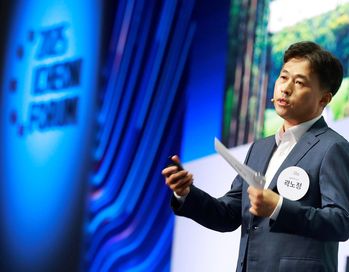
At the SK Group’s Icheon Forum, an annual event bringing together executives and academics in Seoul, SK hynix CEO Kwak Noh-jung shared the company's remarkable journey. The forum, held at the Seoul Walkerhill Hotel in Gwangjin District, started on August 18 and continued for three days. During his opening address, Kwak reflected on the challenges Hynix faced in the early 2000s, a time when the company was struggling to stay afloat.
Employees resorted to removing fluorescent bulbs to cut electricity costs and used handkerchiefs to reduce napkin usage. These measures highlighted the severe austerity the company endured, which Koreans now refer to as "toesa gak," a term that captures the feeling of wanting to quit.
Few could have predicted that Hynix would one day surpass Samsung Electronics, the dominant force in the memory chip industry. Over two decades later, SK hynix has captured the largest share of the global DRAM market, driven by rising demand for high bandwidth memory (HBM), a crucial component for artificial intelligence.
Strategic Investments and Tenacity
Kwak attributed Hynix’s survival and eventual dominance to two key factors: long-term investment and tenacity. While competitors focused on short-term results, SK hynix prioritized both immediate performance and future growth. This approach reflects SK’s culture of making strategic bets on technologies that can transform the world.
This strategy contrasted sharply with Samsung’s focus on quarterly results, which led to criticism for underestimating HBM’s potential. In contrast, SK invested heavily in HBM, positioning itself to benefit from the AI revolution.
Kwak also emphasized the importance of teamwork. He noted that the development of HBM was made possible through collaboration across departments, with engineers and managers working with relentless intensity.
A Leader Shaped by Crisis
Kwak’s career mirrors Hynix’s turbulent path. He joined Hyundai Electronics, the predecessor to Hynix, in 1994 as a researcher. He lived through the financial crisis that placed the firm under creditor control from 2001 to 2005. When SK acquired Hynix in 2012, Kwak quickly rose through the ranks, becoming CEO by 2022.
In the first half of this year, SK hynix posted operating profits of 16.65 trillion won ($12 billion), outpacing Samsung’s 11.36 trillion won. This success was largely due to HBM, which now accounts for a growing portion of DRAM revenue, placing Hynix at the forefront of the AI revolution.
Kwak warned that the memory business is undergoing significant changes. Disruptive innovation is transforming the industry, moving memory away from being a commodity to a more customized product. Competitiveness now depends on how well companies integrate AI, from predicting market demand to optimizing manufacturing processes.
A Forum for Strategy and Innovation
The Icheon Forum, initiated in 2017 by SK Chairman Chey Tae-won, aims to provide a platform for discussing fast-moving global changes. Now in its ninth year, the conference brings together executives, scholars, and policymakers to explore business challenges and technological frontiers.
This year’s theme is “AI and Digital Transformation.” Over three days, participants will discuss strategies for building an AI ecosystem, driving industrial innovation, and reshaping organizational structures.
On the first day of the forum, discussions included a session on the U.S.-led reordering of the global economy, featuring keynote speeches by Victor Cha of the Center for Strategic and International Studies and Jing Qian of the Asia Society Policy Institute.
Chey emphasized the importance of “sovereign AI,” the concept that nations must build their own AI data, infrastructure, and services. He stressed that this is not confined to one country but represents a global competition, where building a sovereign AI capable of winning in the world market is essential.

Post a Comment for "SK hynix CEO Optimistic About Future Growth Amid Shutdown Fears"
Post a Comment