Silicon Valley Leaders Warn of Regional Fallout from Federal Cuts
Key Issues at the Heart of the Debate
Santa Clara County officials are pushing for support from San Jose, the county’s largest city, to increase sales taxes as a way to keep their public hospital system running despite federal funding cuts. However, San Jose leaders have made it clear that they will not back the proposal without certain conditions.
The proposed tax measure, known as “Measure A,” aims to add an additional five-eighths of a cent to the sales tax. This would generate significant revenue to support the county’s healthcare and social services. The measure is set to appear on the November 4 special election ballot. However, San Jose Mayor Matt Mahan has expressed concerns about the plan, indicating skepticism about its effectiveness and potential impact on local resources.
Congressman Sam Liccardo, who previously served as San Jose mayor, has suggested that the city could condition its support for the tax measure on securing more funds for homeless services in San Jose’s interim shelters. He emphasized that while he isn’t directly involved in the negotiations, homelessness is expected to be a central topic of discussion.
Liccardo noted that there are currently ongoing discussions between the city and the county regarding how to allocate the funds from the legislation. He highlighted that some county services, such as drug treatment, mental health care, and case worker programs, are funded exclusively by state and federal dollars. These services are crucial for supporting the homeless population in temporary shelters.
Mahan, who represents a more conservative political base, has often clashed with the progressive Santa Clara County Board of Supervisors. He has criticized the county's investments in public health care and argued that the county hasn't done enough to address the homeless crisis in San Jose.
Despite his reservations, Mahan was not present at a recent town hall meeting hosted by District 2 Supervisor Betty Duong. The event brought together lawmakers from across Silicon Valley to discuss the impacts of H.R. 1, also known as President Donald Trump’s “big beautiful bill.” County leaders warned that the bill’s $1.5 billion in local revenue losses could severely affect the public hospital system and other essential social services.
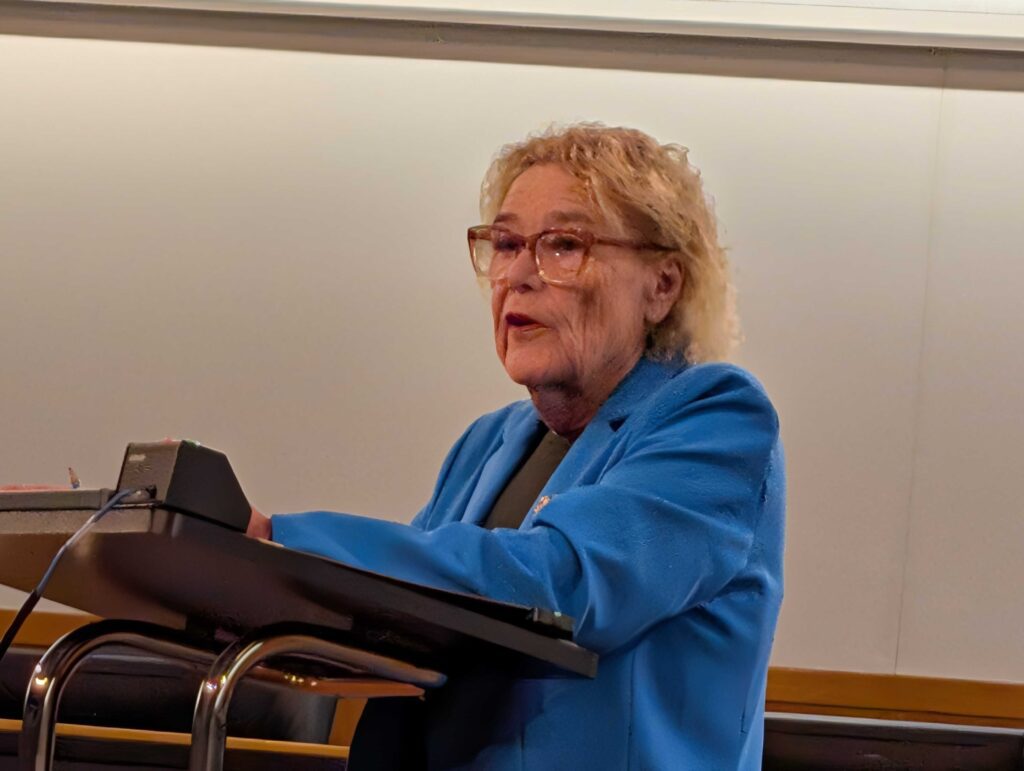
Several lawmakers attended the meeting, including Congressmembers Zoe Lofgren and Sam Liccardo, along with state Assemblymembers Ash Kalra, Patrick Ahrens, Gail Pellerin, and state Senator Aisha Wahab. Lofgren voiced her support for the tax measure, stressing the importance of maintaining access to healthcare for vulnerable populations.
Lofgren pointed out that defunding Planned Parenthood and cutting the Affordable Care Act could lead to more people becoming uninsured and relying on the county hospital system. She said, “I don’t think a sales tax increase is a great choice — I do think it’s a better choice than closing emergency rooms.”
Santa Clara County operates two of the region’s three trauma centers and the only regional burn center in the Bay Area. It serves as the largest and most accessible healthcare provider in Silicon Valley, particularly for working-class and uninsured patients. Nearly one in four residents are enrolled in Medi-Cal, and half of the hospital’s patients pay through this program.
Three of the county’s four hospitals are located in San Jose, including the level I and II trauma centers. Lofgren noted that over 300,000 people in her district rely on Medi-Cal, emphasizing that the proposed bill could significantly raise premiums for Covered California by around 200%.
Other lawmakers took indirect jabs at San Jose’s priorities, suggesting that resources should be directed toward addressing housing shortages rather than focusing on sweeping encampments. State Assemblymember Ash Kalra called for a more thoughtful approach, stating, “We have to double down on ensuring that we’re actually following solutions and I think it’s a lazy and immoral solution to crack down on the homeless.”
County leaders estimate that if Measure A passes, it would bring in approximately $330 million annually. However, they acknowledge that this amount may not be sufficient to prevent further cuts to the hospital system and other county services.
The county has traditionally relied on Medi-Cal reimbursements to cover a majority of hospital expenses. These funds help sustain a system that handles 750 emergency department visits daily and performs roughly 2,000 surgeries each month.
County Executive James Williams highlighted the critical role of the hospital system, noting that 50% of all 911 transports in the county go to county hospitals. The outcome of the negotiations between San Jose and Santa Clara County will play a pivotal role in determining the future of the region’s public healthcare infrastructure.
Liccardo has not yet taken a definitive stance on the tax measure, pending the results of ongoing discussions. He stated, “If it is as I expect it to be, I will be happy to support the measure. But I want to make sure everyone’s had an opportunity to work this out.”

Post a Comment for "Silicon Valley Leaders Warn of Regional Fallout from Federal Cuts"
Post a Comment