Shelby County Leaders Keep School Board Terms; Election Reforms Await Decision
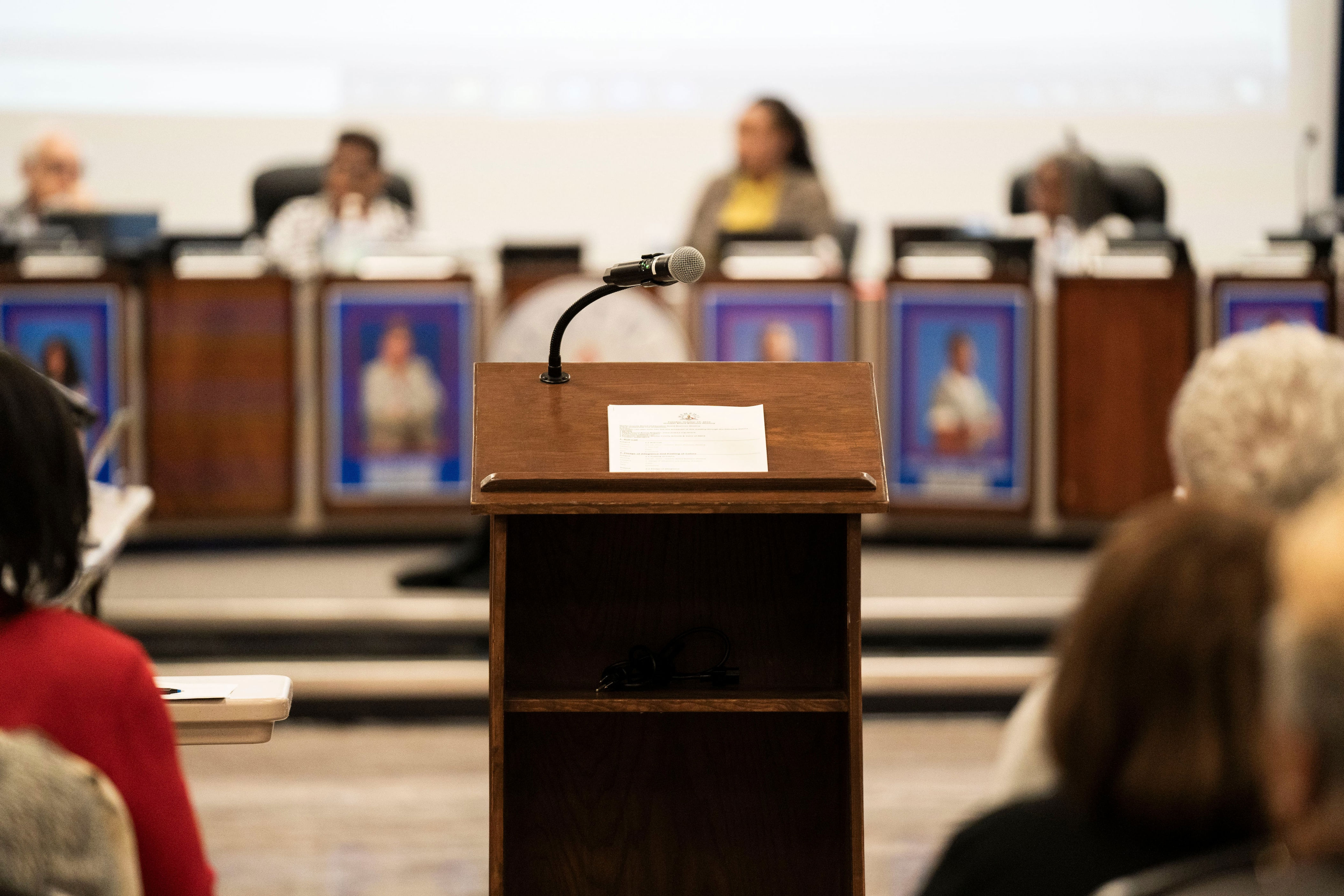
School Board Election Reforms Under Scrutiny in Shelby County
Shelby County Commission officials are moving forward with a new proposal to align school board elections with the general election cycle by 2030. This comes after earlier plans to shorten the terms of five current board members were scrapped due to concerns over constitutional compliance.
The initial plan, which would have placed all school board seats on the 2026 ballot, faced delays last week because it raised questions about its legality. The full commission is expected to vote on the revised resolution as early as Monday. The new proposal includes term limits that could apply to those elected in 2030.
A state law backed by both Democratic and Republican lawmakers made these changes possible. Memphis legislators Rep. Torrey Harris and Sen. Brent Taylor, who sponsored the bill, argued that syncing school board elections with the general election cycle would reduce costs and boost voter turnout, which has historically been low for school board-only elections.
However, some critics see the move as an attempt to reset the school board following the controversy surrounding the January ouster of Superintendent Marie Feagins. Opponents of the resolution argue that the new proposal still violates the state constitution because it introduces term limits without a voter referendum. This concern led Memphis Rep. G.A. Hardaway, who initially supported the state legislation, to request the Tennessee Attorney General’s opinion.
School board member Natalie McKinney told DISCOVER TREND that she does not oppose term limits but believes voters should have the final say on whether they should be implemented. “We don’t have to do this, and we don’t have to do it this way,” she said. “So you have to ask yourself, what’s the real goal here?”
Commission Chair Michael Whaley, who originally proposed the resolution, denied claims that the changes are targeting individual board members or district performance. “We are talking about an issue of governance, and whether we want this [system] to exist decades from today, with new people in these seats,” he said. “We really need to look at it longer-term.”
Despite these assurances, some commissioners remain skeptical. Commissioner Miska Clay Bibbs, who leads the county education committee, argued that aligning election cycles may not increase voter turnout. She pointed to current data showing that voter participation tends to drop as one moves down the ballot.
Commissioner Erika Sugarmon, who sponsored the revised resolution, claimed that delaying the changes for four years would reduce the likelihood of a lawsuit. However, a representative from the county attorney’s office noted that this outcome is not guaranteed.
Four of the five school board members who had their terms shortened voted to fire Feagins after just 10 months in her role. Towanna Murphy, one of those members, called the measure a “form of retaliation.” She said that delaying the timeline doesn’t change the perception that the changes were motivated by anger over Feagins’ removal.
In January, the county commission issued a no-confidence vote for the school board members who voted to fire Feagins. Some Republican state lawmakers then pushed for a state-appointed board to take control of the Memphis-Shelby County Schools.
Commissioner Henri E. Brooks, one of three who voted against the revised resolution, criticized the state law allowing for election-cycle changes, calling it discriminatory. She argued that it applies only to county boards of education and not to the six suburban districts within Shelby County.
“If we’re going to do it to the Memphis-Shelby County Schools, then the others should be susceptible,” she said.
Bri Hatch covers Memphis-Shelby County Schools for DISCOVER TRENDTennessee. Reach Bri at bhatch@DISCOVER TREND.org.

Post a Comment for "Shelby County Leaders Keep School Board Terms; Election Reforms Await Decision"
Post a Comment