Sharaa's Nightmare Near Fulfillment, Regime on the Brink
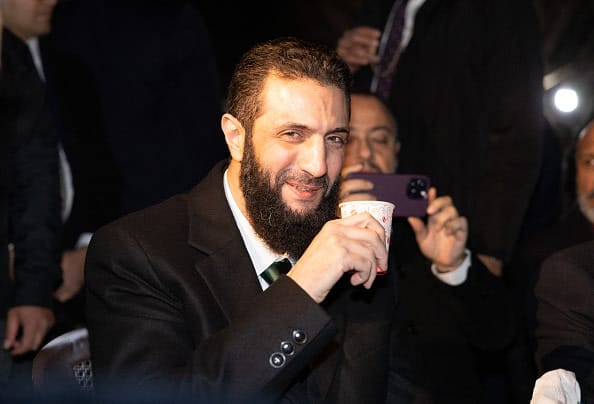
The Rise of Ahmed al-Sharaa and the Struggle for Control in Syria
Ahmed al-Sharaa, the leader of the new Syrian regime, has taken control of the country after a dramatic shift in power that occurred in late 2024. His rise to prominence was marked by the collapse of the previous Assad regime, which had been in place for decades. Sharaa’s leadership, however, has not brought stability but rather deepened divisions among Syria’s minority groups, including the Alawites and Druze.
Sharaa, who belonged to the majority Sunni sect, had long waited in Idlib under Turkish protection during the civil war. In late 2024, he capitalized on the chaos caused by the Ukraine conflict and Hezbollah's war against Israel to overthrow the Assad government quickly. However, his vision for a unified Syria is now facing significant challenges as various ethnic factions push for decentralization and autonomy.
Violence and Unrest in Minority Communities
One of the most alarming aspects of Sharaa’s rule has been the widespread violence targeting the Alawite and Druze communities. After taking control of Damascus in December 2024, massacres began in Latakia, Tartus, and Baniyas. These attacks escalated further in April when Druze were targeted in the suburbs of Damascus, and again in July in Sweida. The killings only ceased after the intervention of the Israeli Defense Forces (IDF).
Despite official denials from Sharaa’s regime, the pattern of violence suggests that his forces are unable to control the more radical elements within his ranks. Punishing those responsible could also weaken the jihadist groups that remain loyal to him, creating a difficult balancing act.
Divisions Among the Druze Community
The Druze community, like the Alawites, is deeply divided over Sharaa’s leadership. Two main factions have emerged. One, led by Sheikh Laith al-Balous, supports dialogue with Sharaa, believing that the Druze must adapt to the new political reality. This group is backed by Lebanese Druze leader Walid Jumblatt and seeks continued engagement with the Damascus regime.
On the other hand, Sheikh Hikmat al-Hijri leads a faction that completely rejects Sharaa’s rule. This group, supported by Druze in Israel, views Sharaa as part of a dangerous jihadist movement that considers the Druze and Alawites as infidels. Their concerns are rooted in the Salafi ideology of many of Sharaa’s followers, which draws from the writings of the 14th-century jurist Ibn Taymiyyah. According to this ideology, the Alawites and Druze are seen as traitors to Islam and deserve harsh punishment.
The Kurdish Perspective and Regional Tensions
The Kurdish community, though largely Sunni, remains wary of Sharaa’s regime. They have a history of persecution and have fought against ISIS in both Syria and Iraq. Many Kurds see Sharaa’s forces as reminiscent of the Islamic State, especially given the similarities between Hay’at Tahrir al-Sham (an al-Qaeda affiliate) and ISIS.
Relations between the Kurds and the new regime initially appeared promising. A National Dialogue Conference in February 2025 included participation from most ethnic groups, and Sharaa even met with Kurdish commander Mazloum Abdi. An agreement was reached to integrate the Kurdish-led Syrian Democratic Forces into the new Syrian army. However, these plans have stalled, and the Kurds remain skeptical about handing over their weapons and autonomy.
The Al-Hasakah Conference and the Push for Decentralization
In August 2025, the Al-Hasakah Conference brought together Kurdish leaders, Druze representatives, and other minority groups. The conference aimed to advocate for a decentralized Syria, where each community would have greater autonomy. This idea, however, is a nightmare for Sharaa’s regime, as it threatens to fracture the country into distinct regions controlled by different groups.
Syrian Foreign Minister Asaad al-Shaibani rejected the conference’s demands, insisting on a united Syria. Yet, the pressure from minorities and international observers continues to grow.
Challenges for Sharaa’s Regime
Sharaa now faces a precarious situation. He wants full control over Syria, but the loss of trust among minorities has created a crisis. Arab countries accuse Israel of trying to destabilize the regime, while Turkey seeks to use the new government as a protectorate. Qatar is also watching closely, hoping to gain economic influence in the region.
Commentators warn that a federal system may not be viable for a weak and unstable state like Syria. The regime is now at odds with all minority groups, with the Alawites vulnerable, the Druze backed by Israel, and the Kurds forming a powerful, armed force with U.S. support.
Recent arrests of suspected perpetrators of the massacres have done little to restore confidence. For the minorities, the presence of Sharaa’s security forces in their regions is a source of fear and uncertainty. Syria’s regime is at risk of crumbling, and the future of the country remains uncertain.

Post a Comment for "Sharaa's Nightmare Near Fulfillment, Regime on the Brink"
Post a Comment