S.F. Choral Society's Bold Take on Brahms's 'Requiem'
A Majestic Performance of Brahms’s "Ein Deutsches Requiem"
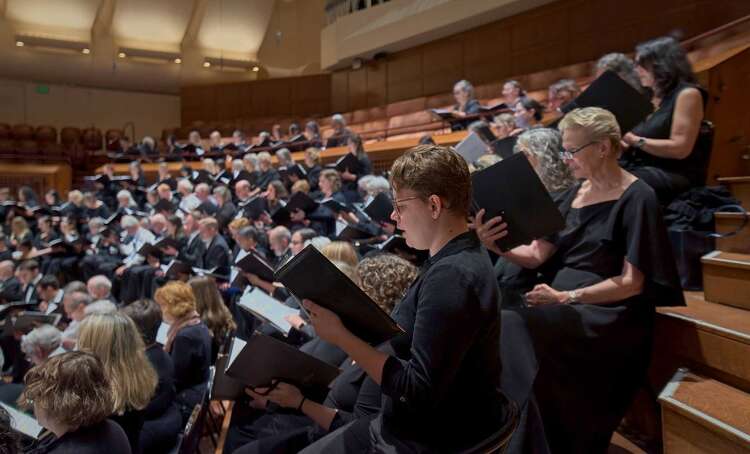
Johannes Brahms's "Ein Deutsches Requiem" is a monumental work that combines profound emotional depth with intricate musical structures. Its demanding vocal lines and extended duration place significant challenges on the performers, particularly the chorus. The piece spans over 70 minutes, with the singers maintaining a high level of concentration throughout. Despite these challenges, the San Francisco Choral Society's 2025 Summer Festival Chorus, under the direction of Artistic Director Robert Geary, delivered an exceptional performance at Davies Symphony Hall on Saturday, Aug. 16.
The 160-member chorus, composed mostly of nonprofessional singers, showcased both technical skill and emotional nuance. Accompanied by the California Chamber Symphony, they brought out the full range of the "Requiem," capturing its spiritual and emotional essence. Under Geary’s leadership, the ensemble highlighted the contrasts and tensions within each movement, allowing the audience to feel the culmination of the work’s journey toward transcendence and peace.
Brahms’s choice to use scripture from the German Bible rather than traditional liturgical texts for the "Requiem" reflects his focus on comfort and solace after loss. Unlike traditional requiems, which emphasize the resurrection of Christ, this piece centers on the human experience of grief and the hope of finding peace. Each movement, except the fourth, explores this theme in unique ways, offering different expressions of consolation and renewal.
The first movement opens with the beatitude “Blessed are they that mourn, for they shall be comforted,” set to a slow tempo without violins or flutes. It transitions into a flowing section based on Psalm 126, “They that sow in tears shall reap in joy.” This movement sets the tone for the entire work, blending sorrow with the promise of hope.
The second movement begins with a somber, quasi-funeral march, reflecting the line “For all flesh is as grass.” However, it soon shifts to a major key, with a faster tempo and fanfares, leading to a fugue that ends with “joy, everlasting joy.” Geary emphasized these contrasts, pushing the sixth movement to its limits with a fast tempo during the “Vivace” passage. The chorus and orchestra maintained precision and clarity, creating a powerful and memorable moment.
Despite the speed, the chorus demonstrated remarkable control, shaping phrases with expressive dynamics and clear diction. The fourth movement, “Wie lieblich sind deine Wohnungen” (“How amiable are thy tabernacles”), was particularly striking in its simplicity and beauty, with a rich, rounded tone across all sections.
In addition to the chorus, the performance featured two accomplished soloists. Baritone Andrew Pardini delivered a firm, warm voice, while soprano Cara Gabrielson displayed a strong, controlled presence with a beautiful midrange. Their contributions added depth and variety to the performance.
The orchestra played a vital role, providing a balanced and emotionally resonant accompaniment that never overshadowed the singers. The string sections, in particular, stood out for their clarity and richness, creating a sound that felt larger than their size suggested.
Overall, the performance was a testament to the dedication and artistry of the San Francisco Choral Society and its collaborators. It offered a deeply moving interpretation of Brahms’s masterpiece, highlighting the power of music to convey both sorrow and hope.

Post a Comment for "S.F. Choral Society's Bold Take on Brahms's 'Requiem'"
Post a Comment