Severe heat wave disproportionately impacts low-income communities
The Struggle for Cool Air: A Summer of Heat and Inequality
For many families in South Korea, the summer heat is more than just uncomfortable—it’s a daily challenge that affects their health, well-being, and ability to function. Nowhere is this more evident than in the lives of low-income households, where the struggle to stay cool often takes a toll on children, the elderly, and those with limited resources.
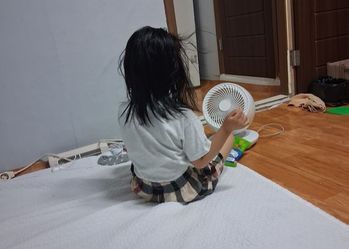
A 6-year-old girl in Bucheon, Gyeonggi, sits in front of a mini fan after playing with water, trying to fall asleep on a sweltering night. Her mother, who lost her husband at the end of 2024, says her daughter still wakes up during the night complaining about the heat. “We try to cool off in the bathroom before bed, but it doesn’t help much,” she said. The family moved into a multi-family house last September due to financial difficulties, but the building offers poor ventilation. They rely on two small fans and have no air conditioner. Their half-basement unit is also prone to mold, so they run the boiler even in the summer to reduce humidity.
This situation is not unique. As climate change intensifies heat waves across the Korean Peninsula, the "climate gap" continues to widen, disproportionately affecting vulnerable groups such as the elderly, young children, and welfare recipients.
Disparities in Access to Cooling
While some people enjoy round-the-clock air conditioning, for others, it remains a luxury they cannot afford. A 2019 Seoul Institute report found that low-income households had an average of just 0.18 air conditioning units per home—about one-fifth of the national average of 0.97 units. Even those with basic cooling devices often hesitate to use them due to electricity costs.
Health data further highlights these disparities. Among 2,454 cases of heat-related illnesses recorded between May 20 and July 27, day laborers made up 27.1 percent, and the unemployed 13.6 percent. In contrast, office workers and managers accounted for only 2.1 and 1.1 percent, respectively. Notably, 5.2 percent of the cases occurred indoors, showing that even inside homes, the heat can be dangerous.
Children are especially vulnerable. A 2024 survey by the K-Green Foundation of 101 low-income households found that 74.3 percent of respondents reported noticeable changes to their living conditions due to the climate crisis. Specific concerns included extreme heat and cold (59.4 percent), increased pests (33.7 percent), and hazardous conditions like mold and flooding from heavy rains (27.7 percent).
Creative Solutions to Combat the Heat
In Chuncheon, Gangwon, a woman named Jang lives with her two children in a deteriorating single-family home built more than 30 years ago. Broken windows remain unrepaired, and rain often pours into the house. Jang, who is in poor health, has been unable to pay her electricity bill for months. To cope with the heat, she freezes water bottles and ice packs and sleeps on them. When it gets too hot, her 14-year-old daughter goes to wait at the bus stop just to cool off with the air conditioning.
Community child centers, which offer meals, educational programs, and refuge from the heat, are seeing growing demand during school vacations. “It breaks my heart to see kids showing up in the morning with red faces,” said a staff member at one center in Seoul. For many children, these centers are the only place with air conditioning.
Government Support and Remaining Gaps
The government provides energy vouchers and support for low-income households, including emergency services for older adults living alone. The summer energy voucher offers up to 700,000 won ($503) in cooling subsidies for low-income single parents or families with children. However, gaps remain.
Kwon, the mother of the 6-year-old girl, said she qualifies for the voucher but was told she’s ineligible because of unpaid bills. Jang also faced similar issues, saying she was denied assistance despite being in need.
Kim Min-jung, director of ChildFund Korea’s welfare program, emphasized the need for fundamental change. “Children in poor housing are far more vulnerable to heat, both physically and emotionally,” she said. “We need to improve their environments, like installing cooling systems in substandard housing and expanding public shelters and infrastructure.”
Lee Byoung-chul, an analyst at the National Assembly Budget Office, wrote in a February report that “local governments should develop tailored support systems for vulnerable groups in their regions.” As the summer heat continues, the need for such support becomes increasingly urgent.

Post a Comment for "Severe heat wave disproportionately impacts low-income communities"
Post a Comment