Senate GOP Considers Rules Shifts, Recess Picks to Unfreeze Nominations
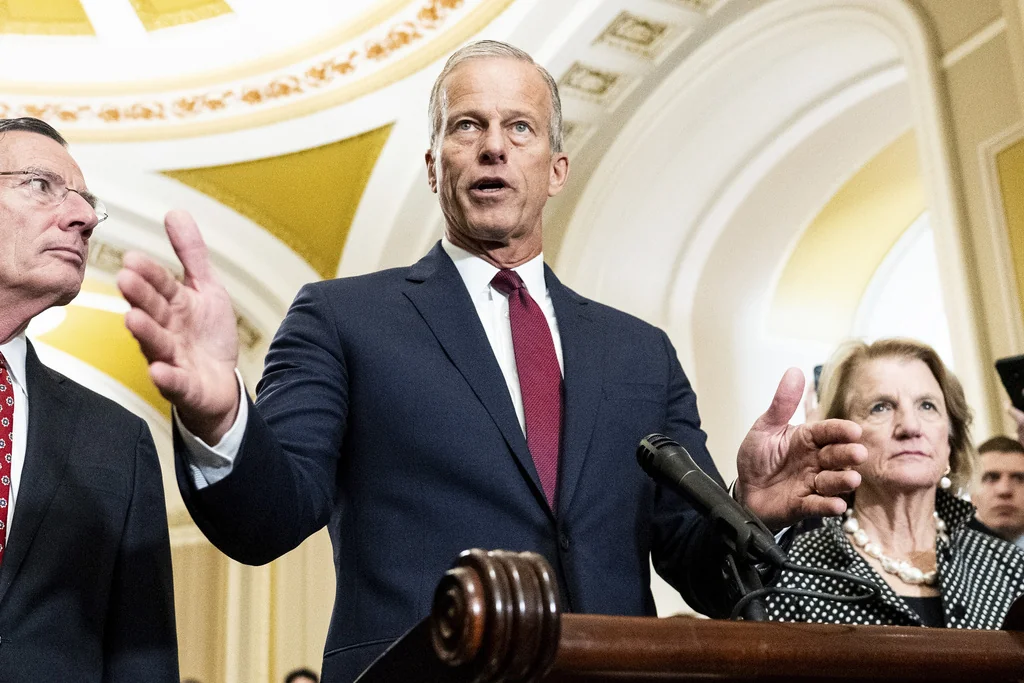
Republican Senators Explore Aggressive Tactics to Speed Up Nominee Confirmations
Republican senators are considering a range of aggressive measures to accelerate the confirmation of President Donald Trump’s nominees, driven by frustration over what they see as Democratic delays. These options include potential rule changes and even recess appointments, according to sources familiar with closed-door discussions.
Senate Majority Leader John Thune (R-SD) has not ruled out scrapping part or all of the August recess as Democrats continue to slow down confirmations, which is consuming valuable floor time. Over 130 of Trump’s nominees remain in limbo, and the White House is pushing for progress this week.
A GOP leadership aide mentioned that discussions about potential rule changes are ongoing but still in the early stages. Some ideas under consideration include reducing the number of positions requiring Senate confirmation and shortening the time needed to process nominees. Additionally, Republican leaders are exploring the possibility of a bipartisan package of nominees in talks with their Democratic counterparts.
“This is unprecedented obstruction by the Democrats. We need to do something to get the president's people in place,” said Sen. John Barrasso (R-WY), the No. 2 Senate Republican.
During a party lunch, Republicans also discussed the possibility of recess appointments. While this option was once considered extreme, it is now gaining traction within the conference. Thune did not confirm whether this was discussed, but he stated, “I wouldn’t take any option off the table. Obviously, it’s one of many suggestions that have been made.”
Sen. John Kennedy (R-LA) confirmed that recess appointments and rule changes were discussed. However, he believes the GOP is leaning toward recessing to allow Trump to act unilaterally. “We've reached the point of stalemate, and Chuck [Schumer] refuses to relent and negotiate on the nominations,” Kennedy said. He highlighted the time-consuming nature of confirming certain nominees, such as the General Counsel of the Department of Defense, which often passes with minimal opposition.
Kennedy acknowledged that time is running short, citing competing legislative priorities like appropriations and the NDAA. He suggested that initiating a recess, despite procedural complications, may be the most practical path forward. “We’re going to get started on a recess, and then the president can appoint whomever he wants.”
While some Republicans openly discuss recess appointments, the chances of them happening remain slim. A key obstacle lies beyond the Senate’s control; both chambers must formally adjourn to enable such appointments, but the House has already left town and is holding pro forma sessions instead.
Sen. John Hoeven (R-ND) echoed the growing frustration within the GOP, calling Democrats’ tactics unprecedented. “Democrats, for the first time ever, are making every single nomination go through the full process, that’s never been done before,” he said. “We’re spending record amounts of time here, and we’re still not getting folks confirmed.”
Hoeven said the best outcome would be a bipartisan agreement to move nominees forward, but warned that if Democrats refuse to cooperate, Republicans are prepared to stay in session through August, pursue rule changes, or enable recess appointments. “All options are on the table,” he said. “One way or another, we’ve got to get this done.”
Changing the rules wouldn’t be without precedent. In 2019, Senate Republicans, led by then-Majority Leader Mitch McConnell, pushed through a rules change that slashed post-cloture debate time on most executive branch nominees from 30 hours to just two. Frustrated by Democratic delays, McConnell argued the move was necessary to overcome obstruction and expedite confirmations, a strategy Republicans are now again considering as they face a mounting backlog.
Though only a simple majority is required to change cloture rules, the process still takes time. Sen. Eric Schmitt (R-MO) questioned the need for even two hours of debate per nominee. “Why are we waiting two hours? … Why not 10 minutes?” he asked.
As tensions rise, some Republicans believe a deal may still be within reach, and preferable to more drastic steps. “I think we get a deal done,” said Sen. Jim Risch (R-ID), speaking to the Washington Examiner. “Because if we don't, the discussion around here about going out on recess and doing recess appointments is a real discussion. And if that happens, I can't imagine that’s something the Democrats would want."
Democrats, meanwhile, are holding off on any decisions as they await a GOP offer. A person familiar with internal Democratic discussions described the Republican threats as part of a political pressure campaign. “The big question is what would Democrats receive in return for expediting the nominees,” the person said, noting that lawmakers on both sides are eager to return home for the August recess.
Some Democrats have indicated they’re open to confirming certain Trump nominees, depending on who’s included. Sen. Amy Klobuchar (D-MN) said a key sticking point is Republicans’ refusal to allow Democratic appointees to serve on independent commissions, a sharp break from the long-standing bipartisan tradition.
“Maybe we didn't obviously support all their appointees, but we've always had Democratic and Republican appointees on the FEC, on the CFTC, on the Safety Commission for product safety,” she said, speaking to reporters on Tuesday.

Post a Comment for "Senate GOP Considers Rules Shifts, Recess Picks to Unfreeze Nominations"
Post a Comment