Senate approves Emil Bove for appeals court amid whistleblower claims and debate
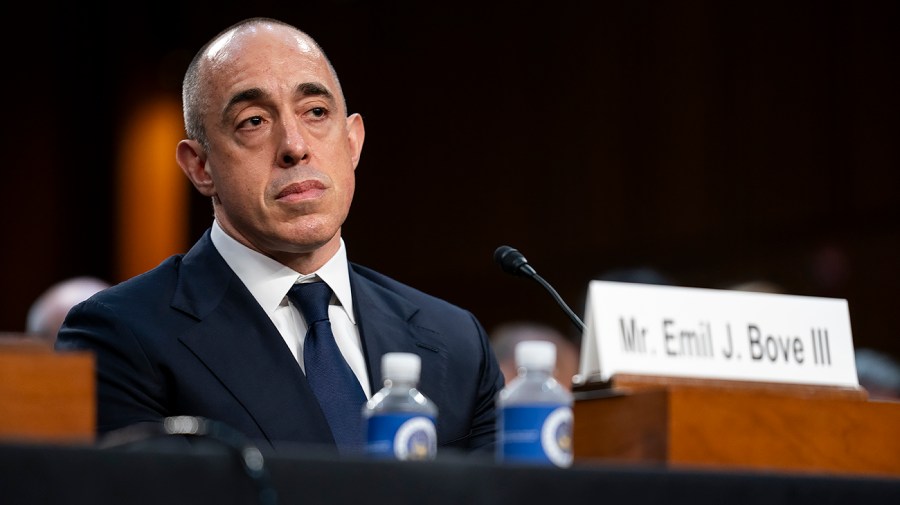
Emil Bove Confirmed to the Third Circuit Court of Appeals Amid Controversy
The Senate has confirmed Emil Bove to a lifetime position on the Third Circuit Court of Appeals, marking a significant step in his career as a former personal lawyer for President Donald Trump. His confirmation has sparked intense debate, particularly due to several whistleblower complaints regarding his conduct during his time at the Justice Department.
Bove, who currently holds the third-highest position at the Justice Department, has been the subject of multiple allegations. Two of these complaints suggest that he encouraged actions that could have violated court orders, while another claims he misled Congress about the decision to drop bribery charges against New York Mayor Eric Adams (D). These allegations have raised serious concerns about his integrity and judgment.
The confirmation vote was extremely close, with a final tally of 50-49. Notably, two Republican senators, Lisa Murkowski of Alaska and Susan Collins of Maine, joined all Democratic senators in opposing Bove’s nomination. This rare bipartisan opposition highlights the deep divisions over Bove’s suitability for the bench.
Senate Minority Leader Chuck Schumer (D-N.Y.) criticized the decision, stating that the Senate is rewarding someone "credibly accused of wanting to lie to judges" with a judicial appointment. He argued that the only reason for Bove’s confirmation is his loyalty to Donald Trump. “The calculus is as simple as that,” Schumer said during the floor debate.
Democrats also pointed out the speed at which Bove’s nomination was processed, suggesting that Senate Republicans were trying to rush the vote before more damaging information could emerge. Senator Adam Schiff (D-Calif.) expressed concern about what might come next, calling Bove “a disaster of a nominee.”
Bove has faced ongoing scrutiny since his June confirmation hearing. Dick Durbin, the top Democrat on the Senate Judiciary Committee, noted that individuals around Bove have come forward to share their concerns, despite risking their careers. One such whistleblower, Erez Reuveni, alleged that Bove suggested the Justice Department defy court orders related to the deportation of migrants under the Alien Enemies Act. Reuveni claimed that DOJ might have needed to tell the courts “f— you.” He was later fired after speaking openly about an administrative error that led to the wrongful deportation of a man named Kilmar Abrego Garcia.
Reuveni’s complaint details how he struggled to get updates on a court order to halt or reverse flights, resulting in the deportation of approximately 200 Venezuelan men to a prison in El Salvador. A judge later found probable cause to hold the Trump administration in criminal contempt for willfully disobeying the order.
A second whistleblower has also come forward, offering information that supports Reuveni’s allegations. While Bove could not recall using the expletive, he stated during his confirmation hearing that he emphasized the importance of the operation. However, this statement has done little to quell the controversy surrounding his conduct.
A third whistleblower has raised new concerns about Bove’s role in dropping the prosecution of New York Mayor Eric Adams on bribery charges. According to reports from The Washington Post, sources indicated that this move called into question Bove’s honesty with the Senate Judiciary Committee. Prosecutors involved in the case reportedly refused to drop the charges, leading to a wave of resignations.
During his confirmation hearing, Bove defended the decision to drop the charges, citing policy reasons. However, Senator Dick Durbin argued that this was a clear quid pro quo, where the administration offered to drop the charges in exchange for Adams’ cooperation on immigration policies. “Policy reasons made it appropriate to drop the charges,” Bove stated at the time.
Beyond the whistleblower complaints, Bove has also faced criticism for leading efforts to dismiss prosecutors involved in the January 6 cases and for compiling a list of FBI agents investigating rioters. These actions have further fueled concerns about his ethical standards.
Senate Judiciary Chair Chuck Grassley (R-Iowa) defended Bove, criticizing the whistleblowers for making accusations just before key votes. He praised Bove’s qualifications, stating that he has a strong legal background and would be a fair jurist. Grassley emphasized that all Republican members of the committee supported Bove’s nomination.
Justice Connection, a group of DOJ alumni, pushed back against claims that they unfairly targeted Bove. They argued that Bove was responsible for many attacks on the department and its employees. The group’s founder, Stacy Young, highlighted the courage of whistleblowers who spoke out against Bove’s actions, stating that history will honor their bravery.
As Bove begins his new role on the Third Circuit Court of Appeals, the controversy surrounding his confirmation continues to raise questions about the integrity of the judicial process and the influence of political loyalty in appointments.

Post a Comment for "Senate approves Emil Bove for appeals court amid whistleblower claims and debate"
Post a Comment