Screwworm Near Texas Border Threatens Cattle Industry
The Threat of the New World Screwworm
A dangerous parasitic insect known as the New World screwworm has been detected less than 400 miles from the U.S.-Mexico border, raising concerns among Texas lawmakers and agricultural leaders. This pest poses a serious threat to the state’s cattle industry and could have far-reaching economic consequences.
U.S. Senator John Cornyn, a Republican from Texas, has warned that if the screwworm crosses into the United States, it could lead to an outbreak with devastating effects. He highlighted that a case was recently reported in Mexico, just south of the border, and that the parasite has been moving northward since November.
The most recent confirmed location of the screwworm is Ixhuatlan de Madero in Veracruz, Mexico—approximately 370 miles south of McAllen, Texas. According to the U.S. Department of Agriculture, this proximity has raised alarms among officials who fear the potential impact on both the livestock and broader economy.
Cornyn emphasized that an outbreak could cost Texas livestock producers around $1 billion and result in a $3.7 billion loss for the national economy. As the top cattle-producing state in the country, Texas plays a critical role in the beef supply chain. Other states such as California, New Mexico, and Nebraska could also face significant challenges if the screwworm spreads.
Economic and Agricultural Impact
The potential spread of the New World screwworm could lead to higher food prices, particularly for beef, affecting consumers at grocery stores and restaurants. For ranchers, especially those in South Texas, the threat is even more dire. Zapata County Judge Joe Rathmell, who is also a rancher, described the situation as extremely concerning.
Rathmell, who has experience managing cattle for deer ticks, said the possibility of the screwworm reaching his area would be overwhelming. “It would place a big hurt on any ranchers trying to handle cattle down here,” he said. Wildlife, including deer and exotic game, could also be severely impacted, with male buck populations particularly vulnerable.
Wildlife management has become a growing business in this rural county, home to about 15,000 people east of Laredo. The proximity of the screwworm has brought increased attention to the issue, according to Rathmell.
Federal Response and Prevention Efforts
To combat the spread of the New World screwworm, U.S. Agriculture Secretary Brooke Rollins announced a plan to use federal funds to launch planes carrying sterile male screwworms from a former Air Force Base in western Hidalgo County. These efforts aim to reduce the population of the parasite in Mexico, where farmers are struggling to manage the infestation.
In Mexico, the cost of treatment has risen sharply, making it unaffordable for many ranchers. Some have resorted to using gasoline or tweezers to remove the larvae, highlighting the severity of the problem.
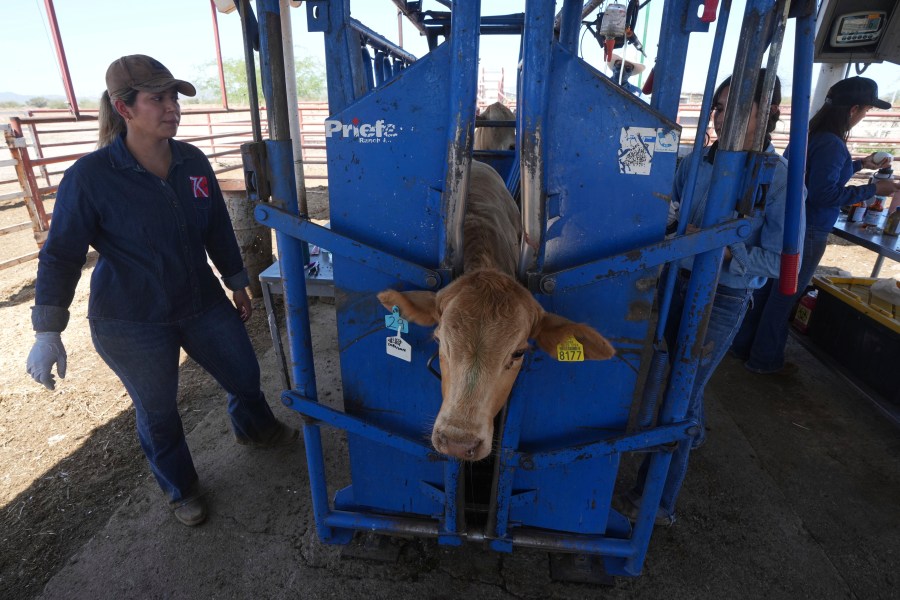
The New World screwworm is a fly whose larvae can infect and kill livestock. Female flies lay eggs in open wounds or sores, and the larvae burrow into the animal, causing severe infections. An infected animal can die within a week if left untreated.
Legislative Action and Future Plans
In May, Senator Cornyn and U.S. Representative Tony Gonzales introduced legislation to fund a $300 million facility in the United States for the production of sterile flies to combat the spread of the New World screwworm. This initiative aims to provide long-term solutions to prevent the parasite from entering U.S. soil.
Representative Monica De La Cruz also urged the U.S. Department of Agriculture to build the facility at Moore Air Base, the same location used for the current sterilization efforts in Mexico.
The American Farm Bureau Federation and other agricultural organizations have supported these efforts, emphasizing the need for immediate action to protect the livestock industry. Brody Peak, chairman of the Livestock Marketing Association’s Government and Industry Affairs Committee, stated that establishing a sterile fly facility in the U.S. would ensure continued protection against the parasite.
With the threat of the New World screwworm looming, swift and coordinated action is essential to safeguard the nation’s agricultural interests and food supply.

Post a Comment for "Screwworm Near Texas Border Threatens Cattle Industry"
Post a Comment