Scientists restore eyesight without laser surgery
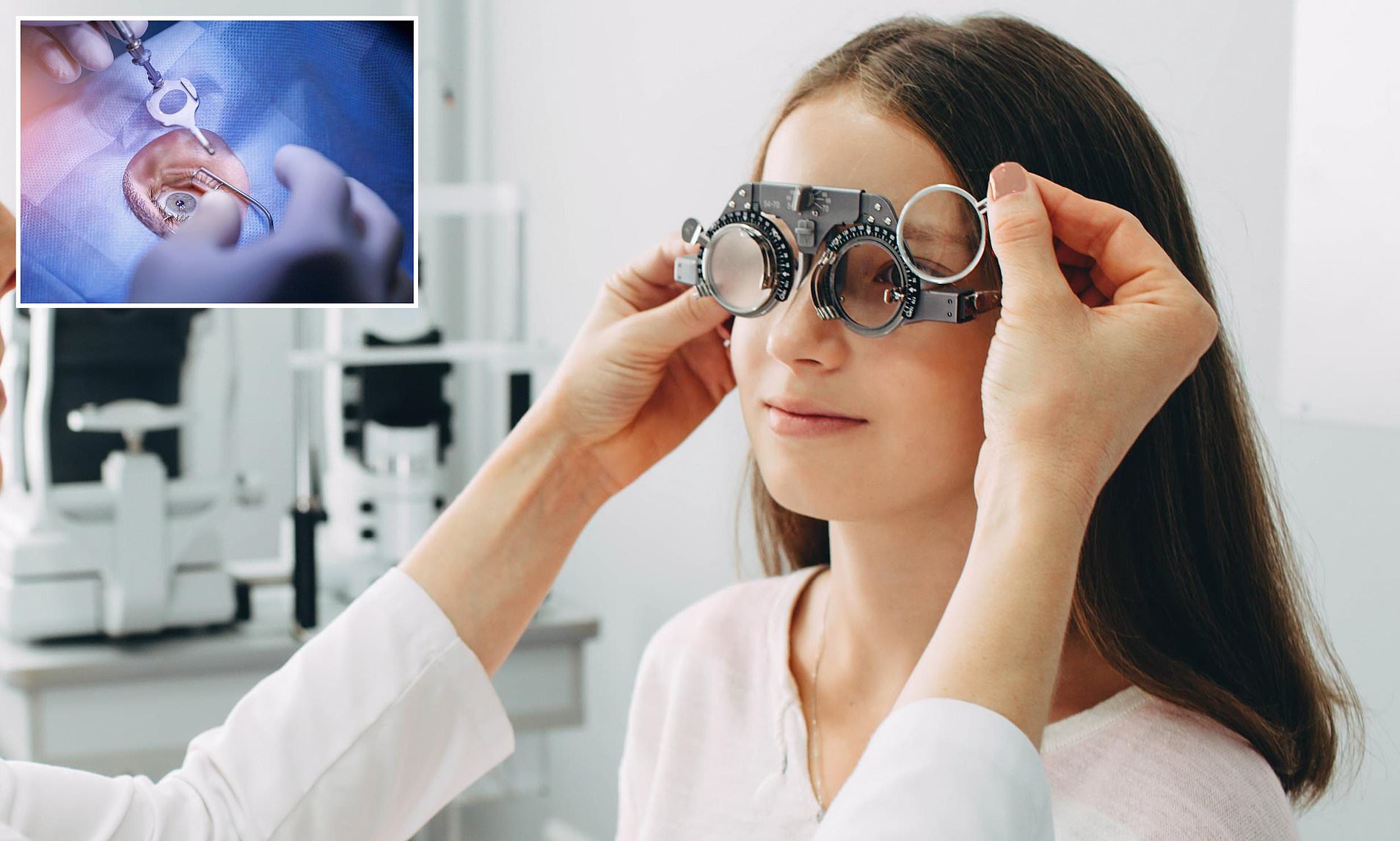
A New Approach to Treating Vision Problems
Scientists are making significant progress in developing a less invasive and more affordable method for treating vision problems. This new approach, which does not require incisions or lasers, could revolutionize how people address issues like nearsightedness, farsightedness, and astigmatism.
The idea was discovered by chemists in California who found that vision issues could be addressed through chemical means rather than traditional surgical methods. Their technique has the potential to replace LASIK, a common laser eye surgery that reshapes the cornea to improve vision. While LASIK permanently removes corneal tissue, the new method involves chemically molding the cornea instead. Both approaches aim to correct the curvature of the cornea so that light focuses precisely on the retina.
The research team from Occidental College and the University of California, Irvine, used a small electric current to lower the pH of the cornea, making it more acidic. This process loosened the collagen structure, allowing the cornea to become moldable. A platinum lens, designed to have an ideal shape, was then placed over the cornea. As the tissue softened, it conformed to the lens’s curve. Restoring the pH levels locked the tissue into its new shape.
The researchers tested their method using rabbit eyeballs in a saline solution. The results were promising: all 12 eyeballs successfully conformed to the desired shape of the template. In 10 cases, the corneas adjusted to correct nearsightedness, showing potential for real-world application.
Vision problems such as nearsightedness, farsightedness, and astigmatism affect millions of people. In the United States, approximately 167 million individuals wear prescription eyeglasses, while 45 million use contact lenses. A healthy eye has a white outer part called the sclera, a clear front surface known as the cornea, and internal structures that focus light correctly onto the retina.
When the cornea is properly curved, light bends precisely onto the retina, resulting in clear vision. However, in cases of impaired vision, such as nearsightedness, the cornea may be too steep or flat, causing light to focus in front of or behind the retina. LASIK surgery reshapes the cornea to allow light to hit the retina properly, restoring clear focus.
While LASIK is generally safe, it is not without risks. Common side effects include dry eyes, glare, especially at night, and rare complications such as the need for additional glasses, healing issues with the corneal flap, or corneal weakening over time. Not everyone is a candidate for LASIK, and surgeons carefully screen patients for factors like thin corneas or other risk factors.
Now, researchers are exploring an alternative method called electromechanical reshaping (EMR), which aims to reshape the cornea without making any incisions. “The whole effect was discovered by accident,” said Brian Wong, a professor and surgeon at the University of California, Irvine. “I was looking at living tissues as moldable materials and discovered this whole process of chemical modification.”
Collagen-rich tissues, including the cornea, rely on magnetic-like attractions between charged particles to maintain their shape. Introducing a tiny electric current lowers the pH of the gel-like fluid surrounding the collagen fibers, temporarily softening the tissue. When the rabbit eye tissue was soft, Dr. Wong and his colleague, Dr. Michael Hill, a chemistry professor at Occidental College, applied a perfectly-shaped platinum plate to mold the cornea into a new shape. The process took about a minute, and when the pH was restored, the tissue remained in its new form.
Although the research is still in its early stages, the team plans to conduct more detailed studies in living animals, not just in saline solutions. They will next explore how well EMR can treat common vision issues like nearsightedness, farsightedness, and astigmatism.
Dr. Hill emphasized that there is a long road ahead before the technique reaches the clinic. “But if we get there, this technique is widely applicable, vastly cheaper, and potentially even reversible,” he said.
The team's findings were presented at the fall meeting of the American Chemical Society, highlighting the potential of this groundbreaking approach to vision correction.

Post a Comment for "Scientists restore eyesight without laser surgery"
Post a Comment