Scientists Cultivate Thicker, More Realistic Lab-Grown Beef Muscle
Breakthrough in Lab-Grown Beef Production
Scientists at ETH Zurich are making significant strides in the development of lab-grown beef, thanks to the work of Professor Ori Bar-Nur, an expert in regenerative and muscle biology. While Bar-Nur has not yet tasted the cultivated meat himself—due to the need for official approval in Switzerland—his colleagues have participated in approved tastings. They report that the taste and texture are comparable to traditional beef. The main difference is that no animal needs to be slaughtered to produce it.
Bar-Nur and his team create meat in cell culture using bovine cells. Specifically, they use myoblasts, which are precursor cells that form muscle fibers. These cells can be obtained from a biopsy taken from a living cow. However, for their research, the team isolated the cells from standard beef cuts such as filet, sirloin, cheek, and flank.
Challenges in Creating Realistic Muscle Tissue
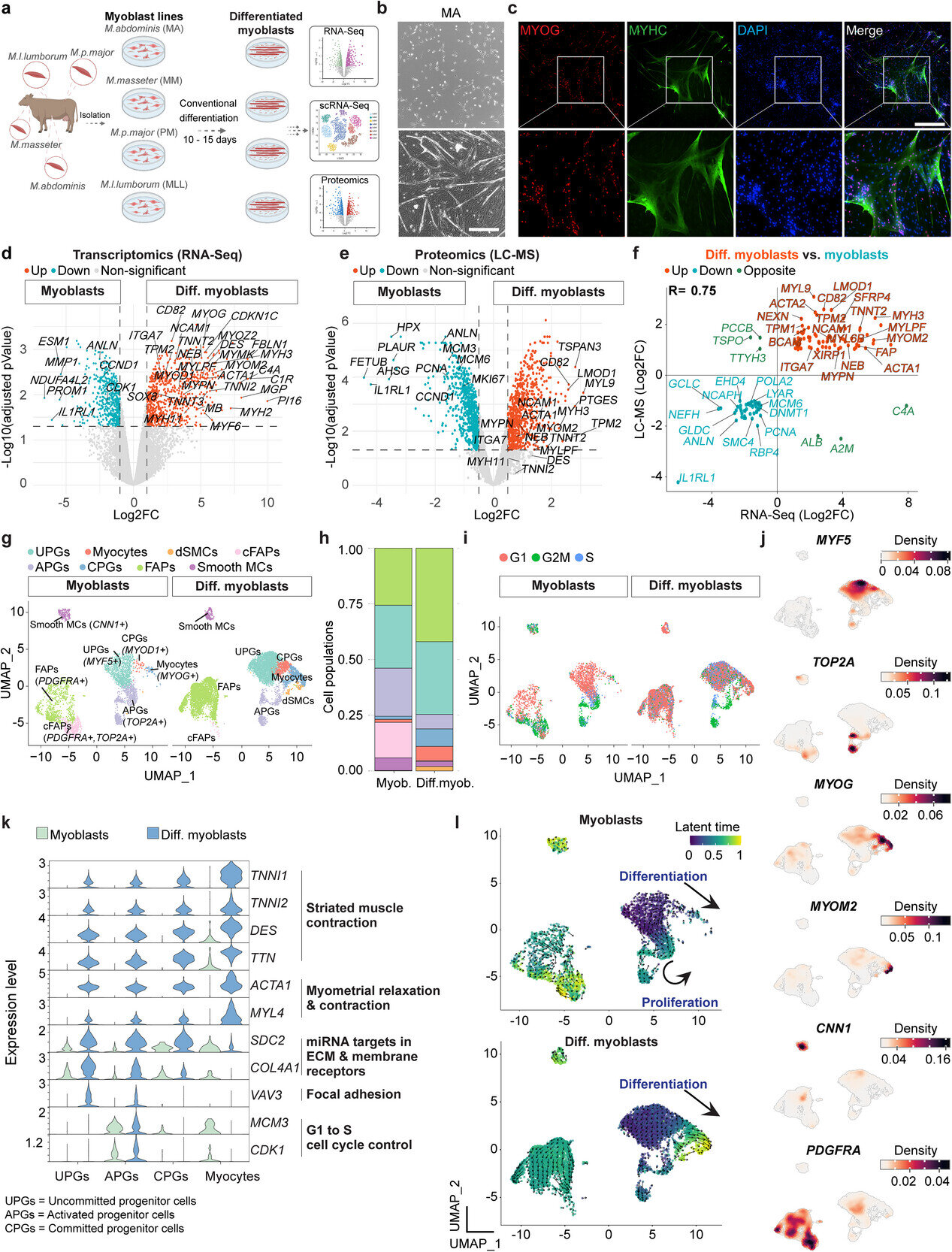
Producing three-dimensional muscle tissue from bovine myoblasts has proven to be more complex than previously thought. Although scientists have successfully generated muscle fibers in the lab, these were typically thin and lacked the complexity of natural muscle. The ETH researchers have now overcome this challenge by creating thick, functional muscle tissue that closely mimics natural bovine muscle at the molecular and functional levels.
The new tissue activates the same genes and proteins as real muscle and contracts similarly. This was not achievable with earlier methods, where the cells lacked some of the essential proteins found in natural muscle.
Global Trends in Cultivated Meat
Bar-Nur’s research is part of a rapidly growing field that aims to transform how meat is produced. Around the world, numerous start-ups are working to develop affordable lab-grown meat, driven by the potential to eliminate the need for cow sheds, livestock transportation, and abattoirs. In addition, lab-grown meat may require less land and could be more climate-friendly, though this remains a topic of debate.
In Singapore, lab-grown chicken is already available commercially. However, lab-grown beef is still in the development phase. The findings from ETH Zurich could help accelerate progress in this area.
A Key Discovery: The Three-Molecule Cocktail
To produce thick and functional muscle fibers, the ETH Zurich team added a cocktail of three molecules to the cell culture medium. These molecules play a crucial role in cell differentiation. Bar-Nur originally developed the cocktail during his postdoctoral work at Harvard University, where he focused on cultivating muscle cells for treating hereditary diseases involving muscle degeneration.
Although the research initially centered on mice, Bar-Nur later discovered that the same approach could be used to produce high-quality cow muscle cells in the lab. His work continues to focus on muscular dystrophy, but the application of this method to cultivated meat shows great promise.
Safety and Scalability
The three molecules are only necessary during the early stages of muscle fiber formation. Once the fibers are formed, they must be removed from the culture medium. Any future commercial product would not contain these molecules.
Despite this breakthrough, additional development is needed before lab-grown beef can reach the market. Christine Trautmann, a doctoral student in Bar-Nur’s group and one of the lead authors of the study, notes that the cell culture medium needs further optimization to make it more affordable and safe for consumption. The team is also exploring ways to scale up production, as they have so far only produced a few grams of muscle.
Adhideb Ghosh, the other lead author of the study published in Advanced Science, explains that the authorization process for these innovative food products will be lengthy and complex before they appear on store shelves.
Future Plans and Potential Impact
Looking ahead, Bar-Nur is considering launching a start-up company to further develop this technology and bring it to market. His goal is to help ensure that ethically sound, affordable, and safe burgers can be produced in the future.
This research represents a major step forward in the field of cultivated meat, offering a glimpse into a future where food production is more sustainable and humane. As scientists continue to refine the process, the possibility of lab-grown beef becoming a mainstream option grows ever closer.

Post a Comment for "Scientists Cultivate Thicker, More Realistic Lab-Grown Beef Muscle"
Post a Comment