San Rafael Drops Permit Parking Plan
San Rafael Cancels Residential Permit Parking Program
San Rafael has decided to abandon a residential permit parking program that was intended for neighborhoods on the city's eastern edge. The decision came after residents expressed concerns about the cost, the hassle of obtaining visitor passes, and the demand for parking space.
"Ultimately, on-street parking demand in these areas exceeds supply," said John Stefanski, assistant city manager. "Any structured system would have required limiting access, which many felt would be unfair or unworkable."
Stefanski added that without clear community support, the city chose not to proceed with the pilot program.
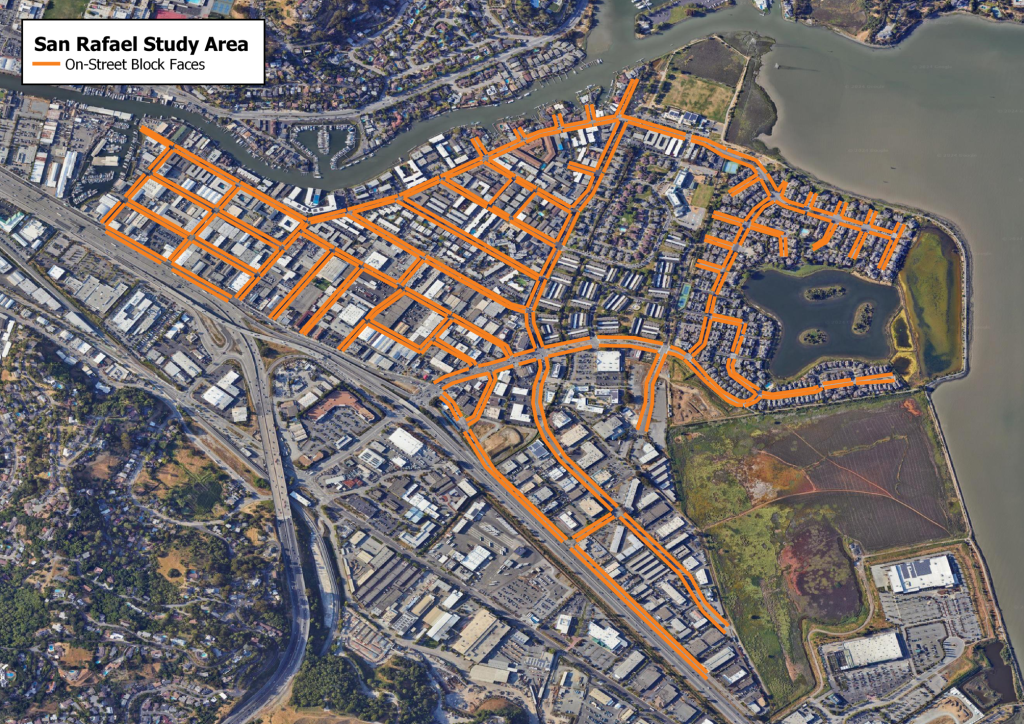
For over a decade, residents of the Spinnaker Point and Baypoint neighborhoods have complained about spillover from the Canal neighborhood causing parking shortages on their streets. These neighborhoods are located east of Interstate 580, bordered by the San Rafael Creek to the north, the bay to the east and south.
In 2017, the city commissioned a parking study in an effort to find ways to alleviate the issue. As a result, the city reduced the on-street parking limit from 72 to 24 hours in the Spinnaker Point and Baypoint neighborhoods. Signs were installed throughout the area to indicate parking limitations, and lines were painted next to curbs to mark out parking spaces.
The city also realigned the sidewalk on Spinnaker Point Drive near the Albert J. Boro Community Center to create 16 new parking stalls. Officials tried another approach by introducing an overnight paid parking program at the Bahia Vista Elementary school lot, but participation wasn't high enough to sustain the initiative.
As the issues continued, the city hired Dixon Resources Unlimited on a $150,000 contract to develop the permit parking program. However, the proposal faced criticism upon its release.
The program would have divided the area into three zones. Residents would have had three types of permits, with annual costs ranging from $50 for low-income households to $200. Guest passes would have been $10 per day, or $5 per day for low-income households.
The Spinnaker Point, Baypoint, Canal, and Bahia Vista neighborhoods were grouped into one zone, while a second zone was designated for the commercial area of the Canal neighborhood. To the surprise of its residents, the Bret Harte community on the west side of Highway 101 and Interstate 580 was included as a third zone.
After backlash, city officials removed the Bret Harte community from the plan. This area is a mostly residential neighborhood of approximately 500 households on the southern edge of the city. Residents there claimed they did not face parking problems.
Ross Bishop, chair of the neighborhood parking committee for Spinnaker Point, stated that the proposal missed the mark. He argued that the main issue was grouping the Canal neighborhood with Spinnaker Point and Baypoint.
"This wouldn't work because the overflow from the Canal is to blame for the parking jam in the other two neighborhoods," Bishop said. "If they were all included in the same permit zone, then it wouldn't prevent the Canal neighborhood residents from parking in the other two neighborhoods."
Bishop described the plan as flawed from the start, saying it was doomed to fail. He noted that the situation remains the same as it was 10 years ago.
He suggested an alternative: designating some parking spaces in Spinnaker Point and Baypoint for local residents while keeping the rest as public parking. "A vast majority of the spaces would remain as public parking," he said.
City consultants explained that the areas were grouped together because it would be considered inequitable to designate a public asset for a specific group of residents and not others.
"After over a year of working with the stakeholder group, listening closely to residents, reviewing community feedback and evaluating multiple permit models, it's clear that the proposed residential parking permit program doesn't meet the needs of east San Rafael in an equitable or effective way," said Mayor Kate Colin. "I remain committed to working with the community to improve quality of life in east San Rafael in ways that are practical, collaborative, and supported."
A detailed report is expected to be presented to the City Council in early 2026 as part of a mid-year update.
Bishop expressed appreciation for the city’s willingness to continue conversations. He said he and his neighbors will keep pushing for changes.

Post a Comment for "San Rafael Drops Permit Parking Plan"
Post a Comment