Russia's Tu-160M2: A New Era of Strategic Bombing Power
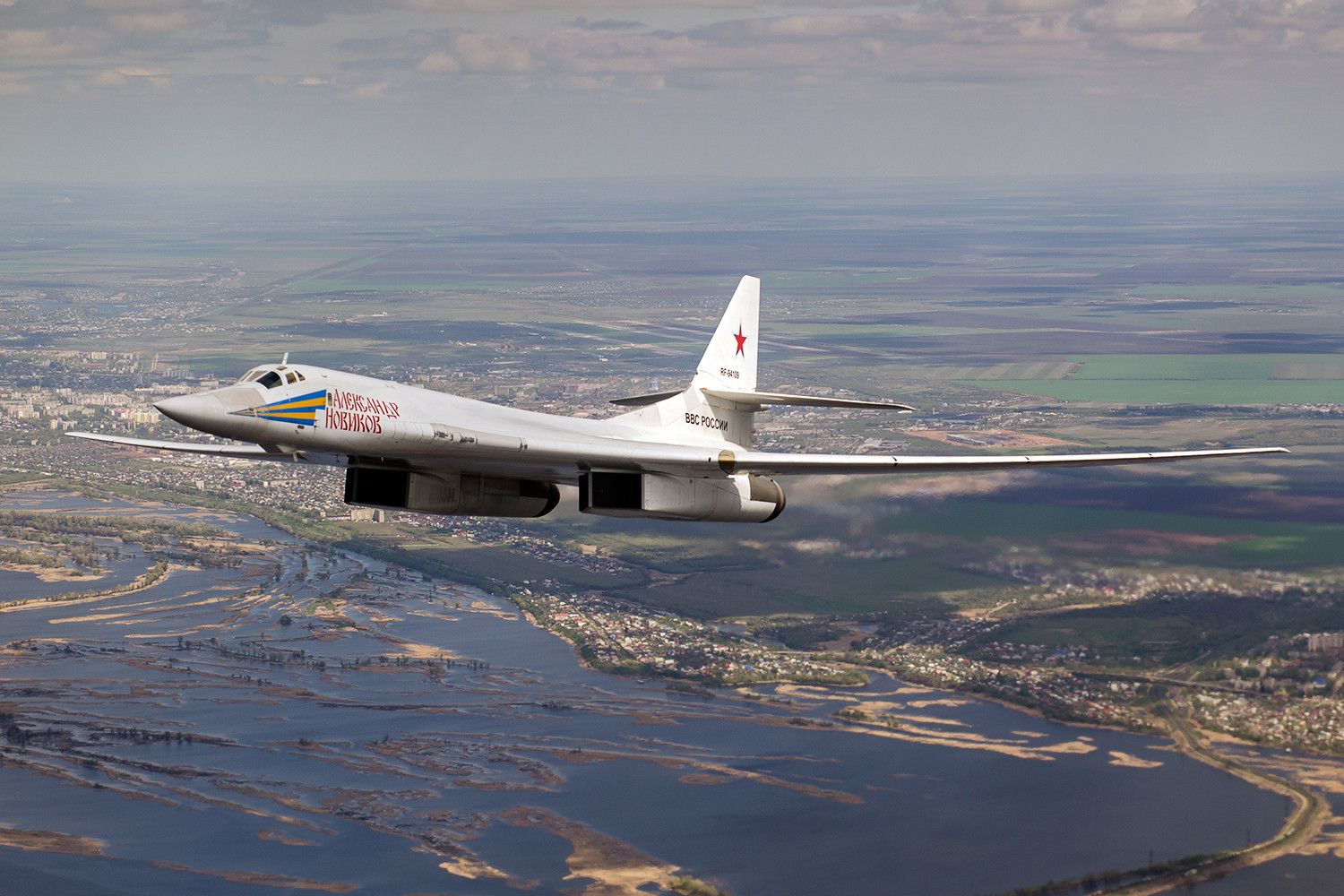
The Tu-160M "White Swan": A New Era of Strategic Bombing
In an age where stealth and precision dominate military aviation, the question arises: is brute force still relevant? The answer lies in the Tupolev Tu-160M “White Swan,” a strategic bomber that redefines the balance between power and sophistication. This aircraft is a cornerstone of Russia’s nuclear triad, combining massive payload capacity with advanced technology to ensure global strike capabilities.
Advanced Weapon Systems and Stealth Capabilities
The Tu-160M is designed for standoff missile delivery, featuring internal weapons bays that eliminate external stores. This design reduces drag and radar signature while allowing it to carry up to 12 long-range cruise missiles. These include the Kh-101, Kh-102, and Kh-55MS, which are engineered for stealth, accuracy, and extended range. The Kh-101 and Kh-102, in particular, are equipped with radar-absorbing composites and GLONASS satellite navigation, along with TV terminal guidance systems. These missiles can fly as low as 30 meters above ground and have a range exceeding 5,000 kilometers, enabling the Tu-160 to strike targets on other continents without entering enemy airspace.
Modernization and Technological Upgrades
The Tu-160M2 program marks a significant leap in avionics, survivability, and lethality. Key upgrades include a new Novella radar system, a glass cockpit, advanced electronic warfare suites, and a digital navigation system that operates without relying on satellite signals. This is a critical advantage in environments saturated with electronic countermeasures. Additionally, the propulsion system has been upgraded with the Kuznetsov NK-32-02 afterburning turbofan, the most powerful engine ever installed on a combat jet. Each engine produces over 55,000 pounds of thrust, significantly increasing the bomber's range to over 12,000 kilometers without refueling.
Variable-Geometry Wings and Versatility
One of the Tu-160’s defining features is its variable-geometry wings, which allow the aircraft to optimize performance across different flight conditions. By unfolding the wings during takeoff and landing, the bomber maximizes lift, and by sweeping them back at high speeds, it minimizes drag. This swing-wing design enables the Tu-160 to achieve supersonic speeds while maintaining stability. The engineering behind this system is remarkable: the swing-wing hinge weighs approximately six tons and must withstand the stresses of both low-speed maneuvering and Mach 2 flights. This versatility allows the Tu-160 to deliver a 40,000-kilogram payload at ranges and speeds that rival or exceed those of Western competitors.
Strategic Importance and Operational Flexibility
The Tu-160’s role in Russia’s nuclear triad is crucial. Its ability to launch nuclear-capable Kh-102 missiles from standoff ranges makes it a key component of Russia’s second-strike deterrent. The bomber has also demonstrated its effectiveness in conventional missions, such as the Syrian campaign, where it successfully deployed Kh-101 missiles against hardened terrorist targets. The guidance suite of these missiles, which includes inertial navigation, terrain mapping, and terminal TV imaging, allows for midcourse updates and re-targeting, aligning with modern doctrines of networked warfare.
Future Capabilities and Industrial Support
Looking ahead, the Tu-160M2 will be capable of integrating hypersonic missiles like the Kh-47M2 Kinzhal, which can reach speeds of Mach 10. While currently deployed on MiG-31Ks, future versions of the Tu-160 may be designed to carry these missiles, further complicating enemy defense strategies. This upgrade is supported by a major industrial initiative, with the Kazan Aircraft Production Association modernizing its facilities. The Russian Ministry of Defence has ordered at least 50 new or refurbished airframes, ensuring the Tu-160M2 becomes the most produced strategic bomber in Russia by the 2030s.
Longevity and Strategic Significance
Despite the complexity of its systems, the Tu-160M offers exceptional performance and reliability. Its combination of speed, range, payload, and standoff strike capability ensures its relevance well into the 2050s, even as Russia develops the next-generation PAK DA bomber. As Deputy Prime Minister Yuri Borisov noted, the Russian Aerospace Forces plan to operate modernized Tu-160Ms until the 2050s or even the 2060s. In the realm of strategic deterrence and power projection, the Tu-160M2 stands as a testament to the enduring value of raw strength, refined through engineering excellence and tailored for the challenges of 21st-century warfare.

Post a Comment for "Russia's Tu-160M2: A New Era of Strategic Bombing Power"
Post a Comment