Rubio: Peace Deal Still Far Off After Putin Meeting
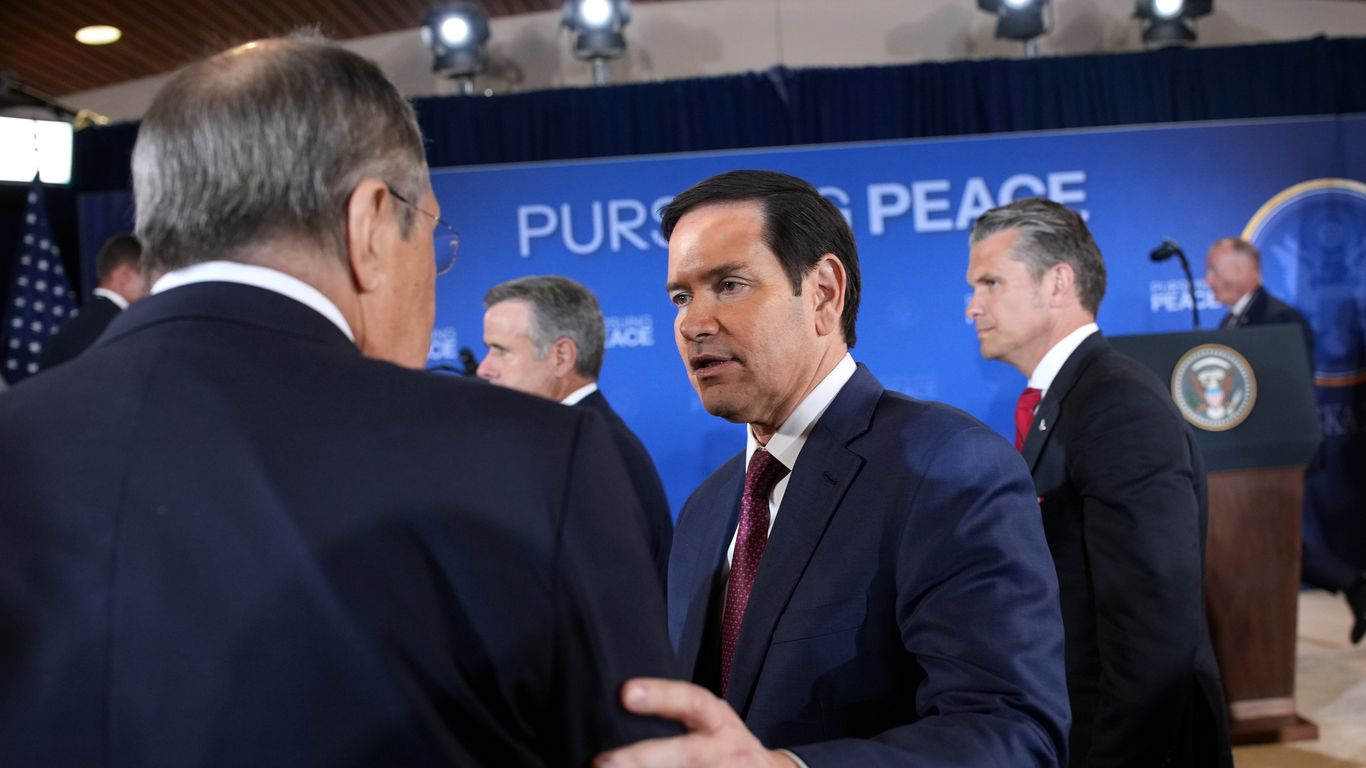
The State of Peace Talks After the Trump-Putin Summit
Following the recent summit between former President Donald Trump and Russian President Vladimir Putin in Alaska, Secretary of State Marco Rubio addressed the current state of peace negotiations regarding Russia’s ongoing conflict in Ukraine. On Sunday, he stated that “we’re not at the precipice” of a peace agreement, emphasizing that no significant progress had been made during the meeting.
The main goal of the talks, as previously reported, was to establish a ceasefire. However, Trump confirmed that this objective was not achieved. Rubio noted that both parties would need to make concessions, but he did not specify any particular terms that Putin agreed to. This lack of clarity has raised concerns among U.S. officials and international allies about the effectiveness of the discussions.
Ukrainian President Volodymyr Zelensky is set to travel to Washington for a potentially challenging meeting with Trump on Monday. This meeting comes amid growing pressure from European leaders who are closely watching the developments in the U.S.-Russia relationship.
The Role of Ceasefire in Peace Talks
Rubio emphasized that a ceasefire was not the primary focus of the summit, arguing that meaningful peace agreements require the involvement of Ukraine. During an interview with ABC’s Martha Raddatz, he stated that it is unrealistic to expect a ceasefire or peace agreement to be reached in a single meeting without Ukraine’s participation.
He also warned that if the administration imposes additional sanctions on Russia, it could halt diplomatic efforts. On Fox’s “Sunday Morning Futures,” Rubio suggested that strong sanctions might lead to an end in talks, stating, “If this morning the president woke up and said, ‘I’m putting these terrible... strong sanctions on Russia,’ that’s fine — [it] may make people feel good for a couple hours.” However, he cautioned that such actions could effectively shut down future discussions.
This sentiment was echoed on NBC’s “Meet the Press,” where Rubio reiterated that new sanctions might not compel Putin to accept a ceasefire. He expressed hope that such measures would not be necessary, as their implementation would signal a failure in peace talks.
Criticism from the Democratic Party
The Democratic Party has strongly criticized the summit, highlighting what they see as a lack of immediate consequences for Russia. Senator Chris Murphy (D-Conn.) described the event as a “great day for Russia” in an interview with NBC’s Kristen Welker. He pointed out that Putin left the meeting with a photo opportunity and no tangible commitments.
Senator Chris Van Hollen (Md.) went further, claiming that Trump “got played” by Putin. He also mentioned that the threatened sanctions appeared to have been abandoned. Van Hollen called for the Senate to advance bipartisan legislation aimed at imposing new sanctions on Russia.
Trump’s Perspective on the Summit
In a post on Truth Social following the summit, Trump claimed that the meeting, along with a subsequent call with Zelensky and European leaders, went “very well.” He stated that all parties agreed that a comprehensive peace agreement, rather than just a ceasefire, would be the best solution. However, Zelensky had previously insisted that a ceasefire must come first before any peace talks could begin.
According to reports, Putin proposed that Ukraine cede two of the four regions Russia claims, while freezing the front lines in the remaining two. These terms were reportedly shared by U.S. officials during calls with allied leaders.
Historical Context and Tensions
Zelensky’s upcoming visit to Washington occurs six months after a tense meeting in February between Trump and the Ukrainian leader, which escalated into a heated argument. This history adds a layer of complexity to the current discussions.
European Commission President Ursula von der Leyen, German Chancellor Friedrich Merz, and NATO Secretary General Mark Rutte are expected to attend the meeting with Zelensky. Despite media speculation, Rubio denied that these leaders were accompanying Zelensky to protect him from potential pressure to accept a deal. He stated that the White House had invited them to participate in the discussion.
Looking Ahead
As the situation continues to unfold, the focus remains on whether the U.S. will take further action against Russia and how these decisions will affect future diplomatic efforts. With tensions high and expectations mixed, the path to a lasting peace remains uncertain.

Post a Comment for "Rubio: Peace Deal Still Far Off After Putin Meeting"
Post a Comment