Ron Paul's Assault on GOP Foreign Policy
The Evolution of Republican Foreign Policy: From War to Restraint
Ron Paul, a name that has long been associated with the American libertarian movement, is set to celebrate his 90th birthday on August 20. At the age of 72, he was already making waves as a revolutionary figure within the Republican Party. His influence, however, extends far beyond his personal achievements; it represents a significant shift in how the party approaches foreign policy.
Today, the Republican Party is engaged in a vibrant and often contentious debate over its foreign policy direction. On one side are the populist, realist, and libertarian “America First” Republicans who advocate for a more restrained approach, emphasizing fiscal responsibility and opposing endless wars. On the other side are the holdover hawks who continue to push for a strong U.S. military presence around the globe, regardless of the cost. This division reflects a broader ideological transformation that has taken place over the years.
In 2008, the landscape was vastly different. Public opinion had begun to turn against the Iraq War, and President George W. Bush’s approval ratings were at historic lows. However, the Republican Party of that era remained deeply entrenched in its support for militarism, the PATRIOT Act, and the use of torture under the guise of counterterrorism. For many Republicans, war was not just a policy choice—it was an identity. Senator John McCain, the 2008 GOP presidential nominee, embodied this mindset and ultimately lost the election.
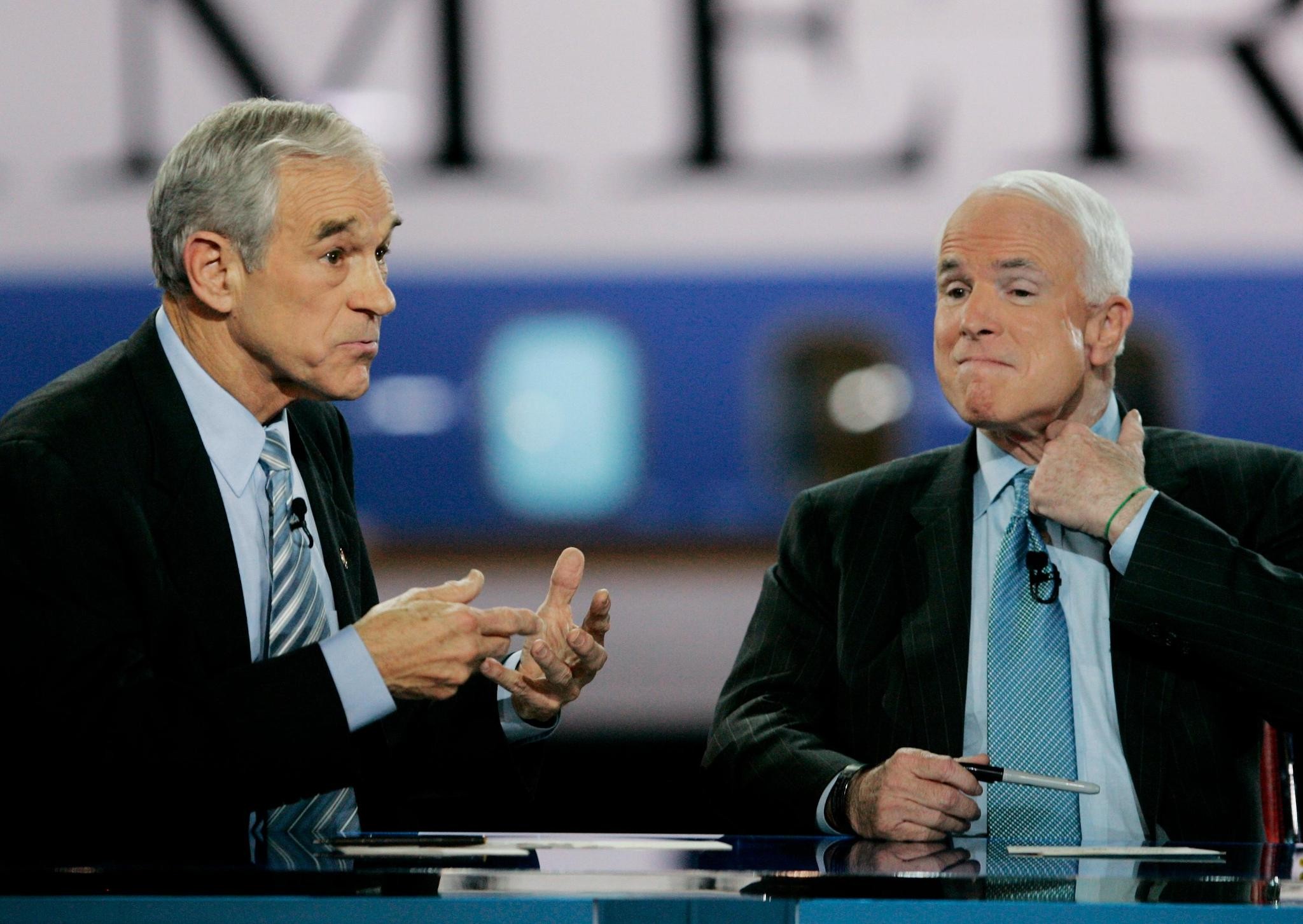
Throughout the 2008 Republican presidential primaries, Congressman Ron Paul attempted to challenge this status quo. He argued that America’s interventionist foreign policy had not only led to disaster in Iraq and Afghanistan but was also harmful to the nation as a whole. Despite his efforts, many within the party dismissed his views, often accusing him of siding with the enemy. During a debate, when Paul explained how perpetual American intervention created tension abroad that contributed to the 9/11 attacks, Fox News moderator Chris Wallace questioned him, asking, “You're saying we should take our marching orders from al Qaeda?” Paul responded by citing the need for a congressional declaration of war, stating, “No, I'm saying we should take our marching orders from the Constitution!”
The other candidates laughed at Paul, highlighting the difficulty of challenging the prevailing narrative. Telling Republicans to tone down their warmongering in 2008 was akin to telling a celebrity to reduce their sex appeal in a modern context.
Despite not winning the nomination, Paul became one of the most influential GOP candidates of that election. His grassroots support was substantial, particularly among younger voters, and his antiwar message resonated with many. His popularity surged after a notable debate in 2007, where he discussed how American interventions in the Middle East had led to resentment and, in some cases, terrorism.
During this exchange, Giuliani criticized Paul’s comments, suggesting that he had implied the U.S. had invited the 9/11 attacks. Paul, however, defended his position by introducing the concept of “blowback,” a term used by the CIA to describe the unintended consequences of U.S. actions abroad. This argument was met with resistance from the neoconservative audience, but it also attracted attention from independents and progressives.
Paul’s campaign gained momentum over the years, with his primary vote count increasing significantly. In 2012, he received two million votes, more than any other candidate. The nominees of both cycles, McCain and Mitt Romney, ran on neoconservative foreign policy agendas and ultimately lost.
The next Republican president, Donald Trump, ran on an “America First” platform that promised to end “endless wars” and even accused George W. Bush of lying about the Iraq War. While Trump did not fully live up to his antiwar rhetoric, he undeniably changed the conversation within the Republican Party. Today, many right-wing Republicans discuss foreign policy in ways that align more closely with Paul’s views than those of McCain or Romney.
The evolution of Republican foreign policy over the past 17 years is a testament to the impact of figures like Ron Paul. What once seemed unthinkable—challenging the party’s commitment to war—has become a more accepted part of the discourse. The legacy of Paul’s fearless questioning of the status quo continues to shape the political landscape, paving the way for new ideas and perspectives within the Republican Party.

Post a Comment for "Ron Paul's Assault on GOP Foreign Policy"
Post a Comment