Robotic Arm with Soft Grippers Empowers People with Disabilities to Cook and Create
Innovations in Robotic Assistance for Daily Tasks
For millions of Americans living with mobility challenges, completing everyday tasks can be significantly more difficult than simply choosing between different types of food. However, a groundbreaking development from Virginia Tech is changing the landscape of assistive technology. Researchers have created a robotic arm equipped with innovative grippers that can help individuals with disabilities perform complex daily activities, such as making a pizza.
The research, which has the potential to enhance independence for those with limited mobility, was published in Soft Robotics. The project, led by Dylan Losey and Michael Bartlett, both associate professors of mechanical engineering, focuses on creating tools that mirror the natural movements of human users. "Our philosophy is that if you are going to provide someone with a robot that can help them, it needs to have a connection to the way a person performs the same task," Losey explained. This approach ensures that the robot's actions feel like an extension of a person’s own movements, making the technology more user-friendly and intuitive.
With over $600,000 in funding and support from graduate students like Maya Keely and Yeunhee Kim, the team developed a gripper capable of handling objects ranging from tiny grains of sand to heavy jugs of water. This versatility makes the technology ideal for a wide range of tasks, including preparing meals.
Challenges in Robotic Task Execution
While robotics can offer significant assistance, they often face challenges when dealing with the diversity of tasks required in daily life. For instance, a robot that can open a jar of sauce might struggle when trying to sprinkle grated cheese. Teaching a robot to differentiate between a banana and a bottle of ketchup requires advanced programming and adaptability.
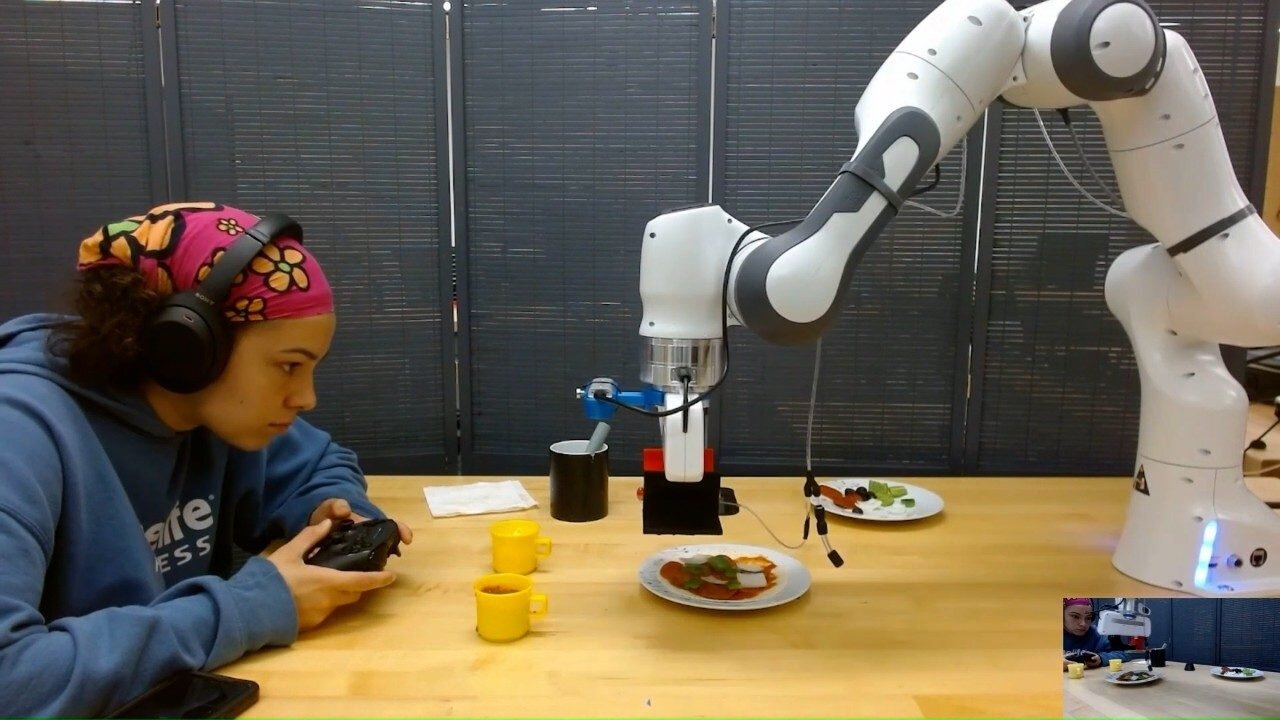
To address these issues, the team programmed the robot to use a joystick similar to those used in video games. With the help of artificial intelligence (AI), the robot could interpret commands and understand what the human user intended to do, then use that information to complete the task.
The initial focus of the project was on something fun: building an ice cream sundae using a robotic hand from Losey's lab. The first attempt was not successful. "One of the reasons it was tough is that traditionally, robots pinch things," Losey said. While this method works well for items like bottles of syrup, it is less effective for smaller or irregularly shaped objects like sprinkles or marshmallows.
A New Approach to Gripping
The challenge with traditional grippers lies in their material composition. Soft materials may struggle with heavier or irregular objects, while rigid materials often fail to grasp small or multiple items effectively. To solve this, Losey and Bartlett's team designed a hybrid system that combines rigid robotics with soft, adhesive fingertips.
Bartlett's expertise in soft materials and adhesives led to the development of switchable adhesives, which can be strong enough to pick up objects but also easily turned off to release them. The team created a soft, bubble-like fingertip that deflates slightly upon contact with an object, forming an adhesive bond. Adding air releases the bond, allowing the robot to handle delicate items with precision.
This innovation enabled the robot to successfully create an ice cream sundae, complete with sprinkles and marshmallows.
Expanding Capabilities: From Sundaes to Pizzas
Next on the team's list was a more complex task: making a pizza. "Having the robot arm and gripper collaborate with a person to assemble a pizza really challenged every aspect of our system," Bartlett said. Pizzas involve various elements, including crusts, cheese, sauce, and toppings, each with different sizes, textures, and shapes. The personal nature of pizza also means that the robot must coordinate with the user to create the desired combination of ingredients.
Using input from a human operator, the robotic hand picked up a pizza pan, spread the dough, and added sauce, pepperoni, peppers, olives, and cheese. The adhesive fingertips performed exceptionally well, resulting in a successful pizza creation.
This achievement highlights the broader goals of the National Science Foundation grant, which aims to advance robotic technology so that people with disabilities can perform a wider range of tasks. "In the long run, we would love to create robots that could pick up any sort of object," Losey said. "They could be soft, rigid, large, small, or made of different types of textures."
The future of assistive robotics looks promising, with the potential to make everyday tasks more accessible and manageable for individuals with mobility challenges. As researchers continue to refine these technologies, the possibilities for enhancing independence and quality of life are expanding rapidly.

Post a Comment for "Robotic Arm with Soft Grippers Empowers People with Disabilities to Cook and Create"
Post a Comment