Residents of Burnham Park seek new speed humps — how to apply
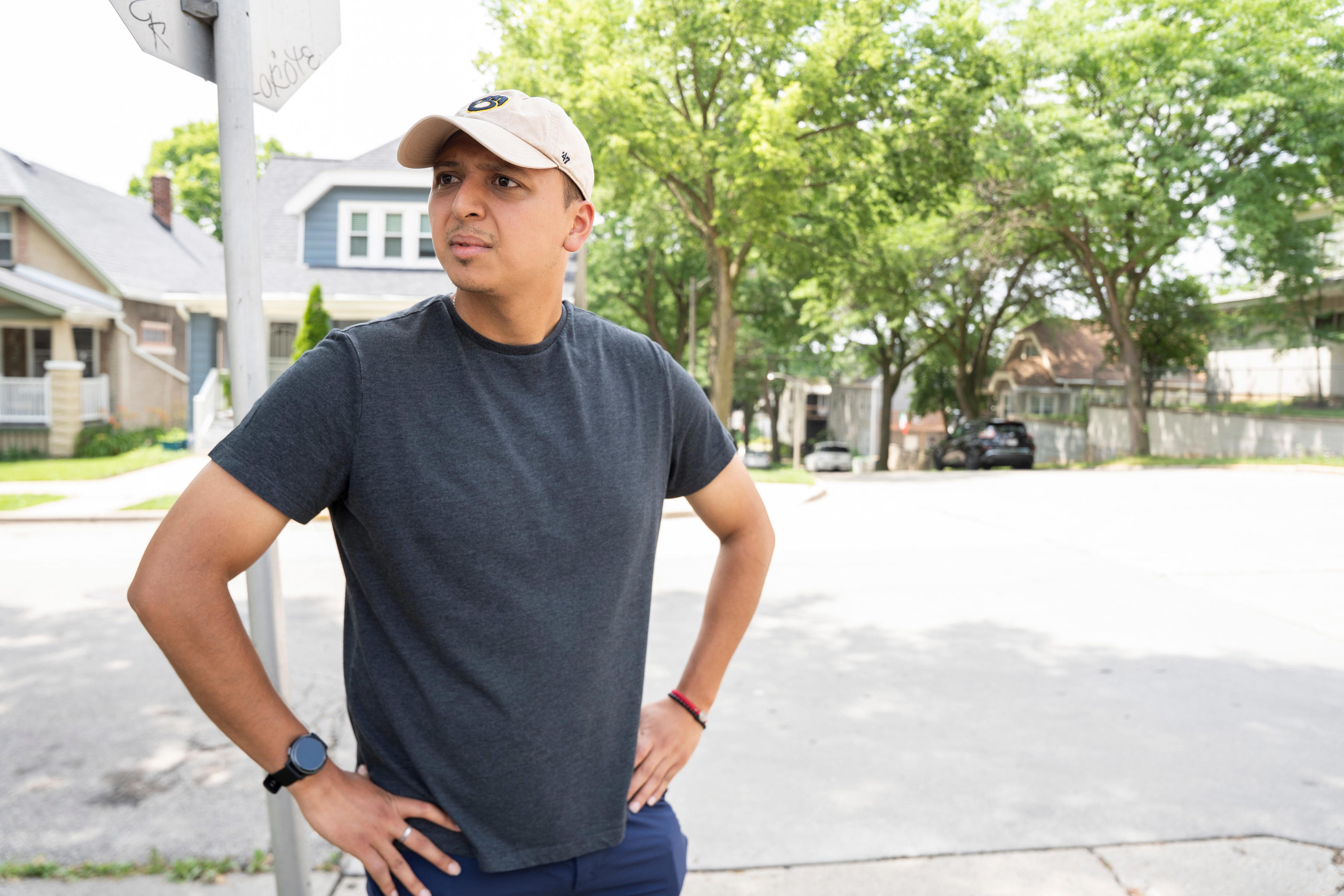
Burnham Park Residents Seek Traffic Safety Solutions
Burnham Park resident Saúl Lopez Jr. recalls waking up to the sound of a crash outside his home in October 2020. When he went to investigate, several neighbors were gathered in the street. His car and four others on his block were totaled, he said. Ring camera footage captured by a neighbor revealed that the damage was due to a reckless driver.
Five years later, reckless driving remains a significant issue in Burnham Park, a neighborhood with some of the highest rates of traffic crashes in the city. Data from the Milwaukee Police Department shows that in 2024, there were 14,343 traffic crashes citywide, with 16% occurring in District 2, which includes Burnham Park. So far in 2025, there have been 7,945 traffic crashes, and District 2 accounts for nearly 15% of those incidents.
Community Efforts to Improve Safety
Residents like Lopez are pushing for changes to improve traffic safety. They hope to add speed humps and additional stop signs to their blocks, a process that requires neighborhood support, common council approval, and could lead to increased tax bills. “Being born and raised in Milwaukee with a lot of the narratives around reckless driving. My fear is that it will become the new normal,” Lopez said. “We can definitely call it out and work together to at least make a small difference, even if it's speed bumps... This is anchored in love and care for the community.”
Debby Montano Luna, a Burnham Park resident and block captain, shared similar concerns. “When my parents bought this house, it was nice and quiet, and calm. I would love to see it get back to that.” However, past proposals for speed humps faced challenges when residents learned they might have to pay for them, which previously halted traffic calming projects.
Steps Toward Traffic Calming Measures
The decision to seek additional speed humps and stop signs was made during a Burnham Park block party hosted by VIA Community Development Corporation (VIA CDC) and Safe and Sound. During the event, around 20 community members gathered to discuss safety concerns, resulting in several residents asking for help applying for more speed humps near the intersection of South 33rd Street and Branting Lane.
Despite these efforts, residents have yet to formally apply for a speed hump, according to Lopez. The process involves several steps, including gathering signatures from at least 50% of property owners in the area. Community members can request various traffic calming measures through the Milwaukee Department of Public Works’ Traffic Calming Program.
How to Request a Speed Hump
To request a speed hump, residents can contact the Milwaukee Department of Public Works or their neighborhood alderperson for a petition and application materials. The petition can also be obtained online through the department’s website. Translators are available for residents who primarily speak Spanish.
Organizations like Safe and Sound and VIA CDC offer resources to help collect signatures for traffic calming solutions. Safe and Sound assists with door-to-door signature collection, while VIA CDC provides translation services and helps residents through the application and installation process.
Once the petition is submitted, the Department of Public Works reviews the application. If the measure is appropriate, a field survey may be conducted, followed by a design phase. The information is then sent to the alderperson’s office, where residents are notified of the estimated cost and asked for their input.
Cost and Funding Options
The cost of installing a speed hump varies depending on the project. Each property owner is responsible for the assessment of their frontage, which is typically $2.75 per linear foot. For an average property with 40 feet of frontage, the total assessment could be around $110. If the project is approved, property owners pay a one-time fee, and if not paid in full, the amount is charged to their taxes.
Residents can request late billing, where the fee is due two years after construction. The city may also cover costs for property owners living below the poverty line or if the project falls within a Tax Incremental District. Grant funding, such as the Safe Routes to School Grant, may also cover the cost if applicable.
Resources for Residents
Residents can contact their alderperson’s office to determine eligibility for grants or assistance. VIA CDC can also connect residents to the correct agencies or elected officials for grant applications. “I like to tell neighbors to open as many doors as possible. It's okay to reach out,” said Kevin Solis, VIA CDC’s senior outreach and engagement manager. “People want to feel safe. People want to be able to go out and be in their neighborhood.”
Through collective effort and community support, Burnham Park residents hope to restore a sense of safety and peace to their neighborhood.

Post a Comment for "Residents of Burnham Park seek new speed humps — how to apply"
Post a Comment