Republicans Reject Trump's Tariff Rebate Plan
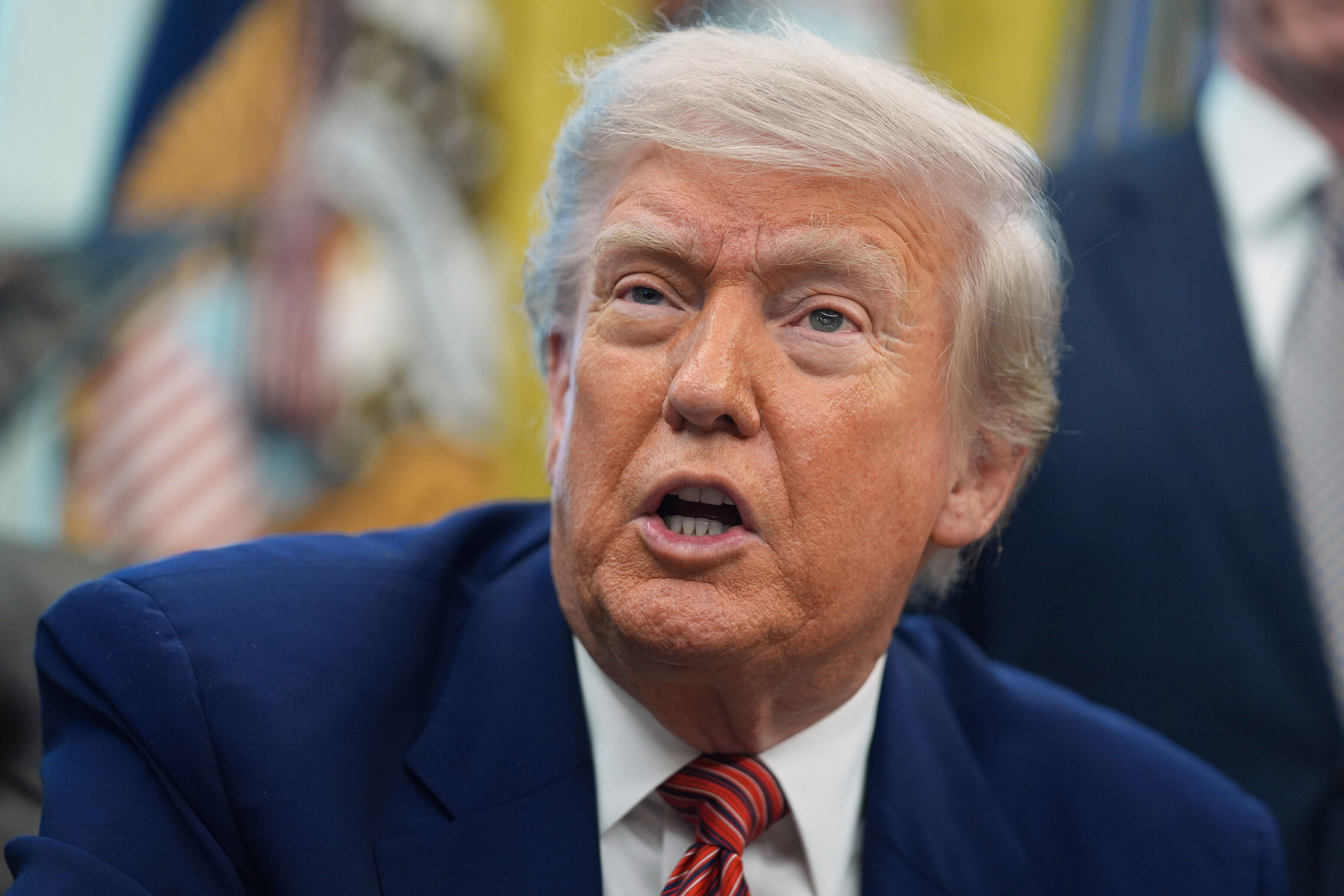
The Debate Over Tariff Rebates and the Federal Deficit
President Donald Trump’s plan to provide financial relief to Americans affected by his tariff policies has sparked a heated debate among lawmakers on Capitol Hill. While the idea of sending checks to consumers is appealing, some Republican lawmakers are pushing for a different approach—using the revenue generated from tariffs to reduce the national debt instead.
Last week, Trump mentioned the possibility of offering rebates to American consumers who have been impacted by the tariffs. He noted that the U.S. Treasury has collected around $150 billion from these higher duties, which were implemented earlier this year on nearly all imported goods. However, he emphasized that the main goal is to pay down the deficit, with the rebate being a secondary consideration.
Republican Senators Weigh In
Senator Josh Hawley (R-Mo.) introduced legislation that would provide $600 tariff rebates as a tax credit. He argued that working people have suffered under the tariffs for years and deserve some form of compensation. “Why not reward the working people who have taken it in the shins for the last four years and give them something out of this?” Hawley said.
However, critics argue that the money collected through tariffs ultimately comes from American businesses and consumers, making the idea of a rebate somewhat contradictory. It's like putting a Band-Aid on a wound you intentionally caused. This sentiment is echoed by other Republicans who believe the funds should be used to reduce the national debt rather than given back to consumers.
Concerns About the National Debt
Senators Ron Johnson (R-Wis.) and Mike Rounds (R-S.D.) expressed concerns that giving rebates would undermine the purpose of reducing the deficit. Johnson stated, “We’re $37 trillion in debt, running a $2 trillion-a-year deficit. No, we shouldn’t be rebating.” Rounds added that while tariffs act as a national sales tax on imported goods, they are worth considering as a way to manage the economy.
The nonpartisan Congressional Budget Office projected that Trump’s tariffs could reduce federal debt by $2.8 trillion over the next decade if maintained. However, the CBO also warned that the tariffs could slow economic growth and increase inflation.
Questioning the Rationale Behind Tariffs
Some Republicans have questioned the original justification for imposing tariffs, which was to reduce the U.S. trade deficit. Marc Short, a former senior adviser to Vice President Mike Pence, asked on social media, “Why do we need rebates if foreign nations are paying the tariffs?” He also criticized the idea of Congress acting as central planners by redistributing funds.
Earlier this year, Trump proposed a similar rebate for Americans, funded by savings from Elon Musk’s Department of Government Efficiency. That idea never gained traction.
Bipartisan Perspectives
While some Republicans are skeptical about the rebate plan, Democrats have largely criticized the Trump administration for implementing tariffs in a chaotic manner. Senator Ron Wyden (D-Ore.) said, “They clobber people with deeply flawed ideas after they said they care about costs, and then they got to run around and invent something to undo the damage.”
Senator Raphael Warnock (D-Ga.) added, “This is a tax across the board on ordinary people. And by the way, that tax is larger than $600.”
Despite the controversy, some Democratic lawmakers, like Senator Jeanne Shaheen (D-N.H.), have shown openness to the idea of rebates. However, she emphasized the need to review Hawley’s proposal first.
Conclusion
The debate over tariff rebates highlights the complex economic and political implications of Trump’s trade policies. While some see the potential benefits of providing financial relief to consumers, others argue that the funds should be used to address the growing national debt. As the discussion continues, it remains unclear whether a vote on tariff rebates will take place in Congress.

Post a Comment for "Republicans Reject Trump's Tariff Rebate Plan"
Post a Comment