Remember When EVs Were the Future? Automakers Have Moved On
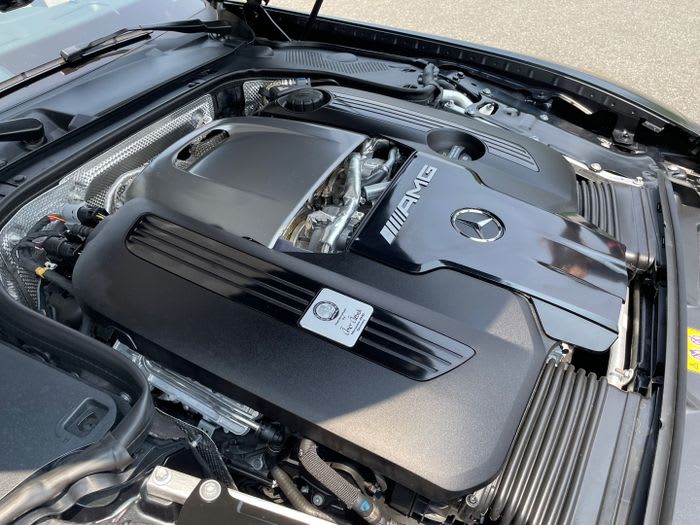
Automakers Reassess Strategy: Focusing on Internal Combustion Engines Amid Market Shifts
As the automotive industry navigates a rapidly changing landscape, global automakers are reevaluating their long-term strategies. A notable trend is the renewed emphasis on internal combustion engine (ICE) vehicles, as companies shift resources and focus away from electric vehicles (EVs). This strategic adjustment comes in response to several key factors, including rising tariffs, the end of EV subsidies, and evolving consumer demand.
The U.S. market, the world’s largest auto market, is at the center of this transformation. With the looming threat of tariffs of at least 10% and the elimination of EV subsidies in October, automakers are recalibrating their plans. Industry insiders suggest that demand for ICE vehicles will remain strong, contradicting earlier forecasts that predicted a swift transition to electrification.
One of the most prominent examples of this shift is Mercedes-Benz. The luxury automaker has informed its U.S. retailers about a more flexible powertrain strategy. Future models will be built on a shared platform capable of supporting gasoline, hybrid, and electric powertrains. This approach allows the company to maintain a balanced portfolio, with plans to launch 19 ICE models and 17 EVs by the end of 2027—marking a departure from its previous goal of transitioning entirely to electric by 2030.
Mercedes-Benz CEO Ola Källenius emphasized the importance of a dual approach, stating that the company aims to pursue both technologies without neglecting either. This sentiment is echoed by other major automakers, who are also adjusting their strategies to accommodate the evolving market dynamics.
BMW's Mini brand has faced similar challenges in expanding its EV presence in the U.S. The company has temporarily halted plans to import EVs from China and abandoned its goal of producing only electric vehicles globally by 2030. In an April interview, Mini's Vice President for the Americas noted that while the brand remains committed to electrification, ICE vehicles will continue to play a crucial role in North America for the foreseeable future. The company has also adjusted its approach to extend the lifespan of its ICE models.
Audi, meanwhile, is maintaining its aggressive EV rollout while expanding its ICE offerings. The German automaker plans to introduce the Q6 e-tron and A6 e-tron in the U.S. market this year, alongside new versions of the A5 and Q5 to bolster its ICE lineup. Similarly, Volvo, once a strong advocate for a full EV transition, has reversed course and accelerated the release of new ICE models. Updated versions of its popular XC60 and XC90 SUVs have already reached U.S. and global markets.
Mainstream brands are also making similar adjustments. General Motors is expanding ICE production at a facility originally slated to become an electric truck plant next year. The Orion Assembly plant in Michigan will add production lines for the Cadillac Escalade luxury SUV as well as the Chevrolet Silverado and GMC Sierra pickups.
Hyundai Motor is repurposing some production lines at its electric vehicle-exclusive plant, Hyundai Motor Group Meta Plant America (HMGMA), to focus on hybrid vehicles. The Korean automaker plans to produce a new type of hybrid, the Extended Range Electric Vehicle (EREV), in North America by the end of next year. Genesis, Hyundai’s luxury brand, will also launch its first hybrid model next year, departing from its previous gasoline- and EV-only lineup.
Factors Driving the Shift
The shift toward ICE vehicles is largely driven by growing uncertainties in the U.S. market. With tariff negotiations concluded with major trading partners, automakers now face tariffs of at least 10%. Automotive tariffs stand at 15% for Europe, South Korea, and Japan, and 10% for the UK.
Adding to the challenges, the U.S. will end EV subsidies starting this October, as EV adoption rates fall short of projections. President Trump previously signed tax legislation moving up the end date for U.S. EV subsidies from 2032 to September 30 of this year. This move is expected to increase EV prices by approximately $7,200, likely prompting a sharp drop in sales by year-end.
In this climate of tariff pressures and weakening EV demand, ICE vehicles are poised to become an important profit stabilizer for automakers. With years of investment and refinement behind them, even minor design updates can sustain steady consumer demand for these vehicles.
An industry expert commented that EVs require substantial investments in raw materials and ongoing technological development, funded largely by ICE vehicle profits. These were investments in the future, not immediate profit generators. With the U.S. cutting EV support and imposing tariffs, EV demand will inevitably decline. While competition will intensify in other markets, reduced sales in the largest market will curtail investment, ultimately elevating the importance of ICE vehicles in automakers' portfolios.

Post a Comment for "Remember When EVs Were the Future? Automakers Have Moved On"
Post a Comment