Quantum Gravimeter: GPS's Invisible Backup
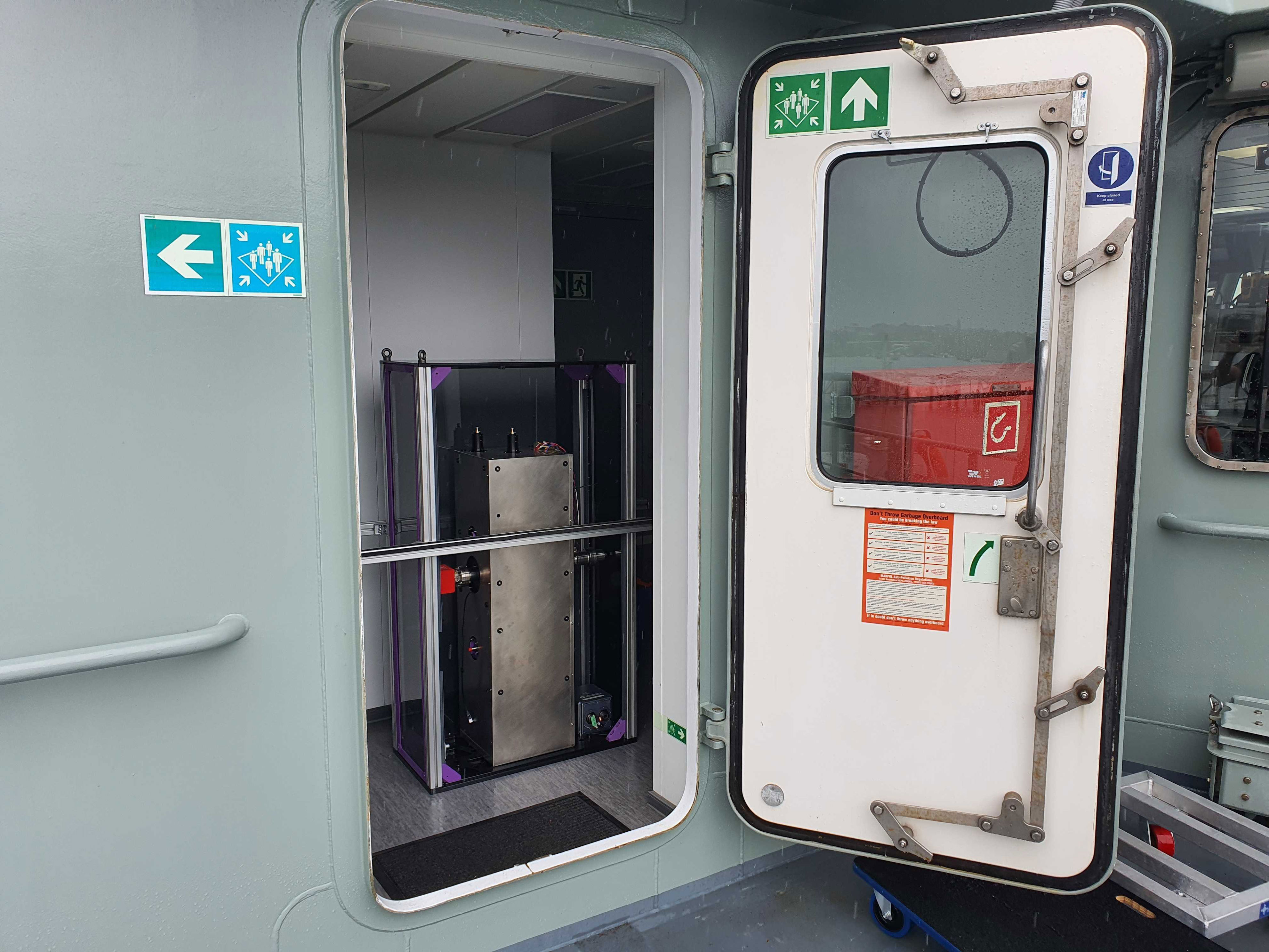
A New Era in Navigation: Quantum Sensors on a Navy Ship
A groundbreaking quantum sensor has been successfully tested aboard an Australian navy ship, marking a significant milestone in navigation technology. This innovative device, known as a dual gravimeter, was developed by the Australian company Q-CTRL and is expected to be available in the market by late 2026. During its first practical test, the crew of the Royal Australian Navy’s aviation training vessel MV Sycamore was able to navigate for 144 hours without relying on GPS.
According to Michael J. Biercuk, CEO and founder of Q-CTRL, this experiment represents the first time such a sensor has been used in a real-world scenario on a moving vehicle. The potential of this technology is vast, especially considering the growing challenges associated with global positioning systems (GPS).
The Limitations of GPS
Quantum gravimetry is one of many technologies being developed as a backup for satellite navigation systems like GPS. As geopolitical tensions rise, issues such as GPS jamming and spoofing have become increasingly common. In early May, a 300-meter-long container ship ran aground in the Red Sea, reportedly due to GPS interference. Analysts found that the ship's GPS position appeared hundreds of miles away from its actual location, highlighting the vulnerabilities of GPS systems.
This incident underscores the critical role GPS plays in various industries, including transport, banking, power grid synchronization, and offshore drilling. While maritime users often rely on inertial navigation systems as a backup, these systems have limitations. They use accelerometers and gyroscopes to track motion, but errors accumulate over time, leading to inaccuracies in position reporting.
How Quantum Sensors Work
Quantum gravity sensors offer a promising alternative. These devices measure Earth’s gravitational pull by analyzing the movement of atoms illuminated by laser beams within a vacuum chamber. By comparing this data with gravity maps created from satellite measurements, the system can determine the strength of gravity at different points along a journey.
Biercuk explains that this process is similar to visual navigation systems used in drones. Instead of using cameras to identify landmarks, quantum sensors rely on the unique gravitational signatures of the Earth. "You can’t spoof gravity without literally moving a mountain," he says, emphasizing the security and reliability of this technology.
Advantages of Quantum Gravity Sensors
One of the key benefits of quantum gravity sensing is its resistance to interference. Unlike lidar or radar-based systems, these sensors do not emit active signals, making them less likely to be detected by adversaries. Additionally, they are highly accurate and can detect even minor variations in gravitational pull caused by geological features such as hills, valleys, and underground mineral deposits.
Despite their advantages, quantum gravimeters are not intended to replace GPS entirely. Biercuk acknowledges that GPS remains a reliable technology when it is available and trustworthy. However, in areas where GPS is unreliable or unavailable, such as polar regions, these sensors could provide a crucial alternative.
Challenges in Development
The prototype tested off the Australian coast is about the size of a server rack, but Q-CTRL aims to reduce its size to that of a small fridge before launching it in 2026. The development process took approximately 14 months and presented several challenges, particularly when testing the sensor outside controlled laboratory environments.
Biercuk notes that mechanical vibrations, radio interference, and the movement of the vessel all create noise that can obscure the sensor's signal. To overcome this, the team developed a sophisticated software solution that filters out unwanted interference.
Future Prospects
While quantum gravimeters may not fully replace GPS, they offer a robust alternative for situations where traditional navigation systems fail. As technology continues to evolve, the integration of quantum sensors into navigation systems could significantly enhance safety and reliability across various industries.
In the coming years, we can expect to see more advancements in this field, potentially leading to widespread adoption of quantum-based navigation solutions. For now, the successful test aboard the MV Sycamore marks a promising step forward in the quest for more secure and accurate navigation technologies.

Post a Comment for "Quantum Gravimeter: GPS's Invisible Backup"
Post a Comment