Puerto Rico: Immigrants Tracked and Deported as Communities Resist
A Story of Fear and Resilience
Aracelys Terrero Mota, a Dominican-born woman who has called Puerto Rico home for 21 years, went to register her small business in the municipal office of Cabo Rojo on June 5. She presented her passport, visa, and migration and work permits — all up-to-date and in good order. As a domestic violence survivor, she is legally protected under the Violence Against Women Act (VAWA) to live and work on the island. However, after leaving the office, she was detained by U.S. Customs and Border Protection (CBP) officers.
According to the executive director of the local chapter of the American Civil Liberties Union (ACLU), Annette Martinez-Orabona, Terrero disappeared from the system and was held in various detention centers in Florida, Texas, and New Mexico. After protests and demands from human rights organizations and activists, she was finally returned to Puerto Rico on June 28.
“My soul cried, and even my heart ached. … It was like a horrible nightmare,” Terrero told Telemundo Puerto Rico in Spanish.
Terrero’s immigration case has become one of the most visible in Puerto Rico, drawing attention from thousands of Puerto Ricans and fellow migrants across the archipelago via social media and the press. Her experience, however, is not unique. As the Trump administration intensifies its crackdown on immigrants through controversial Immigration and Customs Enforcement (ICE) raids, arrests, and deportations, agents in Puerto Rico have followed suit — disproportionately impacting Dominican migrants on the island.
As of June 2025, 500 people have been detained in Puerto Rico, with nearly three-quarters of those arrested being from the Dominican Republic. “We are currently being persecuted, rounded up, deported, and there have even been deaths,” said José Rodríguez, president of the Dominican Human Rights Committee of Puerto Rico, during an interview with Somos.
The committee was formed during the late 1980s and early '90s, when many Dominicans left their homeland in search of better employment opportunities in Puerto Rico. Over the years, the community has faced increasing challenges, including state-sanctioned xenophobia and anti-Blackness. These sentiments have been emboldened under President Donald Trump and Puerto Rican Governor Jenniffer González’s anti-immigration rhetoric and policies.
A History of Violence and Discrimination
Dominicans make up one of the largest immigrant populations in Puerto Rico, yet they continue to face systemic discrimination. Despite contributing significantly to the island's social and economic fabric, they have increasingly been targeted by authorities.
In 1997, Rafael Herrera, a Dominican migrant, was beaten to death by a Puerto Rican police officer during a drug bust. In 2009, Franklin Cáceres Osorio, an undocumented Dominican immigrant, was struck and handcuffed before being thrown from a two-story building and left to die. More recently, on March 28, Antonio Báez, a Dominican worker, climbed onto the roof of his workplace to avoid arrest during an ICE inspection. While attempting to hide, he fell and died.
These incidents reflect a pattern of racial profiling and violence against Dominican and other immigrant communities. “There are people hiding out of fear,” said a pro-immigrant organizer in Puerto Rico, who preferred to remain anonymous.
Government Policies and Community Resistance
In 2013, then-governor Alejandro Garcia Padilla approved Law 97, which allowed people without official immigration status to obtain a driver’s license. This policy benefited nearly 20,000 individuals. However, under Governor Jenniffer González, a Republican and Trump ally, this progress has been reversed.
In June, both the Department of Transportation and Public Works (DTOP) and ICE confirmed that private data had been shared between the two agencies for several months. ICE subpoenaed the Puerto Rican government for the information, and it complied without public warning or hearing. This led to the detention of people in their homes.
Now, in Barrio Obrero, a San Juan neighborhood known for its Dominican population, fear is widespread. People are afraid to leave their homes or go to work. “It’s dangerous. People are coming here as if it’s the Nazi times. There are people hiding out of fear,” the organizer said.
González’s government has aligned itself closely with Trump’s hardline immigration policies, pressuring local institutions to cooperate or face consequences. In January, she warned that public workers and agencies refusing to cooperate with ICE could jeopardize federal funding. However, sanctuary cities and counties across the U.S. have successfully challenged similar threats in court.
Despite this, only two municipalities — Aguadilla and Hormigueros — have declared themselves sanctuaries. Meanwhile, the government has proposed an extension to the controversial Act 60, which allows “investors” — often white, wealthy, and American — to come to Puerto Rico and take advantage of tax incentives until 2055.
This extension was approved just days before Terrero returned to Puerto Rico after being illegally detained.
Grassroots Efforts and Solidarity
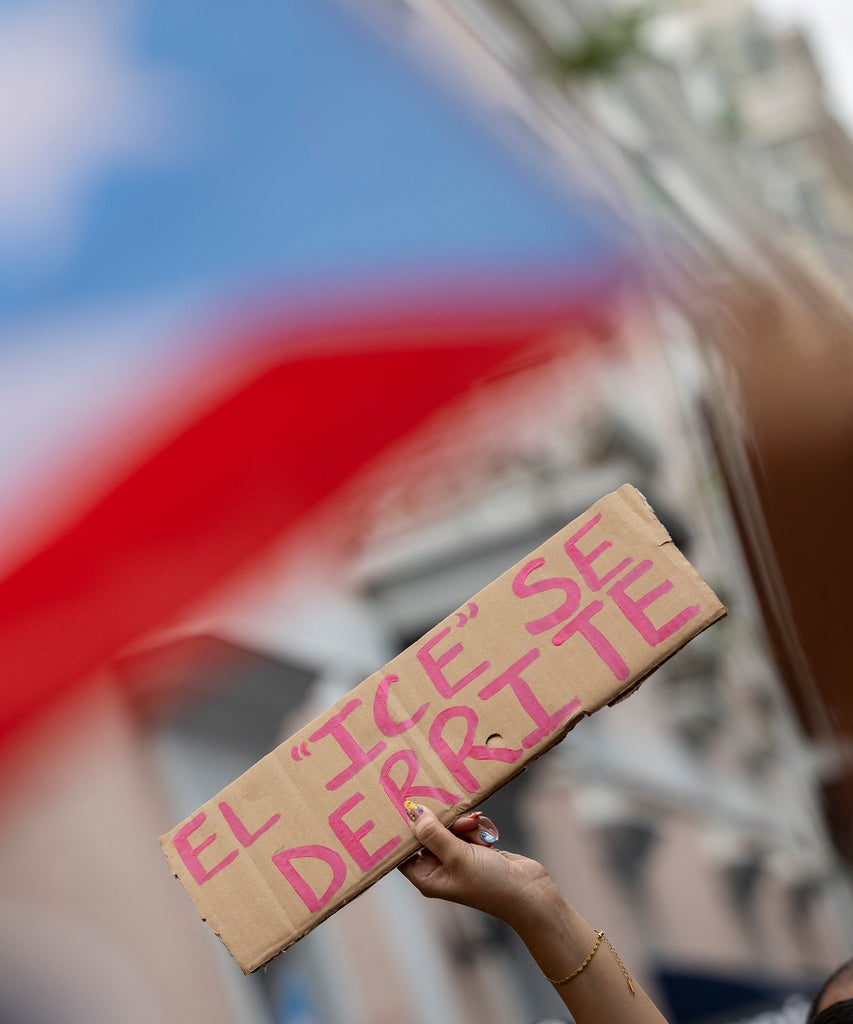
While much of the government is actively participating in its own colonialism, many Puerto Ricans have been pushing back, speaking out, and protesting against escalating raids and deportations. This movement also impacts Haitian and South American migrants.
“We know and we recognize that anti-Black racism is what it perpetuates,” Gloriann Sacha Antonetty Lebrón, founder of the popular Black Puerto Rican magazine Revista Étnica, told Somos. “This is not the first time this has happened. This is a pattern that keeps repeating itself to benefit a few.”
Despite the challenges, grassroots organizations are working to support immigrant communities. Groups like Taller Salud, Centro de Apoyo Mutuo, and others have expanded their focus to include immigrants. On social media, even Bad Bunny has spoken out about the raids, recording and posting an Instagram Story showing ICE agents in unmarked RAV4s on Avenida Pontezuela in Carolina.
“What the Puerto Rican government hasn’t done for the community, the Puerto Rican people are doing,” said Rodríguez. “I go out running in the morning, and sometimes I have to stop to talk to people in their cars, or they honk and yell, ‘we are with you.’ That has never been seen before.”

Post a Comment for "Puerto Rico: Immigrants Tracked and Deported as Communities Resist"
Post a Comment