Protests Rise in Israel Before Gaza Operation
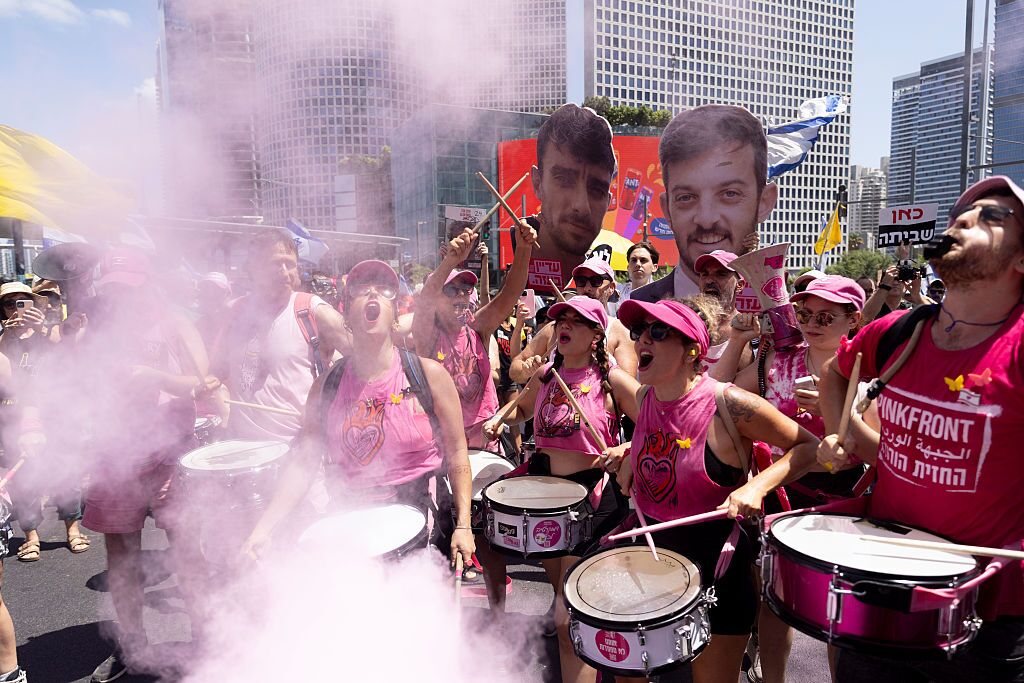
Growing Protests in Israel Against Government's Gaza Strategy
Hundreds of thousands of Israelis took to the streets on Sunday to express their opposition to Prime Minister Benjamin Netanyahu’s plan to expand military operations in the Gaza Strip. Instead of focusing on negotiations to end the war and secure the release of the remaining hostages held by Hamas, the government has opted for a more aggressive approach. The protests were organized by families of the 50 hostages still held by Hamas, with many calling for solidarity through strikes and demonstrations across the country.
The main rally was held at Tel Aviv’s "hostage square," where organizers claimed up to half a million people gathered. This marked a significant turnout, especially considering the usual size of such events in Israel. Demonstrators carried Israeli flags and photos of the hostages, emphasizing their demand for the safe return of loved ones.
Earlier in the day, police clashed with protesters who blocked roads in several parts of the country, resulting in at least 30 arrests. At one protest near a Jerusalem access tunnel, authorities used a water cannon to disperse participants. These actions highlighted the growing tensions between the government and its citizens over the direction of the ongoing conflict.
The Israeli government has recently approved a plan to take control of Gaza City, the de facto capital of the Palestinian enclave. This move is seen as a high-risk operation, as it could endanger the lives of the remaining hostages, many of whom are believed to be in poor health and suffering from malnutrition. There are also concerns that they may be caught in crossfire or even executed.
Despite the government’s decision to proceed with this plan, some members of Netanyahu’s security cabinet have expressed doubts about its scale. Meanwhile, Israeli envoys are reportedly preparing to resume mediated talks with Hamas if the group softens its demands. However, there has been no indication that Hamas is willing to make any concessions.
Domestic support for the war, which began in response to the October 7, 2023, attacks by Hamas, has significantly declined. Recent polls show that most Israelis want a deal to bring back the 50 hostages, even if it means leaving remnants of Hamas intact. This shift in public opinion has led to widespread protests, with groups organizing through social media and occupying highway intersections.
Netanyahu has remained firm in his stance, vowing victory against Hamas. He has not provided details on who might govern the devastated Gaza Strip, where the Hamas-run health ministry reports that over 61,000 Palestinians have died. In a statement, he warned that calls for an end to the war without defeating Hamas would only lead to more violence and repeated conflicts.
While the main labor federation did not join the strike, several private sector companies supported the protests. Apple, Microsoft, Wix.com, Fiverr, Qumra Capital, and Pitango Ltd. allowed employees to take the day off to participate in demonstrations. A coalition called the Hi-Tech Forum, formed in 2023 to oppose the government’s judicial overhaul, also voiced its support for the hostage families.
Eli Cohen, a member of Netanyahu’s security cabinet, confirmed that the Israel Defense Force would finalize orders for the takeover of Gaza City. He estimated that the operation could take six to eight weeks to evacuate as many as 1 million Palestinian civilians before the main assault, though he urged for faster action.
Hamas has condemned the plan, calling it “the beginning of a new wave of brutal genocide” by Israel. The group insists on a full Israeli withdrawal as part of any truce and refuses to disarm, despite Israel’s demands. The conflict has left Israel exhausted, with over 1,200 people killed in the October 7 attacks and more than 450 troops lost in combat since.
As the protests continue, the divide between the government and its citizens grows wider. Many Israelis feel that the war has become unsustainable, and they are determined to resist further escalation. With the situation evolving rapidly, the future of the conflict remains uncertain.

Post a Comment for "Protests Rise in Israel Before Gaza Operation"
Post a Comment