Prominent Palestinian Nonviolent Activist Killed by Israeli Settler
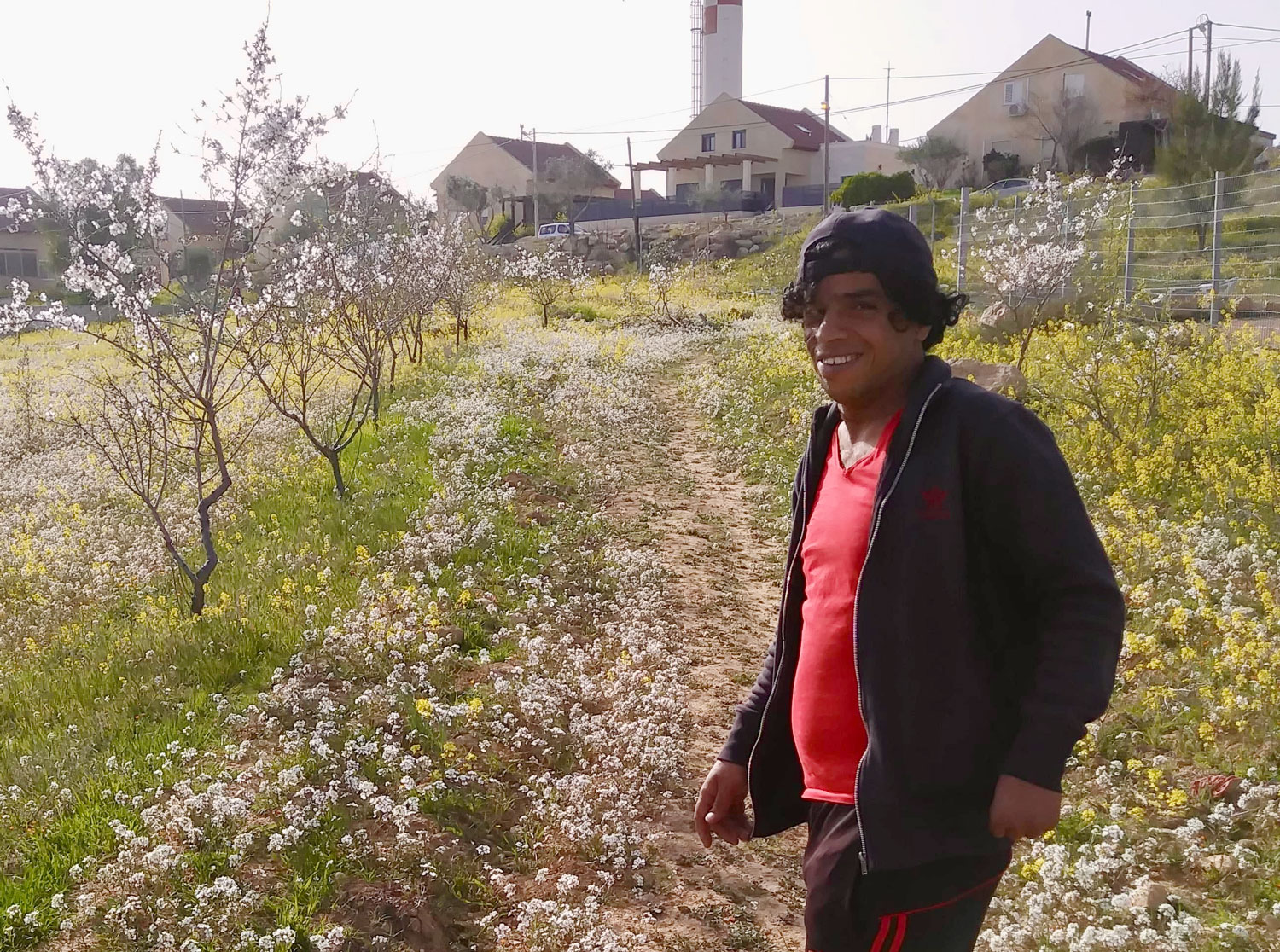
A Life of Resistance and Tragedy
Awdah Hathaleen struggled with sleep for years. Every time his phone buzzed at night, his heart raced. Was it another attack? Had a home been destroyed? Were people hurt? For him and many others in his community, the fear was constant. “There is no safety at all,” he told a reporter in May. “We wish we could sleep one night and be sure that nothing is going to happen. But we haven’t found that so far.”
On Monday, July 28, Hathaleen’s fears became reality. The 31-year-old Palestinian Bedouin was shot and killed by a Jewish settler in his village of Umm al-Khair in the South Hebron Hills of the West Bank. Footage from the scene showed the attacker opening fire. Israeli authorities identified the suspect as Yinon Levi, a settler who had previously been sanctioned by former President Joe Biden due to his involvement in expulsions and violence against Palestinians. However, those sanctions were later lifted under President Donald Trump.
Levi was detained on suspicion of “reckless conduct resulting in death and unlawful use of a firearm” but was released to house arrest. He was scheduled for a hearing the following day, according to reports from the Israeli newspaper Haaretz.
The incident began when Levi was driving an excavator and struck a resident of the village, leaving the man unconscious. Children gathered around the injured man and began throwing stones. At this point, Levi stepped down from the excavator, brandished a handgun, and fired indiscriminately. Hathaleen was shot in the chest and died shortly after. The man hit by the excavator was later released from the hospital.
Hathaleen was more than just a community leader—he was a well-known and beloved activist, known for his nonviolent resistance. His death sent shockwaves across the world, with Muslims, Jews, and Christians mourning the loss of a man who had built bridges between communities. Friends and colleagues described him as warm, generous, and deeply committed to creating connections and fostering understanding.
“He did so in the service of a higher purpose and a broader movement,” said Maya Rosen, a Jerusalem-based activist and journalist. “He was really building the world he wanted to see for his children.”
Basel Adra, a Palestinian activist and journalist, called the killing a “slaughter.” He posted on social media: “This is how Israel erases us—one life at a time.” Hathaleen had contributed to the Oscar-winning documentary “No Other Land,” which highlights the struggles of Palestinians in the West Bank.
Over the past decade, Hathaleen had cultivated a wide network of allies, including Israelis and American Jewish activists who volunteered as a “protective presence” to deter settler violence and document human rights violations. He believed in nonviolent resistance, even as the situation around him worsened.
“I’m a Palestinian, but forget it, put it aside. As a human, do you accept what I’m facing?” he once asked. “Anyone who is a human will say ‘no.’”
In the months leading up to his death, Hathaleen and his cousin traveled to the U.S. to speak with Jewish and Christian congregations. However, their visas were revoked at San Francisco International Airport, and they were sent back home the same day.
Since the Hamas attack on Israel on October 7, 2023, life for West Bank Palestinians has become increasingly dangerous. According to the United Nations, nearly 1,000 people have been killed in the West Bank since that day, and over 2,907 homes have been demolished.
Hathaleen’s village, Umm al-Khair, is part of Masafer Yatta, a collection of 19 hamlets. The Bedouin Palestinians there have been denied access to their grazing lands by encroaching settlers. Since 2007, 118 structures in the village have been destroyed.
Despite the growing fear and danger, Hathaleen remained committed to his cause. Elisheva Goldberg, a longtime friend and senior director of media and policy for the New Israel Fund, noted how frightened he had become in recent years. “I’d never seen him so afraid,” she said. “This is a guy who believed very strongly in nonviolent resistance to the occupation.”
Rabbi David Cooper, who had befriended Hathaleen during a 2017 trip to Israel, also saw the change. “He didn’t know how he could possibly say to his kids that everything was gonna be OK,” Cooper said. “For a parent not to be able to reassure your children that things will be fine—that’s one of the worst aspects of trying to be a parent in an occupation.”
Hathaleen’s funeral has not yet taken place, and his body remains in the hands of the Israeli military. Activists who visited the village after the shooting reported that a mourning tent was taken down by the military, and the area was declared a closed military zone.
Many believe that justice for Hathaleen’s killer is unlikely. According to monitoring by the Israeli human rights group Yesh Din, only 3% of investigations into “ideologically motivated crime” against Palestinians in the West Bank led to convictions between 2005 and 2024. The Israeli military has not responded to requests for comment.

Post a Comment for "Prominent Palestinian Nonviolent Activist Killed by Israeli Settler"
Post a Comment