Pritzker: Illinois Aiming to Ease SNAP Cuts from Trump's Policies
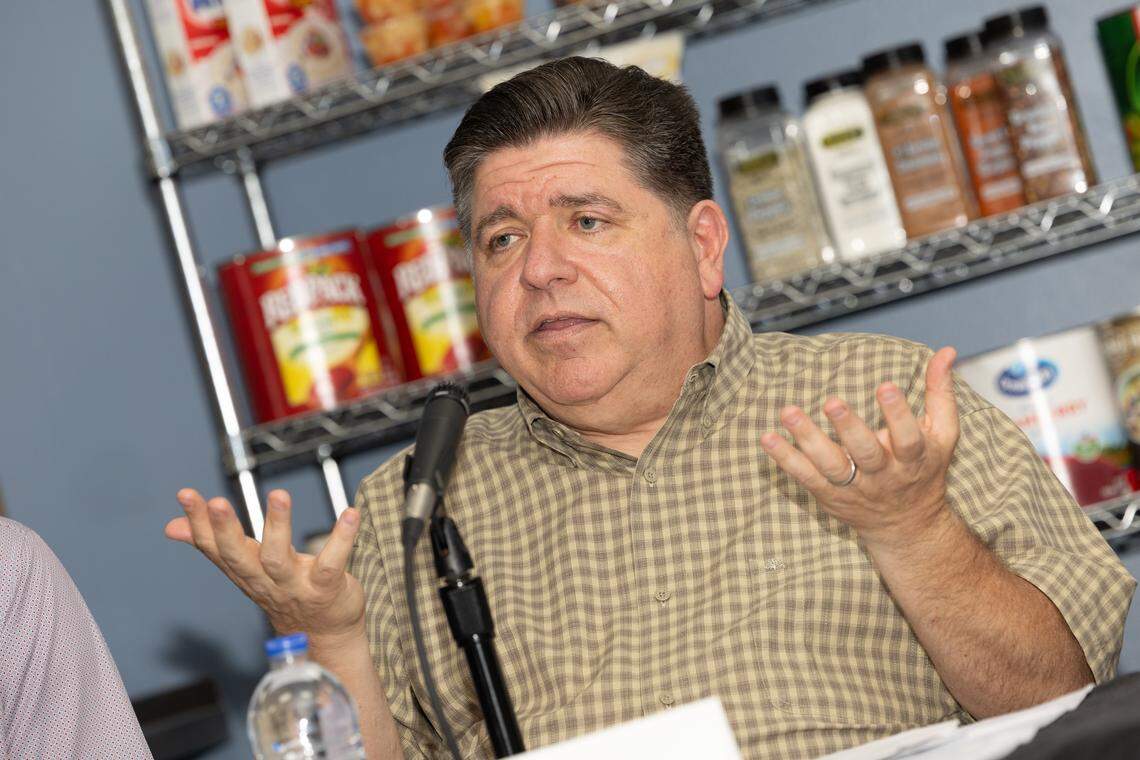
Governor JB Pritzker Addresses Impact of Federal SNAP Cuts in East St. Louis
Governor JB Pritzker recently visited an East St. Louis food shelter to discuss his administration's strategies for mitigating the effects of federal spending cuts on essential programs like the Supplemental Nutrition Assistance Program (SNAP). These cuts are expected to significantly impact Illinois residents who rely on SNAP benefits to afford groceries.
Pritzker highlighted several initiatives his team is exploring, such as simplifying the application process and supporting local grocers to prevent them from being overwhelmed by the changes. However, he did not outline specific policies aimed at generating additional revenue to offset the financial burden caused by these cuts. He acknowledged the challenge of managing the economic implications, noting that the federal government has more flexibility in funding than state governments.
"The federal government gets to print money, we can't," Pritzker said. "It's like they're cracking holes in our boat from Washington D.C., and we can only hold so many boards together. There's gonna be a leak."
The federal government passed the One Big Beautiful Bill Act in July, which includes significant changes to the SNAP program. These changes shift some costs to states, increase work requirements for individuals aged 18 to 64, and mandate that recipients complete at least 80 hours of paid, unpaid, or volunteer work per month to maintain their benefits.
Pritzker warned that the full impact of these changes will be felt within a year, affecting approximately 1.9 million Illinois residents who depend on SNAP. This includes around 47,000 people in St. Clair County, where up to 10,000 individuals could lose their benefits immediately—over 21% of the current recipients.
According to state statistics, over 1.8 million Illinoisians received $4.7 billion in SNAP benefits during the 2025 fiscal year. First Assistant Deputy Governor for Health and Human Services Ryan Croke stated that while the administration is exploring ways to ease the burden, no concrete plans for new revenue sources have been developed yet.
"This is a day by day operation that will require a lot of creativity and strategic thinking," Croke said. Dulce Quintero, secretary of the Illinois Department of Human Services, criticized the changes as intentionally bureaucratic, claiming they are designed to discourage applications. She noted that the state will face an annual cost of $800 million to manage the adjustments.
Croke added that Quintero’s office is working to ensure proper staffing, updated technology, and policy reviews to handle the changes effectively. When asked about the possibility of opening state-run grocery stores similar to proposals by New York City mayoral candidate Zohran Mamdani, Pritzker declined, stating that the focus would remain on supporting existing private businesses and local co-ops.
Pritzker emphasized that SNAP plays a crucial role in sustaining the local economy, helping keep grocery stores operational. Without it, some stores might close, and similar issues could arise with Medicaid cuts, potentially leading to hospital closures.
One East St. Louis resident, Tony Russell, 67, criticized the cuts, saying, "If (Trump) takes away too much stuff from the people, then he's starting a war." Russell shared his personal struggles, including losing his birth certificate after his house burned down, which complicated his efforts to regain Social Security benefits.
The Trump administration defended the cuts, stating in a news release that the changes are necessary to ensure the program serves "the truly needy." They argued that the mission of SNAP has failed, claiming it was meant to be temporary help for those facing hardship. The administration also cited that nearly 75% of able-bodied adults without dependents on SNAP have no earned income.
The Supplemental Nutrition Assistance Program, previously known as "food stamps," began in 2008 and traces its origins to 1939 during the Great Depression. Local reporter Mike Koziatek contributed to this article, providing insights into the ongoing challenges faced by communities affected by these federal changes.

Post a Comment for "Pritzker: Illinois Aiming to Ease SNAP Cuts from Trump's Policies"
Post a Comment