"Pray for Rain": Wildfires in Canada Burn Unfamiliar Territory
Unprecedented Wildfire Patterns Across Canada
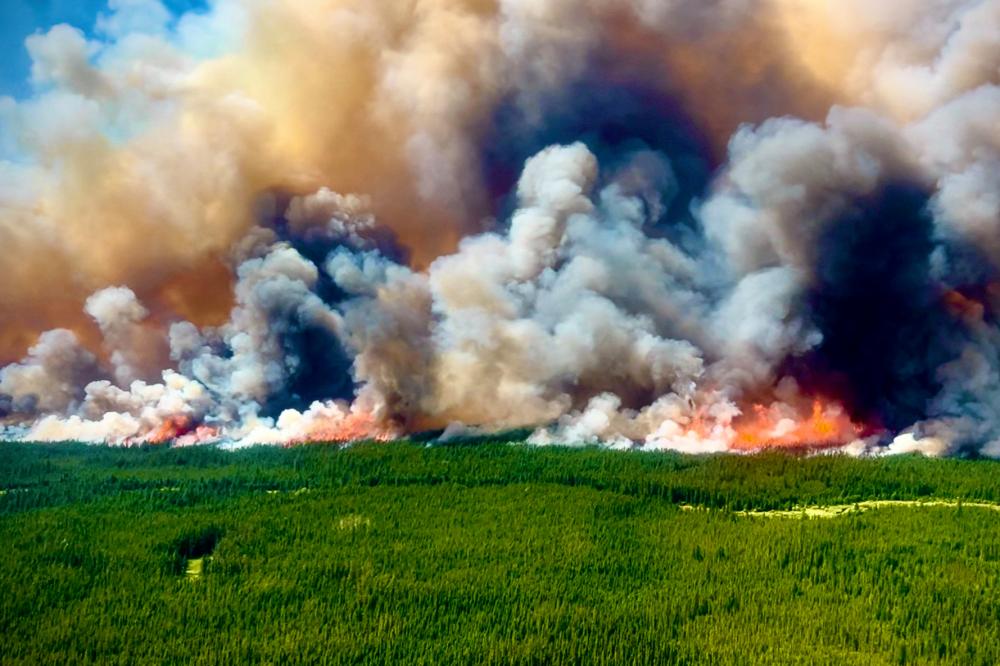
Road closures, evacuations, and travel disruptions have become a regular part of Canada’s wildfire season. However, this year has brought a new challenge: the worst fires are not coming from the traditional hotspots in the western provinces but instead from the prairie provinces and the Atlantic region. This shift highlights the evolving nature of wildfire risks across the country, as dry conditions continue to strain resources and force officials to adapt their strategies.
In recent weeks, tens of thousands of residents have been evacuated due to wildfires, with Saskatchewan and Manitoba bearing the brunt of the damage. These two provinces alone account for over 60% of the area burned in Canada this year. The situation is also severe in the Atlantic region, where Newfoundland and Labrador is struggling to manage out-of-control blazes. In response, the province’s premier, John Hogan, announced a temporary ban on off-road vehicles in forested areas, citing the need to minimize additional risks.
Nova Scotia has taken similar steps, including shutting down hiking, camping, and fishing in forests. This decision reflects the fact that nearly all fires in the province are caused by human activity. Premier Tim Houston emphasized the extreme risk posed by the current dry conditions, saying, “We’re doing everything we can to protect people, property, and just pray for rain.”
Even Ontario has seen wildfires, with the Kawartha Lakes region experiencing fires less than 100 miles north of Toronto. This area, known for its popularity among city dwellers during the summer, now faces an unexpected threat.
For much of the past century, wildfires have primarily affected the western provinces, where geography, climate, and industry created the perfect conditions for large-scale fires. However, 2023 marked a turning point when Canada experienced its worst fire season on record, with smoke blanketing the United States. This event sparked a national conversation about the growing threat of wildfires.
Paul Kovacs, executive director of the Institute for Catastrophic Loss Reduction at Western University, noted that the scale of the 2023 fires was unprecedented. “This year is repeating all of that,” he said. “This is a national issue. This can show up anywhere.”
Kovacs also warned that more buildings have been destroyed this year compared to 2023, and many residents in high-risk areas like British Columbia and Alberta have not taken steps to protect their homes from fire. He hopes the increased awareness of wildfire risks will encourage people in other regions to reassess their vulnerability to fast-moving blazes.
A New National Reality
With nearly 7.5 million hectares burned in Canada in 2025—far above the 10-year average—experts warn that the situation is likely to worsen as climate change continues to alter weather patterns. Jen Baron, a postdoctoral researcher at the University of British Columbia’s Centre for Wildfire Coexistence, explained that even regions previously considered low-risk are now facing challenges due to extended droughts and rising temperatures.
“There are very few parts of Canada that would be totally protected from wildfire,” she said. To address this growing concern, the federal government has launched a multimillion-dollar initiative to study wildfire risk and adaptation strategies.
Baron emphasized that the problem is not limited to Canada. Similar challenges are emerging across Europe, where countries like Spain, Portugal, Greece, Bulgaria, Montenegro, and Albania are grappling with intense wildfires fueled by record-breaking heat and dry conditions. In Spain, officials are working to contain 20 major fires, while Portugal has seen a 17-fold increase in burned area compared to 2024.
The global focus on wildfires underscores the urgent need for a comprehensive approach to managing these disasters. Experts hope that the increasing frequency and severity of wildfires will prompt a reevaluation of forestry practices, urban planning, and Indigenous land stewardship.
“We’re just starting to catch up to the scale of the problem,” Baron said. “Wildfire is a natural ecological process, but it’s becoming increasingly challenging to manage with changing climatic conditions.”
As Canada and other nations face an uncertain future, the message is clear: wildfire is no longer just a regional issue. It is a national and global crisis that demands immediate and sustained action.

Post a Comment for ""Pray for Rain": Wildfires in Canada Burn Unfamiliar Territory"
Post a Comment