Pittsburgh Officials Assess Emergency Preparedness After Prolonged Power Outage in April
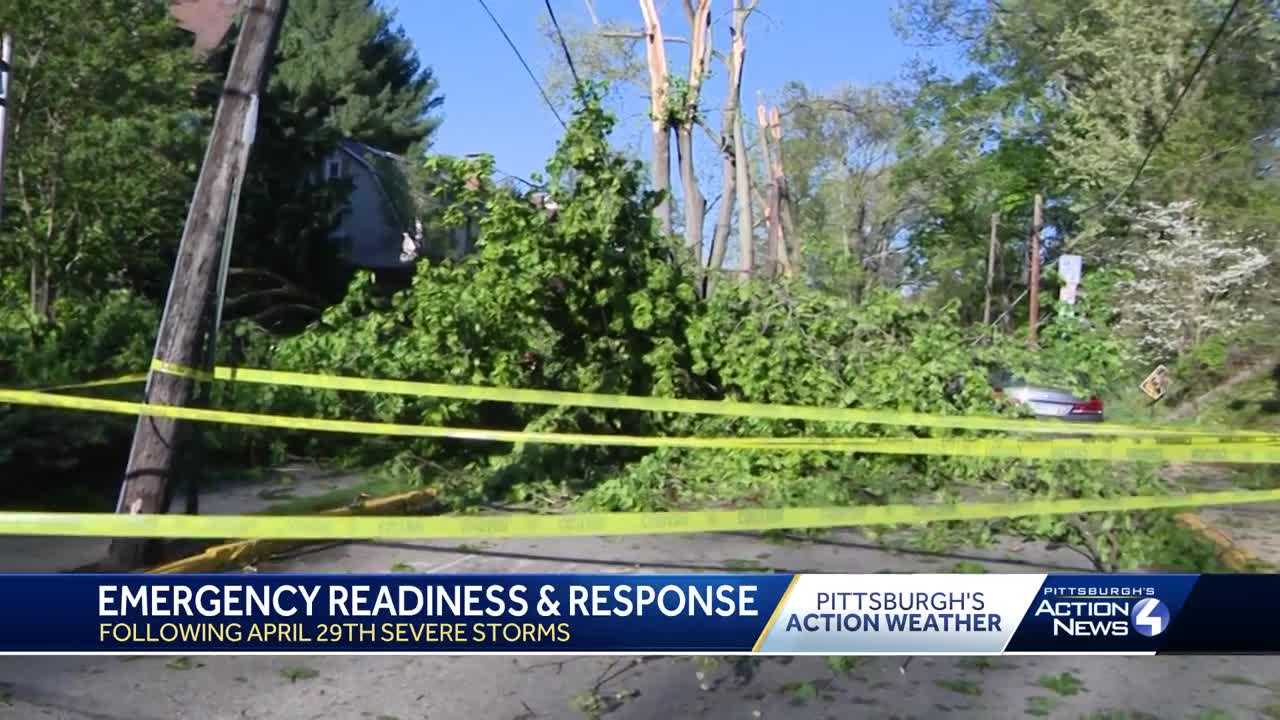
Reviewing the Emergency Response to Severe Storms in Western Pennsylvania
In April, severe storms swept through several communities in western Pennsylvania, causing significant flooding and widespread power outages. Local leaders have since convened to evaluate the emergency response, seeking ways to enhance preparedness for future events. One such meeting took place in Pittsburgh City Council chambers, where officials discussed the challenges faced during the storm and the lessons learned.
The post-agenda meeting, held on Wednesday, focused on the experiences of emergency crews during the storm. Officials highlighted the unpredictable nature of the event, which caught many off guard. Allegheny County Emergency Services Chief Matt Brown emphasized that while preparations were made for a two-day event, the scale of the storm was beyond expectations.
“We couldn’t have predicted the full impact of this storm,” Brown said. “The sheer volume of calls coming in overwhelmed our 911 system.”
During the peak hour of the storm, over 6,700 service calls were received by Allegheny County. In one minute alone, the system handled 1,000 calls. This surge in demand forced emergency responders to prioritize calls based on urgency. Brown noted that the initial focus was on the hospital system, as the extent of the power outages was unclear at first.
“Through coordinated efforts with hospitals, we discovered that roughly half of the hospitals in the area, most located in Pittsburgh, were operating on generators,” he explained. This highlighted the importance of having backup systems in place for critical infrastructure.
Public works crews also faced significant challenges due to the storm’s impact. Strong winds caused trees to fall onto power lines, creating hazardous conditions. Adam Ameel, the city of Pittsburgh’s critical infrastructure manager, described the difficulty in safely clearing these obstacles.
“We couldn’t send crews out until we confirmed that the lines were de-energized,” Ameel said. “This required coordination with Duquesne Light to ensure that no re-energization occurred while crews were working.”
Ameel also mentioned the importance of communication during the crisis. The city held press conferences in collaboration with Duquesne Light to provide updates on restoration timelines. While the public expected a quick resolution, the scale of the storm made it clear that recovery would take longer than anticipated.
Pittsburgh Fire Chief Darryl Jones reiterated the importance of preparedness, even when the outcome is uncertain. “Despite our best efforts at planning for disasters, we cannot control the disaster itself. We can only hope to manage it effectively,” he said.
The meeting marked the first part of a broader review process. The second part will focus on the response from Duquesne Light, the local utility company responsible for restoring power.
Lessons Learned and Future Preparedness
The storm served as a wake-up call for local officials, emphasizing the need for continuous improvements in emergency response strategies. Key areas of focus include enhancing communication systems, improving coordination between agencies, and ensuring that critical infrastructure remains resilient during extreme weather events.
Officials also recognized the value of community engagement. Public awareness and transparency played a crucial role in managing expectations and maintaining trust during the crisis. Moving forward, there are plans to conduct more frequent drills and simulations to better prepare for similar scenarios.
As the community continues to recover, the emphasis remains on learning from the experience. By analyzing the strengths and weaknesses of the emergency response, local leaders aim to build a more robust and effective system for future challenges.
Ongoing Developments in Pittsburgh
While the storm has passed, other stories continue to shape life in Pittsburgh. Local efforts are underway to address affordable housing issues as the city expands its development projects. Meanwhile, construction at Pittsburgh International Airport is nearing completion, with the new terminal more than 90% complete.
Other recent developments include the discovery of a body in the Monongahela River and a tense situation involving a Pitt student who found individuals moving into his apartment. Additionally, a 21-year-old Thiel College student tragically passed away after collapsing during a half marathon in Erie.
In another update, the Butler County sheriff has entered an agreement with ICE, outlining how the partnership will operate. These stories highlight the ongoing challenges and changes shaping the region.
As the city moves forward, the lessons learned from the storm will play a vital role in shaping future policies and emergency protocols. Through continued collaboration and proactive planning, Pittsburgh aims to be better prepared for whatever challenges lie ahead.

Post a Comment for "Pittsburgh Officials Assess Emergency Preparedness After Prolonged Power Outage in April"
Post a Comment