Patriotism Flags Removed by London Council
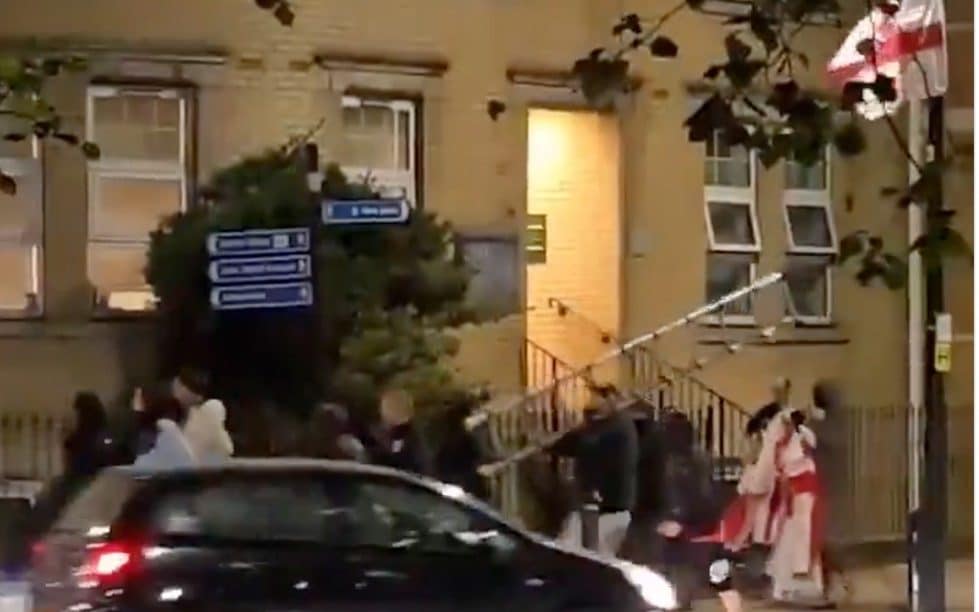
Rising Tensions Over National Flags in UK Cities
A growing debate has emerged across the United Kingdom regarding the display of national flags, particularly the St George’s flag and the Union Jack. This issue has sparked controversy among local councils, political figures, and residents, highlighting deeper divisions over patriotism, public safety, and cultural representation.
Tower Hamlets, a borough in east London, recently announced its decision to remove St George’s flags that had been attached to lampposts by patriotic groups. The move follows similar actions taken by Birmingham council, which ordered the removal of hundreds of Union Jack and St George’s flags from street lampposts. These flags were part of a widespread “Operation Raise the Colours” campaign, which gained momentum online.
The Labour-run Tower Hamlets council stated that it would take down the flags “as soon as possible,” citing concerns about the safety of pedestrians and drivers. Although the flags were placed up to 25 feet high, the council argued that they posed a risk to public safety. However, this claim was met with strong opposition from Reform UK MP Lee Anderson, who called the decision a “disgrace” and accused the council of showing “utter contempt for the British people.”
This is not the first time that the display of national flags has become a point of contention. Across England, including cities like Swindon, Bradford, Newcastle, and Norwich, British and English flags have been raised on streets as a sign of patriotism. In Tower Hamlets, the pro-Gaza Aspire Party-led council confirmed its intention to remove any St George’s flags from council property, including lampposts. A council spokesperson explained that while the public has the right to express their views, the council has a duty to maintain infrastructure. They added that unauthorized flags could be removed during routine maintenance.
The situation has drawn criticism from various political figures. Lutfur Rahman, the mayor of Tower Hamlets, previously faced backlash when he ordered the removal of Palestinian flags from council buildings and lampposts in March 2024. Jewish families had reported feeling unwelcome due to the presence of the flags, which they described as “oppressive and intimidating.” Critics accused the council of “two-tier bias” after Palestinian flags remained on display for months following the start of the Israel-Hamas war.
Robert Jenrick, the shadow justice secretary, condemned the council's actions, calling them an example of “absurd national loathing.” He criticized the council for allowing Palestinian flags to remain while removing those representing the UK. Similarly, Sir Iain Duncan Smith, former Conservative leader, questioned why Palestinian flags were left up while British flags were taken down.
Despite the controversy, some officials argue that national flags are a source of pride and should be displayed widely. Suella Braverman, a former home secretary, emphasized that national flags “are a great source of pride and patriotism,” and urged their display in as many places as possible.
Government guidance published in 2021 supports the idea of flying national flags, stating that they are a “very British way of expressing joy and pride.” It encourages more flags to be flown, especially the Union Jack. However, the guidance also warns that flags must not obstruct road signs or create hazards for transportation users.
As the debate continues, the question remains: how can communities balance the expression of patriotism with public safety and inclusivity? The recent decisions by local councils highlight the complex challenges of managing national symbols in a diverse and politically charged environment.

Post a Comment for "Patriotism Flags Removed by London Council"
Post a Comment