Ozarks Public Broadcasting Struggles to Stay Visible After Federal Funding Loss
The Impact of Federal Funding Cuts on Ozarks Public Broadcasting
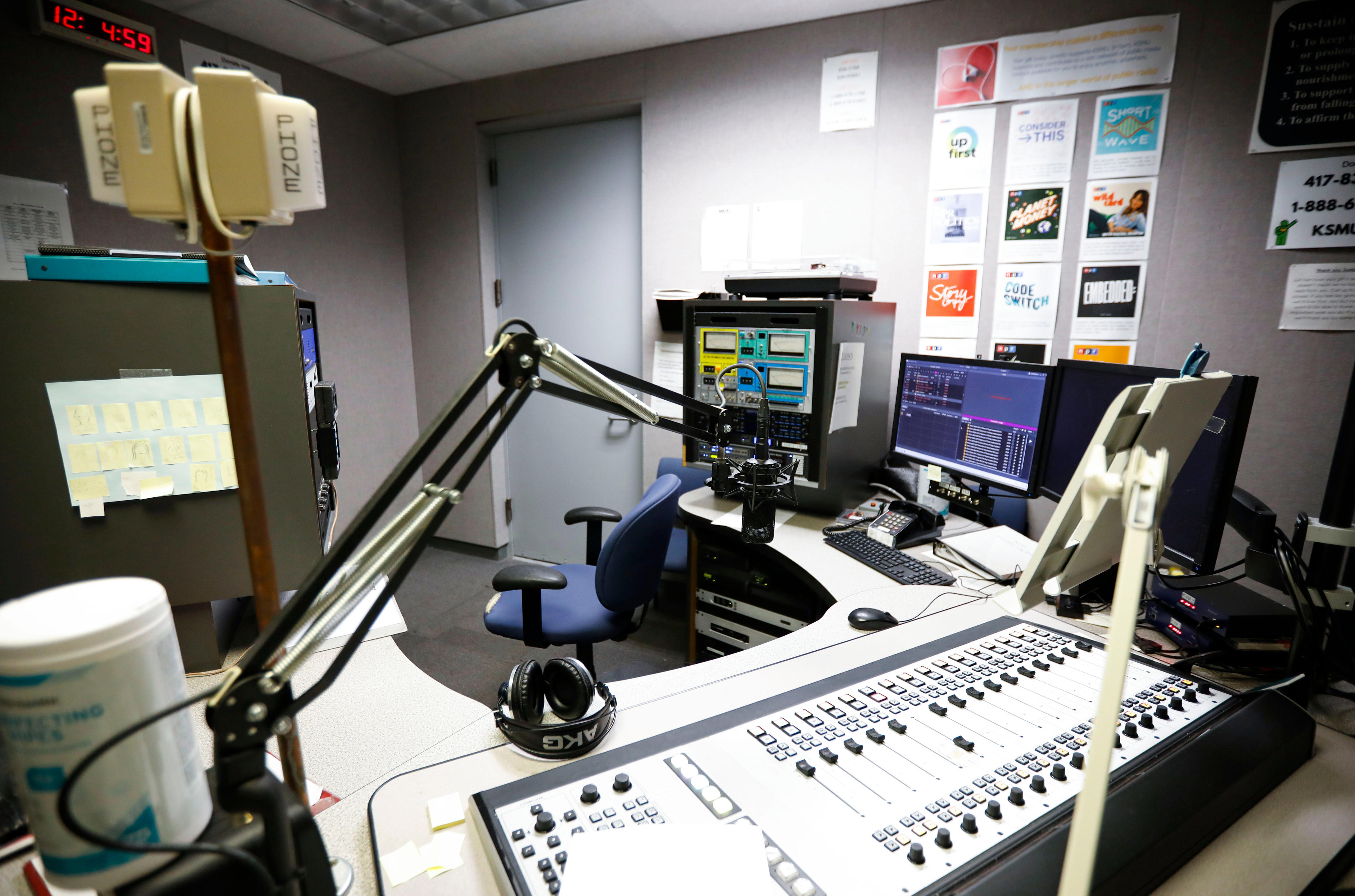
In the weeks following the approval of the "Rescission Act of 2025," which includes rescinding $1.1 billion to the Corporation for Public Broadcasting (CPB), it remains unclear exactly what changes will come to Ozarks Public Broadcasting. However, one thing is certain—there will be changes, according to Rachel Knight, general manager of Ozarks Public Radio (KSMU) and Ozarks Public Television (OPT).
Knight emphasized that the changes cannot go unnoticed. "The changes we're going to have to make will include changes to programming. People are going to hear, in some cases, less of what they enjoy about the radio station and see fewer of the programs they love on public television," she said.
Knight has been overseeing both KSMU and OPT for just over five years. She explained that federal funding accounts for 10% of KSMU's yearly budget and nearly a third (30%) of OPT's budget. Currently, the stations are analyzing their operations and trying to re-negotiate contracts with providers, but this process is proving challenging.
"The stations have operated so efficiently. It's something that we're proud of. But in this moment, it means that there are no easy cuts to make," Knight said. "Every decision is a hard one, and we hope people will have grace and understanding as we can't protect every single thing that we know is important to people."
The CPB was established in 1967 under the Public Broadcasting Act as a nonpartisan nonprofit that distributes federal funds and supports local public broadcasters. Knight noted that about 70% of the rescinded funding went directly through the CPB to stations like hers. Of the remaining third, a small portion is used for CPB administration, while the rest is allocated for strategic investments on behalf of the stations it serves.
One example of these strategic investments is music rights. "CPB is the entity that, on behalf of all public media, negotiated and funded music rights. Those are currently paid just through the end of this year," Knight said. "Taking CPB out of the mix is a real detriment to the system."
The Role of Public Media in Education
Public media may be the only source of news, education, and information for many individuals. While many people access news through the internet or cable television, not everyone has the same level of access. For those in areas with poor internet connections or who cannot afford cable or satellite services, public broadcasting provides essential resources.
Knight highlighted the importance of public media in early childhood education. A recent survey by Rebecca Dore, director of research at the Crane Center for Early Childhood Research and Policy at The Ohio State University, found that only about 12% of content consumed by first graders was educational. However, PBS accounted for 45% of the educational TV or videos parents said their kids watched most often.
For children without access to pre-school programming, shows like "Sesame Street," "Wild Kratts," and "Daniel Tiger's Neighborhood" on OPTV are crucial for their development. Knight stated that up to 90,000 children between the ages of 2 and 12 watch OPTV weekly. "These shows are maybe the most significant source of early counting, phonics, and all those building blocks that help kids get ready to succeed in school," she said.
Ensuring Public Safety Through Emergency Alerts
Another critical role of public broadcasting is ensuring public safety during natural disasters. While it is well-known that public broadcasting disseminates emergency alerts via radio and television, it also serves as a backup path for transmitting crucial messages to cellphones.
Knight explained that when new technologies fail, especially during natural disasters, public broadcasting becomes an essential alternative. "What the public television station has been able to offer because we have transmission locations in virtually every corner of the United States — we cover upwards of 99% of the population — we are the backup path that ensures if this link is broken, these alerts can still get to mobile carriers and out to the public."
Community Support and Future Solutions
Despite the challenges, there has been a surge of community support for local public broadcasting after the Rescission Act of 2025 passed. Knight noted that many people who had never supported the stations before became concerned about their future. "We've definitely seen the community step up," she said.
One way to ensure ongoing support is through sustaining memberships, where individuals contribute monthly. "This has been key for the station's stability, just knowing what amount of support we can expect," Knight said. She also encouraged the community to contact lawmakers to advocate for continued public funding.
Knight emphasized that public broadcasting was built on the concept of public-private partnerships. "There is no obvious savior in this. Like I said, public media was really designed and envisioned to be this public-private partnership," she said. "We are looking and trying every channel and avenue available to recover this money."
As the stations navigate these difficult times, Knight remains hopeful that the community will continue to support public broadcasting and its vital role in education, emergency alerts, and public safety.

Post a Comment for "Ozarks Public Broadcasting Struggles to Stay Visible After Federal Funding Loss"
Post a Comment