Opinion: Politics Shapes Civil Rights Enforcement at Justice Department
The Justice Department’s Political Manipulation and the Threat to Voting Rights
The U.S. Justice Department’s civil rights division has come under intense scrutiny for its apparent role in advancing political interests rather than upholding the rule of law. Recent actions, particularly those involving Texas, have raised serious concerns about the department’s integrity and its commitment to protecting voting rights. These developments highlight a troubling shift that could have far-reaching implications for democratic processes across the country.
A Letter That Shaped Redistricting
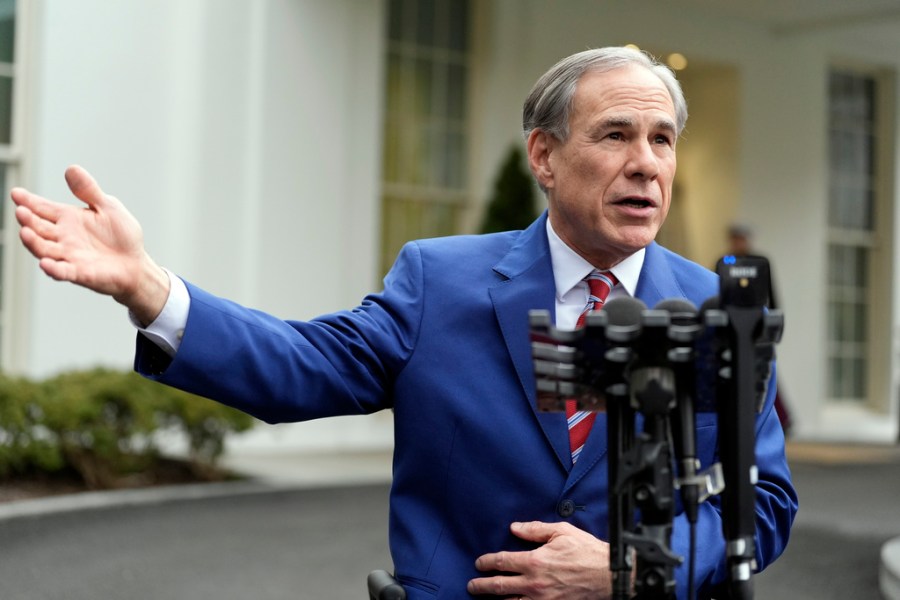
On July 7, the Justice Department sent a letter to the governor of Texas, urging him to re-gerrymander the state’s congressional map. This move was seen as an attempt to influence the outcome of future elections by altering district boundaries to favor certain political outcomes. Texas complied with the request, setting off a potential chain reaction where other states may follow suit or take countermeasures to protect their own interests.
This action came just months after the Trump White House reportedly asked Texas to redraw its map to secure more Republican seats in the House. The timing suggests a direct connection between the administration’s political goals and the Justice Department’s involvement. However, the legal basis for the department’s demands appears questionable.
A Flawed Legal Argument
The letter from the Justice Department claimed that four majority-minority districts in Texas were racially gerrymandered, violating the Fourteenth Amendment. However, the legal reasoning provided was weak and inconsistent with previous rulings. The department cited a Fifth Circuit case, Petteway v. Galveston County, which supposedly suggested that “coalition districts” — where different minority groups form a majority — violated the Voting Rights Act and the Fourteenth Amendment.
This interpretation is not supported by the actual ruling in Petteway. The court had ruled that Section 2 of the Voting Rights Act allows discrimination claims by a single racial minority that holds a majority in a district, but it did not address coalition districts or racial gerrymandering. Therefore, the Justice Department’s argument lacked a solid legal foundation.
A Lack of Investigation and Institutional Decay
One of the most alarming aspects of this situation is the apparent lack of due diligence. Normally, the civil rights division would conduct a thorough investigation before making such serious allegations. This includes gathering information from the state, consulting with voters, and engaging with advocacy groups. In this case, it seems no meaningful inquiry took place.
According to reports, only three lawyers remained in the division’s voting section, with the rest having been driven out by leadership that appears hostile to civil rights protections. This internal erosion of expertise and commitment raises serious questions about the department’s ability to fulfill its mission.
A Shift in Priorities
The Justice Department’s sudden change in stance is also puzzling. Earlier in 2025, the department had filed lawsuits against Texas over its 2021 redistricting plan, alleging discrimination against people of color. However, just months later, the department dropped these claims without explanation. This abrupt reversal suggests that the department’s priorities may have shifted based on political considerations rather than legal merit.
The only significant event between March and July 7 was President Trump’s call for Texas to redraw its map to benefit his political agenda. This timeline strongly implies that the Justice Department’s new allegations were politically motivated, not based on any new evidence or legal changes.
A Threat to Democracy
The Justice Department’s actions represent a dangerous departure from its traditional role as an impartial arbiter of justice. Historically, the department has sought to insulate itself from political influence, ensuring that legal decisions are made based on facts and law, not partisan interests. Attorney General Edward Levi, who led the department after Watergate, emphasized that the law must not be used as “an instrument of partisan purpose.”
However, the current leadership of the civil rights division appears to have abandoned this principle. Instead of serving as an independent watchdog, it seems to be acting as an extension of the White House’s political strategy. This undermines public trust in the department and threatens the very foundations of American democracy.
The Path Forward
The events surrounding Texas and the Justice Department’s actions serve as a warning about the dangers of political interference in law enforcement. If left unchecked, such behavior could erode the integrity of the entire system, leading to widespread distrust in the legal process.
It is imperative that the Justice Department reclaim its independence and reaffirm its commitment to protecting voting rights and upholding the law. Without this, the democratic process remains vulnerable to manipulation and abuse.

Post a Comment for "Opinion: Politics Shapes Civil Rights Enforcement at Justice Department"
Post a Comment