Opinion: Dismantling the Tax Division Will Cost Billions
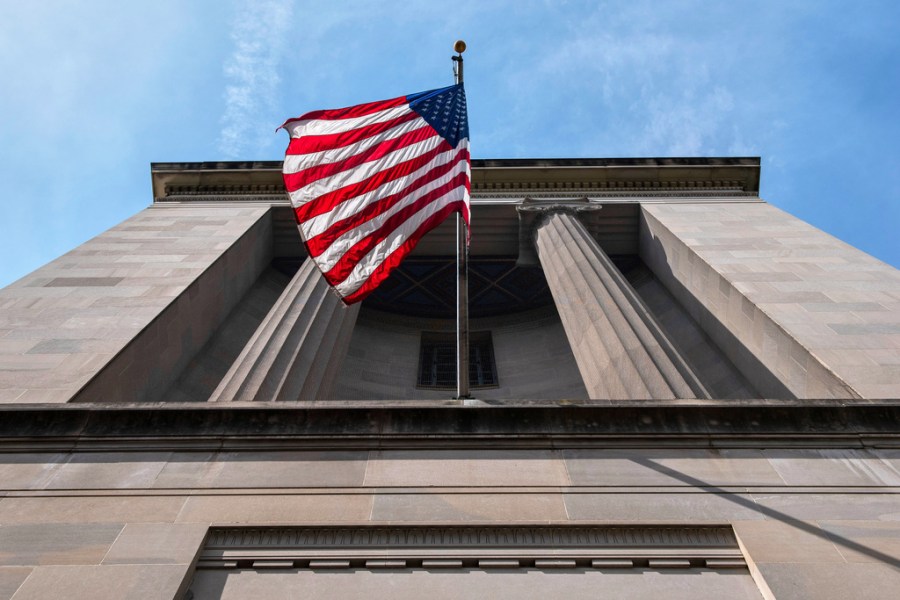
The Critical Role of the Department of Justice Tax Division
The Department of Justice (DOJ) is at a crossroads, with a decision that could have far-reaching consequences for tax enforcement in the United States. Proposals to dismantle the DOJ’s tax division—America’s primary defense against ultra-wealthy tax evasion—pose a significant risk to the integrity of the nation’s tax system. As sophisticated tax fraud continues to rise, weakening this division would not only undermine enforcement but also embolden those who exploit loopholes and evade their fair share of taxes.
Tax enforcement in the U.S. is already under immense pressure. Each year, tax evasion costs taxpayers approximately $447 billion, a staggering amount that far exceeds the commonly cited figures about government waste. Over the past decade, the number of tax fraud prosecutions has plummeted, dropping nearly 50% between 2014 and 2023. In 2023, only 363 individuals were convicted of criminal tax fraud, highlighting a troubling trend of leniency toward the wealthy. One IRS investigator recently remarked, “There’s never been a better time to commit tax fraud.” Without the DOJ’s tax division, this situation is likely to worsen dramatically.
Success Stories from the Tax Division
Despite these challenges, the tax division has achieved notable successes that underscore its importance. For instance, in the Anderson Ark case, the division uncovered an offshore evasion scheme that had defrauded thousands of Americans. The operation was dismantled, and nearly $100 million was recovered for taxpayers. Additionally, the division secured a groundbreaking $2.6 billion plea deal from Credit Suisse for its role in helping wealthy individuals hide their assets.
Another high-profile case involved the late billionaire Robert Brockman, where prosecutors pursued over $1.4 billion in taxes and penalties from alleged offshore income. This case represents the largest individual tax fraud indictment in U.S. history and highlights the complexity of modern tax evasion schemes.
These cases demonstrate the value of the tax division’s specialized prosecutors, who consistently recover far more than the division’s modest $106 million budget. The Credit Suisse settlement alone recovered more than the division spent in two decades, showcasing the return on investment that taxpayers deserve.
The Risks of Dismantling the Tax Division
Without a centralized tax division, complex cases like these are likely to go unaddressed. Cases that span multiple jurisdictions and involve international elements often require concentrated expertise and resources that regional U.S. Attorneys’ offices may lack. These offices are typically focused on local priorities, which can lead to the neglect of high-profile, complex cases.
Distributing elite tax litigation specialists to regional offices may seem efficient, but it is both impractical and demoralizing. Some of the tax division’s top prosecutors have already resigned in anticipation of restructuring, signaling a loss of confidence in the future of tax enforcement. The result is a scenario where tax evaders feel increasingly secure, knowing they can operate with minimal risk.
This shift sends a clear message to taxpayers: the Department of Justice is no longer committed to developing the deep expertise needed to prosecute complex tax fraud. If your scheme is sophisticated enough, you may well get away with it. And if you are ever indicted, you will face a legal system that lacks the focus and resources to win.
The Importance of Public Trust and Fairness
The U.S. tax system relies heavily on voluntary compliance and public trust. Weak enforcement threatens both. The top 1% of earners already evade taxes at three times the rate of those in the bottom half of the income scale. Automated systems used by the IRS are not designed to catch billionaires; they tend to target middle-income earners with straightforward returns. Catching sophisticated tax evaders requires equally sophisticated enforcement, something that a robust, centralized tax division provides.
Without this critical component, wealthy tax cheats may come to view evasion as a low-risk gamble, leaving billions unpaid and forcing ordinary Americans to cover the difference. This imbalance undermines the principles of fairness and justice that the American system is built upon.
A Call to Action
Congress and Department of Justice leadership must recognize the stakes and reverse course. The tax division is not just another bureaucratic unit—it is America’s strongest defense against sophisticated tax fraud and financial crime. It deserves reinforcement, not dismantling. This is not a political issue, but one of fundamental fairness.
Preserving and strengthening the tax division will uphold justice, reinforce public trust, and save taxpayers billions. The time to act is now, before the damage becomes irreversible.

Post a Comment for "Opinion: Dismantling the Tax Division Will Cost Billions"
Post a Comment