Opinion: Biden's Wind Rules Harm Eagles, Must Be Repealed
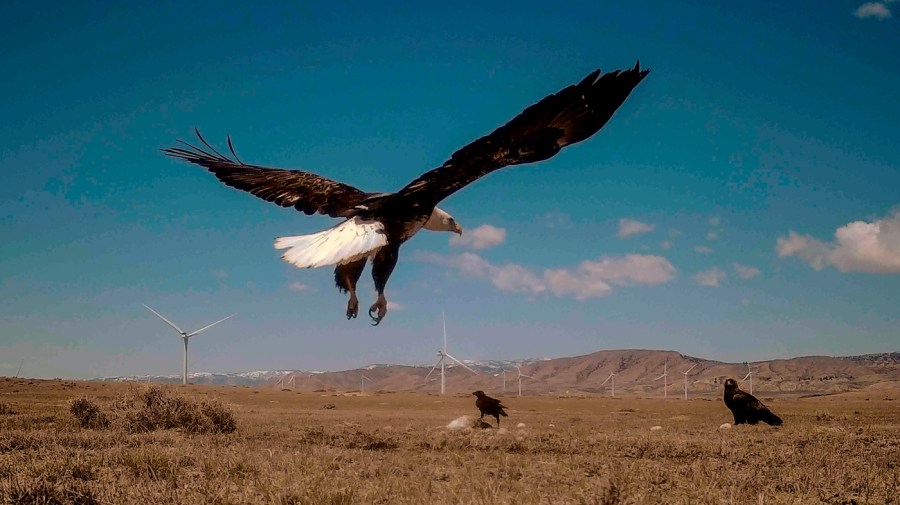
New Eagle Permitting Regulations Raise Concerns Over Conservation
The U.S. Fish and Wildlife Service introduced a new regulation related to eagle permitting last spring, claiming it would “promote eagle conservation.” However, critics argue that the regulation primarily benefits wind energy projects by making it easier for them to receive permits that allow the killing of eagles.
The Bald and Golden Eagle Protection Act has long prohibited the "take" of eagles, which includes actions such as pursuing, shooting, poisoning, wounding, killing, capturing, trapping, collecting, molesting, or disturbing them. In 2009, the agency finalized a rule that allowed for the "incidental take" of eagles, granting authorization to kill eagles as a result of otherwise lawful activities.
In 2013, the agency issued guidance for wind energy developers, requiring them to complete Eagle Conservation Plans. These plans were meant to demonstrate how they would avoid or minimize their impact on eagles. The guidance also mandated the use of eagle-fatality models to predict the potential for "take" of eagles from wind projects.
These regulations encouraged developers to avoid areas with high concentrations of eagles and implement conservation measures before permits would be issued. However, the Biden administration claimed that the complexity of the earlier permitting process was deterring companies from applying for eagle take permits, which were only granted after the implementation of avoidance measures.
The administration argued that simplifying wind permitting would lead to better eagle conservation. But does the 2024 permitting regulation truly enhance protections for eagles, or is it merely allowing wind projects to kill eagles without consequences?
The 2024 rule revision introduces two permitting options: a specific permit and a general permit. The latter is easier to obtain, less costly, and comes with fewer mitigation and monitoring conditions. General permits are available in regions where the relative abundance of eagles is considered low.
Unfortunately, the general permits assume there is little risk to eagles from wind energy projects across most of the U.S., excluding the Rocky Mountain states. Areas with high concentrations of eagles are not considered in the general permit region.
Under the 2024 regulations, if a wind project in this region requests a general permit, staff have no discretion to refuse it, even if existing wind projects have already killed eagles. Additionally, the post-construction monitoring requirements for eagle mortality in wind energy projects appear to be skewed towards underreporting.
The monitoring survey distance was reduced from more than 100 meters to just 40 meters. This means that unless an eagle carcass falls on a road or turbine pad, it is unlikely to be detected, and carcasses falling outside the 40-meter survey area will not be recorded.
The 2024 regulation does not give the Fish and Wildlife Service authority to prevent the siting of wind projects in high eagle concentration areas. Nor does the agency have any recourse when siting guidance is ignored.
The regulation has shifted its core mission from protecting eagles to issuing permits for wind energy projects with unlimited authorization to kill eagles without consequences.
Before retiring, I served 25 years with the Fish and Wildlife Service enforcing federal wildlife laws. Wind energy projects have always posed a threat to birds and bats, yet our personnel were often instructed not to enforce existing wildlife protection laws against this industry, even though they would be enforced against other energy producers like oil and gas.
In my opinion and experience, the 2024 eagle permitting regulation does not contribute to the conservation of eagles but rather authorizes, without consequence, wind energy projects to kill eagles.
The Trump administration’s August guidance aimed at forcing wind energy projects to comply with the law is a good start. However, it will also be necessary to amend the 2024 Biden permitting regulations to protect our national symbol.
Biden effectively tried to grant wind energy projects immunity from our existing laws to protect eagles, and that's not what Congress intended when it passed laws to protect our National symbol.

Post a Comment for "Opinion: Biden's Wind Rules Harm Eagles, Must Be Repealed"
Post a Comment