Only a Few Click Beyond Google's AI Search Results
Understanding the Impact of AI Overviews on User Behavior
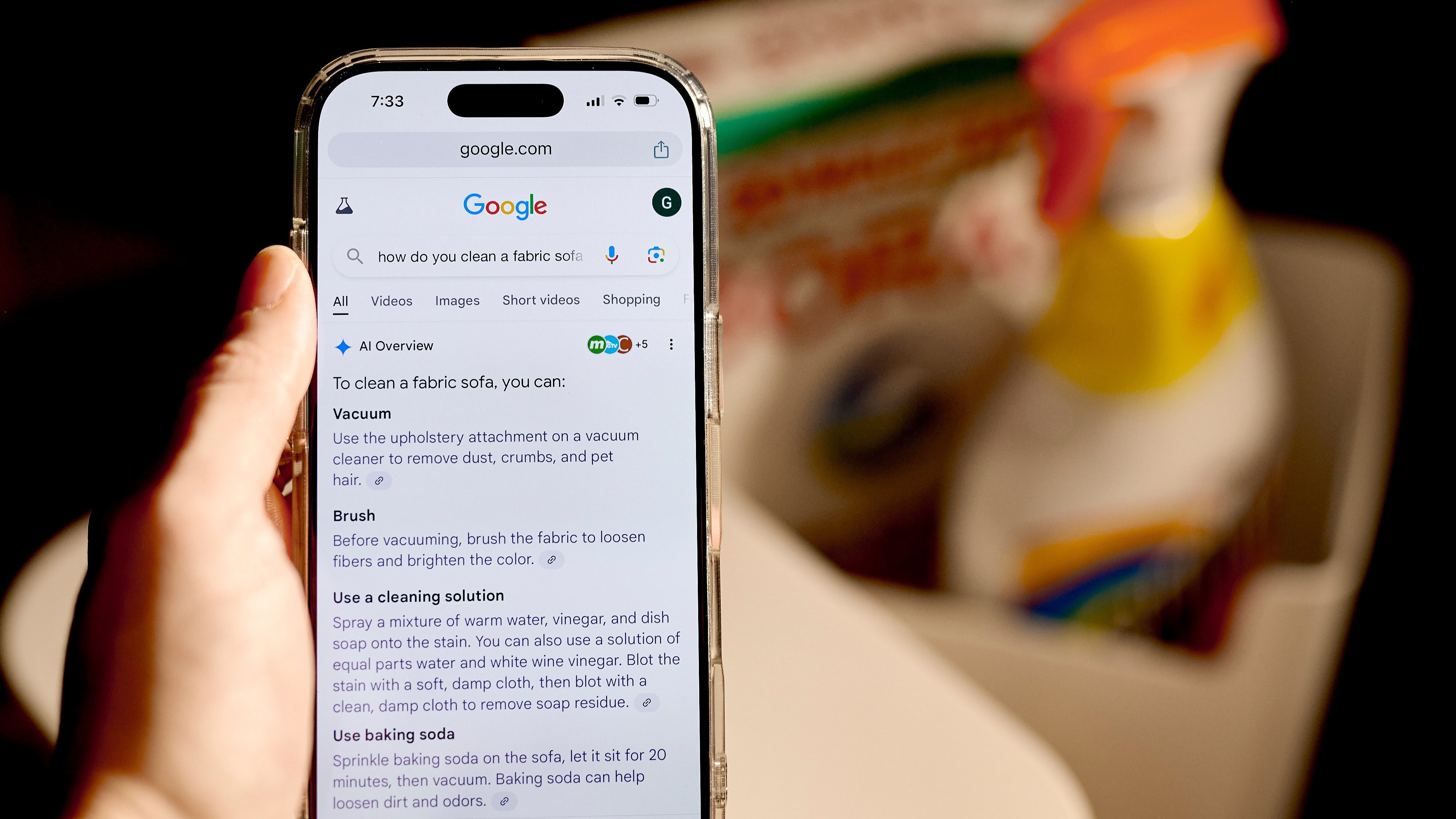
Recent studies have revealed that a significant number of Google users are not venturing beyond the AI-generated summaries provided by the search engine. These summaries, introduced as Search Generative Experiences in 2023 and later rebranded to AI Overviews, have become a common feature for many searches. The Pew Research Center conducted an analysis that highlights how these AI-generated overviews influence user behavior.
Among participants who encountered an AI Overview, only 8% clicked on a link in the search results, compared to 15% among those who saw traditional search results. This suggests a notable decrease in engagement with external links when AI Overviews are present. Additionally, 26% of users ended their browsing session after viewing an AI Overview, while 16% did so after seeing traditional search results. Despite this, 32% of users continued searching Google, slightly below the 35% who searched after receiving older-school search results.
The Pew Research Center tracked the web habits of 900 participants who agreed to have their March 2025 browsing activity monitored. Their findings also examined the types of links featured in both AI Overviews and traditional searches, revealing some intriguing differences.
For instance, YouTube, which now provides AI Overview results to Premium subscribers, appeared in the first page of 8% of traditional search results but was mentioned in only 4% of the first three links in AI Overviews. Conversely, Wikipedia, which recently paused its AI summary rollout, showed up in 3% of standard search results but in 6% of AI Overviews. Government sites, particularly those with .gov domains, were more frequently included in AI Overviews, with 6% of summaries pointing to these sites, compared to 2% in traditional results.
Reddit and news sites appeared in 5% of each type of search result, except for traditional results where Reddit had a link in the first page 6% of the time. Notably, Reddit is also testing AI search assistance, highlighting the evolving landscape of search technologies.
While most users in the Pew study had encountered AI Overview results, only 18% of their total searches yielded an automated summary. Queries that followed a who/what/when/why format resulted in AI Overviews 60% of the time, whereas sentence-style queries with a noun and a verb triggered an automated response 36% of the time.
Google has challenged the notion that AI Overviews negatively impact clickthrough traffic. A spokesperson for the company, Jennifer Kutz, stated that the methodology used in the study was flawed and that the dataset was not representative of overall search traffic. She emphasized that Google consistently directs billions of clicks to websites daily and has not observed significant drops in aggregate web traffic.
However, many publishers disagree. The Wall Street Journal reported in June that various publications, including Business Insider and the Washington Post, have experienced steep and sustained declines in search traffic. While the WSJ's own search traffic remained relatively stable, the trend is concerning for other outlets.
At Google’s I/O developer conference in May, executives claimed that AI Overviews increased search usage, citing a 10% growth in the US and India. Search VP Liz Reid also suggested that AI Overview clickthroughs are "higher-quality," implying that users spend more time on those websites. However, Google has not released detailed data to support these claims, and Pew publicist Sogand Afkari noted that the research did not examine post-clickthrough dwell time at destination sites.
Additionally, the Pew study did not cover a newer form of AI search that Google is now implementing: conversational “AI Mode” results. As a result, further discussions about the impact of AI on search traffic seem inevitable, much like the rise of AI itself.

Post a Comment for "Only a Few Click Beyond Google's AI Search Results"
Post a Comment