Ohio Supreme Court to Rule on Transgender Healthcare Ban
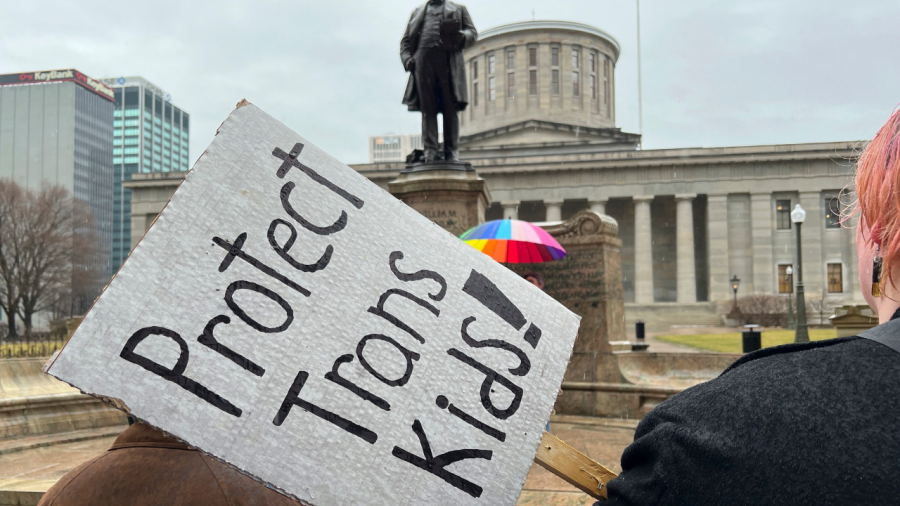
Ohio Supreme Court to Review Contested Law Banning Medical Treatment for Transgender Youth
The Ohio Supreme Court is preparing to determine whether a controversial state law that prohibits certain medical treatments for transgender youth is unconstitutional. This law, known as House Bill 68, has sparked significant debate and legal challenges across the state. The high court announced on July 22 that it will review a lawsuit against the law, which bans gender-affirming care for minors.
Ohio Attorney General Dave Yost, a long-time supporter of H.B. 68, requested the court to consider the case after an appeals court ruled in March that the law was unconstitutional. The appeals court argued that the law infringes on parents’ fundamental right to make medical decisions for their children. In response, Yost vowed to appeal the ruling. In an April statement, his office emphasized that the legislature acted properly in enacting the law, claiming it protects children from irreversible medical decisions.
Despite the appeals court’s decision, the Ohio Supreme Court, which voted 6-1 along party lines to take up Yost’s appeal, said in late April that the state can continue enforcing the law while litigation continues. This development has raised concerns among advocates who oppose the law, especially given the recent U.S. Supreme Court ruling in June that upheld a similar law in Tennessee. That law also prohibits trans minors from receiving treatments like puberty blockers and hormone therapy. However, the ACLU of Ohio, which filed the lawsuit against H.B. 68 on behalf of two families with trans children, remains confident in its challenge.
“Make no mistake: the ACLU of Ohio’s litigation challenging House Bill 68 will proceed,” said Freda Levenson, chief legal officer at the ACLU of Ohio, in a statement. “Unlike [in Tennessee], our case raises separate constitutional claims under the Ohio Constitution. We will continue to do everything in our power to ensure transgender children and their families have the ability to live freely and thrive.”
House Bill 68, which also bans trans female athletes from participating in women’s sports, faced intense opposition during its legislative process. Top Ohio doctors, including Nick Lashutka, president of the Ohio Children’s Hospital Association, criticized the bill. At the Statehouse in 2023, Lashutka argued that “it is a dangerous precedent for government to dictate when medication is appropriate in pediatrics.”
Although the Statehouse approved H.B. 68 in December 2023, Governor Mike DeWine vetoed the legislation the following month. He cited his visit to five children’s hospitals, stating that “these are gut-wrenching decisions that should be made by parents and should be informed by teams of doctors.” Despite the veto, both chambers of the Statehouse moved to override DeWine’s decision.
The ACLU filed its lawsuit against H.B. 68 later that spring, temporarily halting the law and setting up a five-day trial in Franklin County in July 2024. Common Pleas Judge Michael Holbrook ultimately ruled that the legislation could go into effect since it did not violate Ohio’s constitution. The ACLU then appealed Holbrook’s decision to the appeals court.
“This has been a long hard fight to protect minors in the state of Ohio,” said Rep. Gary Click (R-Vickery), the primary sponsor of H.B. 68, in a statement after Holbrook’s ruling. “A strong cross-section of Ohioans… recognize that decisions like these are too consequential to be made for and by minors who are incapable of providing informed consent.”

Post a Comment for "Ohio Supreme Court to Rule on Transgender Healthcare Ban"
Post a Comment