Ohio coalition demands fair maps before Congress redrawn
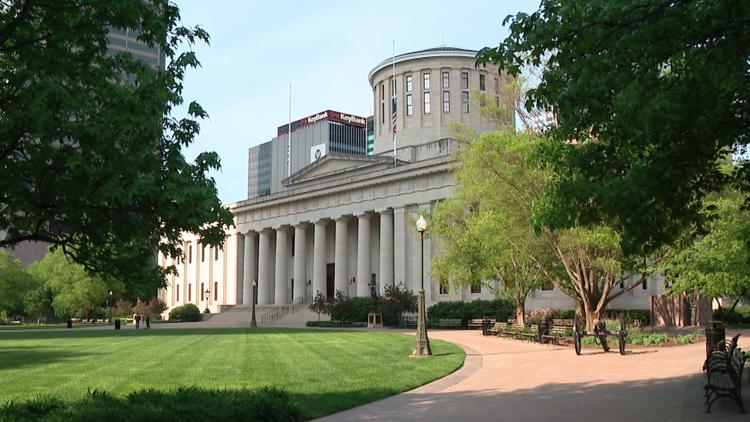
Ohio’s Redistricting Battle: A Fight for Fair Representation
Ohio lawmakers are currently working on drafting new congressional districts, a process that has sparked significant debate across the state. The Equal Districts Coalition, a group of progressive organizations, is actively advocating for fair and balanced maps. Their goal is to ensure that the redistricting process doesn’t favor one political party over another.
This effort comes after lawmakers approved maps in 2021 that were drawn along partisan lines. Ohio is unique in that it is constitutionally required to redraw its districts, making this process particularly important. However, the push from the Trump administration has added another layer of complexity, as Republican state leaders are being encouraged to create more favorable maps for their party.
The idea behind these changes is to counter potential losses in the 2026 mid-term elections. With Republicans holding a narrow majority in the U.S. House, adjusting district lines could help maintain their influence. This strategy is not limited to Ohio; some Democratic states have also considered gerrymandering to counteract Republican gains. However, the League of Women Voters of Ohio has taken a strong stance against such tactics.
Jen Miller, Executive Director of the League of Women Voters of Ohio, emphasized that gerrymandering harms all voters. She noted that the organization opposes gerrymandering regardless of which party is responsible for it. Miller pointed to California Governor Gavin Newsom’s suggestion to gerrymander for Democrats as an example of why such actions are problematic.
Despite the challenges, there is a clear advantage for Republicans in Ohio. GOP candidates consistently win statewide races by significant margins. However, the current congressional maps give Republicans a 2-to-1 advantage, with them holding 10 out of the state’s 15 seats. Deidra Reese from the Ohio Organizing Collaborative called this situation unfair and unrepresentative.
Reese highlighted the importance of voting, noting that many people feel their votes don’t matter due to the way districts are drawn. She stressed that the power of the pen can be used to dilute the influence of certain communities, making their voices less impactful.
Some Republicans believe they can further expand their advantage with minor adjustments. Ohio Republican U.S. Senator Bernie Moreno suggested targeting specific districts to increase the number of GOP-held seats. This includes focusing on key areas like Cleveland, Columbus, and Cincinnati, where Democrats currently hold representation.
Rev. Raymond Greene Jr. from Freedom Bloc expressed concerns about how these changes might affect communities like Akron. He warned that splitting up neighborhoods could lead to a lack of representation and neglect of local needs. Greene emphasized the importance of equal districts in ensuring that all voices are heard.
In 2018, Ohio voters approved an anti-gerrymandering measure that required input from the minority party. Despite this, Republicans managed to draw maps that favored their candidates. The state supreme court rejected these maps multiple times, but GOP lawmakers eventually forced them through.
Last year, Ohioans rejected an anti-gerrymandering ballot measure known as Issue 1. However, even those who voted against it framed their decision as a vote against gerrymandering. Miller noted that the public clearly wants fairness, even if they didn’t fully understand the ballot language.
Under the 2018 process, state lawmakers have the first opportunity to draft a map. If they can secure a 60% majority in both chambers and the governor signs it, that will be the final map. They have until the end of September to complete this task.
If lawmakers fail to meet this threshold, the Ohio Redistricting Commission takes over. The commission consists of seven members, with five being Republicans. They need at least two members from each major party to approve a map. They have until the end of October to finalize their work.
If the commission cannot reach an agreement, the process returns to the legislature. In this case, a simple majority is sufficient to approve a map. Additional criteria include prohibiting any benefits to a specific party or candidate and limiting the division of communities. They must finish their work by November 30.
Historically, Republicans have used procedural tactics to pass partisan maps. While organizations like the Equal Districts Coalition can challenge these maps in court, the Ohio Supreme Court has shifted significantly toward Republicans, with six of its seven seats now held by the party.
Miller mentioned that litigation remains an option, but she also proposed a different approach—challenging the map at the ballot box through a referendum. She highlighted the coalition’s extensive volunteer network, which is prepared to gather signatures and get a referendum on the ballot.

Post a Comment for "Ohio coalition demands fair maps before Congress redrawn"
Post a Comment