Officials Confident in $2.1B Federal Funding for I-5 Bridge Project
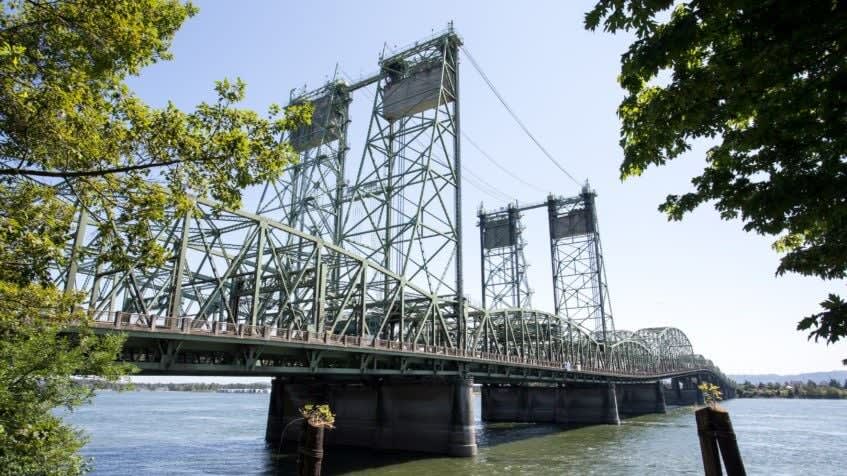
Federal Funding for I-5 Bridge Replacement Project Remains Secure
Officials involved in the major project to replace the aging Interstate 5 (I-5) bridge over the Columbia River, which connects Portland, Oregon, and Vancouver, Washington, are confident that federal funding for the project will not be disrupted. This assurance comes despite recent developments that saw the Trump administration terminate approximately $4 billion in unspent federal funding for California’s High-Speed Rail project.
The California High Speed Rail Authority is currently pursuing legal action against the Trump administration over the cancellation of this funding. However, the I-5 Bridge Replacement Program (IBR) has managed to secure a significant amount of federal support, with nearly $2.1 billion already allocated from key grant programs.
This funding primarily comes from two major initiatives: the $600 million Mega Grant Program and the $1.5 billion Bridge Investment Program (BIP). Additionally, the project received a $30 million Reconnecting Communities grant. These funds have been crucial in advancing the project and ensuring its continued progress.
Sam Stites, a representative from the IBR Communications Team, emphasized that the IBR Program is distinct from the California High-Speed Rail project. He noted that the IBR Program has its own dedicated funding streams and planning processes involving both Oregon and Washington, along with federal agencies.
“The grant agreements required to access the $2.1 billion in federal funds awarded through the Mega Grant and BIP Grant were fully executed and signed earlier this year by ODOT/WSDOT and the Federal Highway Administration,” Stites explained via email. “A portion of these funds has already been obligated, with future obligations expected once the project reaches the construction phase.”
Stites also mentioned that the IBR Program anticipates receiving an amended record of decision in early 2026 from the Federal Highway Administration and the Federal Transit Administration. This approval would allow the project to move forward into the construction phase.
The combined $2.1 billion from these grants is vital for the project. The program continues to collaborate with federal partners and the congressional delegation to ensure access to these funds and to stay informed about any changes in federal policy.
Project Scope and Timeline
The IBR Program is a massive undertaking, estimated to cost between $5 billion and $7.5 billion. This includes the construction of a replacement bridge and other related components. The project is expected to span from 2025 to 2035, with construction set to begin in 2026.
Stites acknowledged the complexity of such a large-scale infrastructure project, noting that it requires years of planning and execution. He also pointed out that changes in leadership at the federal and local levels are to be expected during this time.
“We appreciate the support we’ve received across all levels of leadership,” Stites said. “We look forward to continuing our conversations with federal, state, and local elected leaders to ensure we can deliver a safer and more reliable multimodal replacement bridge and corridor.”
Controversies and Community Concerns
Despite the progress being made, the IBR Program is not without controversy. One of the most contentious aspects of the project is the inclusion of light rail. Many residents in Southwest Washington have expressed opposition to the idea, citing concerns about costs, potential negative impacts on their communities, and a lack of perceived benefits.
Proponents of the light rail component argue that it is essential for addressing environmental issues, reducing traffic congestion, improving transportation options, and fostering economic growth. They believe that the integration of light rail will provide long-term benefits for the region.
As the project moves forward, it will be important for officials to address these concerns and ensure that the needs and perspectives of all stakeholders are considered. The success of the IBR Program will depend on collaboration, transparency, and a commitment to building a safer and more efficient transportation system for the future.

Post a Comment for "Officials Confident in $2.1B Federal Funding for I-5 Bridge Project"
Post a Comment