Northern Lights to Glow Over Washington Tonight
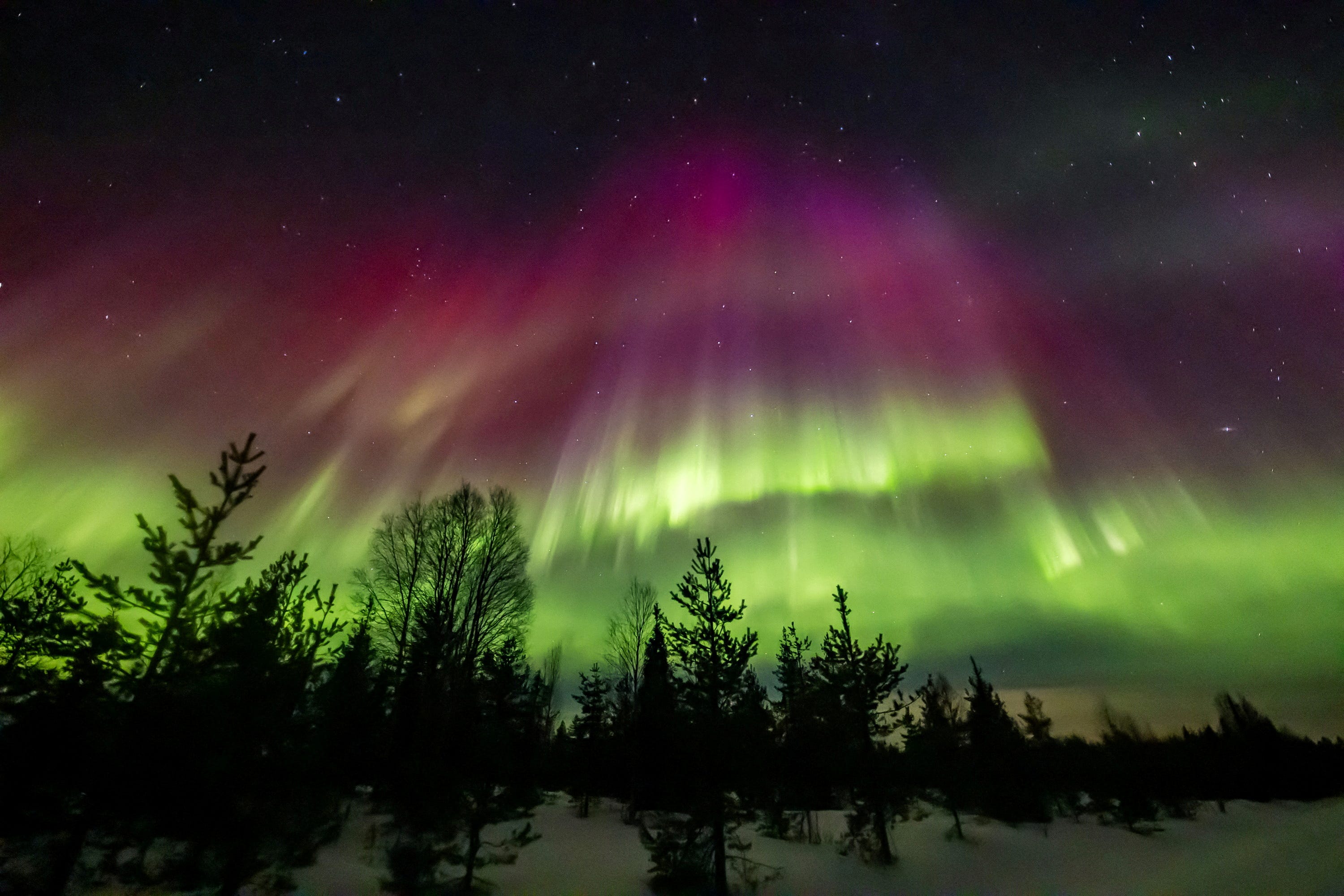
Northern Lights Expected to Light Up Washington State Tonight
Skywatchers in Washington state may have the opportunity to witness the northern lights, also known as the aurora borealis, tonight, August 18. According to forecasts from the National Oceanic and Atmospheric Administration (NOAA), much of the state is within the aurora "view line," which indicates the southernmost regions where the phenomenon might be visible on the northern horizon. However, areas in the southwestern part of the state are not expected to see the display.
The NOAA Space Weather Prediction Center's forecast suggests that the aurora borealis could be visible across 15 U.S. states overnight from August 18 to 19. This potential visibility is due to a large coronal hole on the sun, which is currently facing Earth. Coronal holes are open regions in the sun’s magnetic field that allow solar wind to escape more easily. The high-speed solar wind stream is expected to interact with Earth’s magnetic field, potentially causing minor geomagnetic storm conditions.
Cloud Cover Forecast for Washington State
The cloud cover forecast for Washington state on August 18 is mixed. At 11 p.m., Eastern Washington is expected to have good viewing conditions, with sky cover percentages ranging from 8% to 31%. These levels are generally considered favorable for observing the night sky. In contrast, Western Washington, including cities like Seattle and Olympia, is predicted to have more cloud coverage, with opaque clouds covering between 32% to 53% of the sky at that time. Some areas may experience up to 83% cloud cover, which could significantly hinder visibility.
Best Time to View the Northern Lights
The best time to view the northern lights in Washington state is typically within an hour or two of midnight, from 10 p.m. to 2 a.m. Pacific Time. During this period, the aurora is most active and visually striking. As geomagnetic activity increases, the hours of active aurora may extend into the evening and early morning. However, these times may not offer the same level of intensity or visual appeal as the peak hours around midnight.
To enhance the viewing experience, skywatchers should seek out dark locations away from city lights. This can help reduce light pollution and provide a clearer view of the aurora. For those interested in capturing the display, using a camera with long exposure settings can reveal the true brilliance of the auroras. It's important to note, however, that the colors observed with the naked eye may differ from those captured in photographs.
Understanding the Northern Lights
The northern lights are a natural light display that occurs in the skies of high-latitude regions in both the Northern and Southern Hemispheres. This phenomenon is caused by electrically charged particles from space entering Earth's atmosphere and colliding with molecules and gases such as oxygen and nitrogen. These collisions cause atmospheric particles to gain energy and then release it in the form of light.
Earth's magnetic field plays a crucial role in directing these charged particles toward the poles, creating the stunning displays of rays, spirals, and flickers that have captivated humans for centuries. The colors of the auroras—ranging from green, red, blue, and even pink—depend on the altitude at which the collisions occur, as well as the composition and density of the atmosphere at the time.
For those planning to observe the northern lights, checking local weather conditions and choosing a clear, dark location will greatly increase the chances of a successful viewing. Whether viewed through the eyes or captured with a camera, the aurora borealis remains a breathtaking natural spectacle.

Post a Comment for "Northern Lights to Glow Over Washington Tonight"
Post a Comment