Next Black Moon in August 2025: When the 'Invisible' Lunar Event Will Appear
Understanding the Concept of a Black Moon
The term "Black Moon" is not an official astronomical designation, but it has gained popularity in recent years. It refers to two different definitions of a new moon. The first definition involves having two new moons within a single calendar month, while the second relates to the third new moon in a season that contains four new moons. These occurrences are relatively rare and offer unique opportunities for stargazers and astronomy enthusiasts.
The Upcoming Black Moon in August 2025
The next significant Black Moon is expected to occur on August 23, 2025. This event will fall under the definition of the third new moon in a season with four new moons. During this time, the Moon will be positioned between the Earth and the Sun, making its illuminated side face away from Earth. As a result, the Moon will be largely invisible from our perspective. This phenomenon happens because the Moon's orbit aligns with the Sun, causing it to be lost in the glare of sunlight.
This type of Black Moon is less common than the monthly version. The monthly Black Moon occurs approximately every 29 months, while the seasonal Black Moon happens roughly every 33 months. Both events provide a unique chance to observe the night sky without the interference of moonlight.
Common Misconceptions About the New Moon
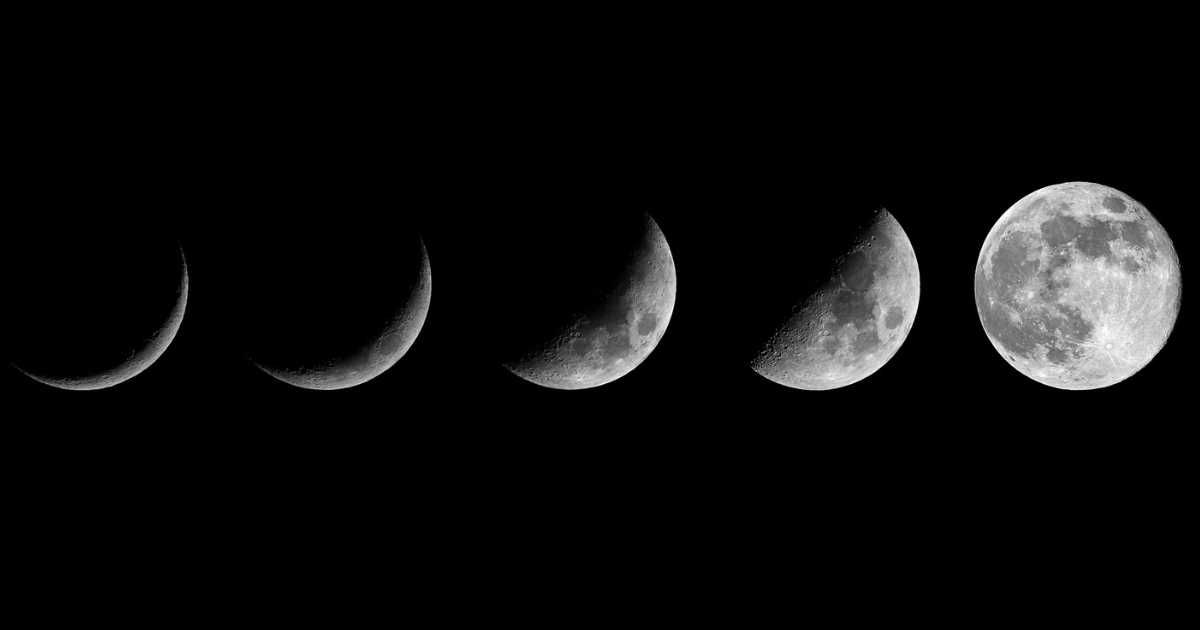
There is often confusion surrounding the identification of a new moon. Typically, a new moon is followed by a thin crescent that becomes visible a few days later in the western twilight sky. However, some people mistakenly refer to this crescent as the "new moon," leading to a common fallacy. This misunderstanding has even appeared in literature, such as in Walter Lord’s book "A Night to Remember," where a fireman is quoted as saying, “A new moon!” after seeing a narrow crescent.
It is important to distinguish between the actual new moon and the subsequent crescent phase. The new moon itself is not visible, as the Moon is positioned between the Earth and the Sun, with its dark side facing us.
The Origin of the Term 'Black Moon'
The concept of a Black Moon has roots in ancient astronomy. The Moon goes through various phases over the course of about a month, completing 12.37 orbits around the Earth each year. This means that some years have 12 new moons, while others have 13. Over a 19-year cycle, there are 235 new moons, which means that seven years in every 19 will have an extra new moon.
The extra full moon in a month is known as a Blue Moon, a term that has become synonymous with rarity. The idea of a Black Moon was originally used to describe a new moon that was not visible due to its position relative to the Sun. Over time, the term evolved to encompass both the monthly and seasonal variations.
Stargazing Opportunities During a Black Moon
While a Black Moon may seem like a blank night for stargazers, it actually presents ideal conditions for observing other celestial phenomena. Without the light of the Moon, meteor showers such as the Perseids, which typically occur in August, can be more easily spotted. This makes the Black Moon a perfect opportunity for those interested in astronomy to explore the night sky.
The upcoming Black Moon adds to the list of celestial events taking place in August and throughout the year. It serves as a reminder of the beauty and complexity of the lunar cycle, offering a unique chance to witness the wonders of the universe. Whether you are an experienced astronomer or a casual observer, the Black Moon is an event worth noting.

Post a Comment for "Next Black Moon in August 2025: When the 'Invisible' Lunar Event Will Appear"
Post a Comment